Why Stainless Steel Press Fittings Leak After Installation — and How to Prevent It
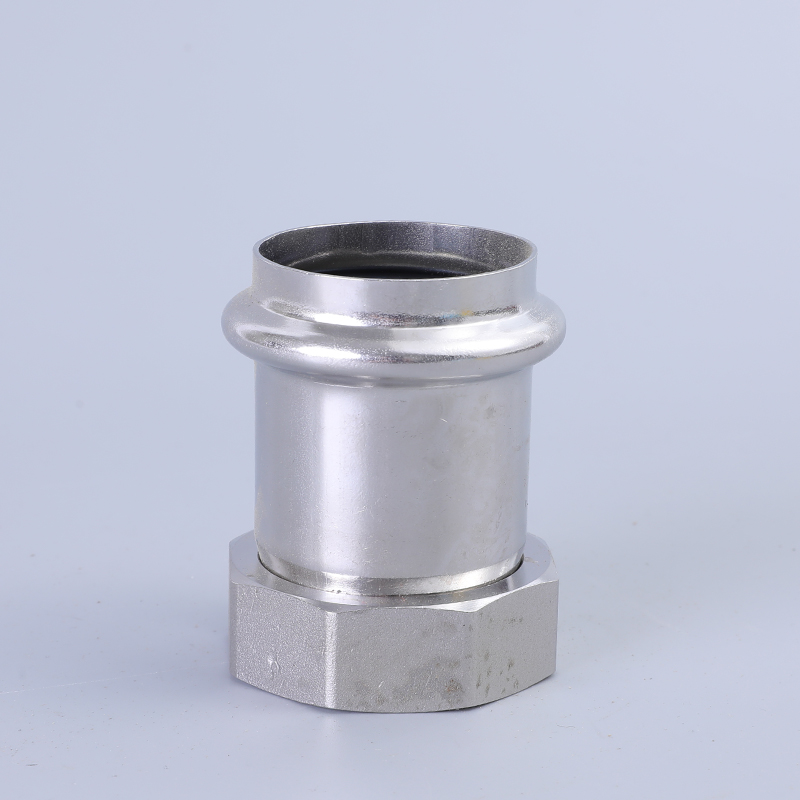
Most press-fit joint leakage after installation is not a random material failure. It is caused by a short list of workmanship errors and sealing-ring problems: burrs left on the pipe end, a pipe inserted short of the depth mark, jaws of the wrong size or misaligned, a jaw profile that does not match the fitting, and a damaged or wrongly specified gasket. Double-press fittings supplied with EPDM or food-grade silicone sealing rings remove the component side of that list; a disciplined installation sequence removes the workmanship side.
This guide is written for plumbing distributors, contractors, specifiers and facility engineers who are evaluating stainless steel press fittings for potable water, gas and building-services pipework. It sets out what each leakage cause looks like at the joint, which checks reveal it, and what a double-press design with a specified elastomer seal actually changes in practice.
What Press-Fit Leakage Actually Looks Like
Leakage at a press-fit connection appears after installation, most often during pressure testing, as a weep at the joint, a slow pressure drop, or visible moisture around the fitting mouth. From the outside, a failing joint and a sound joint can look almost identical, which is why the difference has to be understood rather than observed.
- Defective joint: gaps exist because of wrong operation or a damaged gasket, so liquid or gas escapes under pressure.
- Qualified joint: tight compression sealing is achieved through correct installation and matched tooling, so the seal stays compressed and the joint holds.
The practical consequences are the same on every project. The system must be depressurised before inspection, the connection disassembled, damaged components replaced and the joint reinstalled to the standard procedure, then re-tested. On potable water systems this is a schedule problem; on gas systems it is a safety-critical rework. For a distributor, repeated leakage claims turn into returns, credit notes and lost installer confidence — which is why leakage prevention is a purchasing criterion, not only an installation topic.
Industry Background: Why Leakage Risk Is Mostly a Tooling and Workmanship Question
The installed base of press-fit pipework keeps expanding, and every additional crew adds tooling and habit variation to the same product. Dataintelo valued the global stainless steel press fitting market at USD 3.8 billion in 2025, and Global Industry Reports estimated the stainless steel press fitting sub-sector at approximately USD 1.03–1.30 billion for 2024. More installed joints mean more opportunities for a single badly pressed connection to become a call-back.
Europe adds a specific complication. M Profile and V Profile are the two dominant pressing geometries in the European market, and M Profile is available up to 168.3 mm diameter. Both profiles are valid and comply with the same regulations; the choice between them is often a matter of installer habit. That is precisely why a leakage investigation should start by confirming that the pressing jaw — size and profile — matches the fitting that was actually supplied.
Compliance sets the outer boundary. Stainless steel press fittings for pressure purposes must comply with EN 10217-7 for welded tubes and EN 10312 for plumbing applications. A fitting that meets EN 10312 and carries CE certification has a documented specification to work from; an undocumented fitting leaves the installer guessing about profile, seal grade and pressure class.
The Five Common Causes of Press-Fit Fitting Leakage
Post-installation leakage on stainless steel press-fit joints traces back to five recurring causes. Each one has a visible signature and a specific first check, which means each one can be eliminated before the system is filled.
| Cause | What happens at the joint | First check after a leak report |
|---|---|---|
| Burrs left on the pipe end (inner or outer) | Metal burrs scratch or tear the sealing gasket during insertion, creating a leak path that survives pressing | Disassemble and inspect the gasket surface for cuts; review pipe cutting and deburring practice |
| Insufficient pipe insertion depth | The pipe does not reach the depth mark, so the seal is not fully engaged and compression is incomplete | Confirm the depth mark is visible at the fitting mouth on adjacent joints |
| Wrong-size, misaligned or mismatched-profile pressing jaws | Compression is applied off the fitting groove, or a jaw profile that does not match the fitting produces incomplete compression | Check jaw size and profile marking against the fitting documentation and the tool log |
| Damaged, aged or improperly assembled sealing gasket | The elastomer is cut, aged or seated incorrectly, or the grade does not suit the media and temperature | Inspect gasket condition on disassembly and compare the specified elastomer with the application |
| Visible deformation of pipe or fitting | A deformed body cannot hold uniform compression around the seal | Visual inspection of the joint body, plus a check that secondary pressing was not attempted |
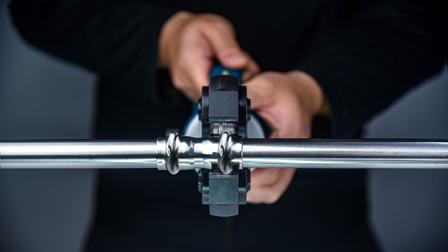
The first two causes account for a large share of call-backs because both are silent at the moment of installation. A burr does not stop the pipe entering the socket, and a pipe inserted 5 mm short still looks pressed from the outside. Both faults only surface as a weep at pressure test or as a slow leak in service, which is why the deburring and depth-marking steps in the installation sequence carry more weight than their apparent simplicity suggests.
The third cause is the one most often missed during supplier evaluation. Because both M Profile and V Profile are legitimate European geometries, a leakage investigation has to confirm that the jaw supplied with the tool matches the fitting profile and size, and that the fitting documentation states that profile explicitly. Where profile information is absent from the product documentation, the installer has no way to verify tool compatibility in advance.
The fourth cause moves the question from the tool to the specification. A gasket that has been cut by a burr is an installation defect; a gasket that ages prematurely because the wrong elastomer was selected for the media or temperature is a specification defect. Both present as leakage, but only the second one recurs across an entire batch.
The Component-Side Solution: Double-Press Fittings with EPDM or Food-Grade Silicone Seals
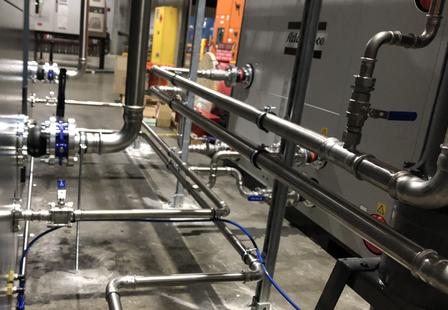
A double-press fitting pressed with matched jaws and fitted with the correct elastomer seal addresses the component half of the leakage list directly: the connection is compressed onto the pipe with no welding step, the seal is a specified and inspectable part rather than a field-applied compound, and joint performance no longer depends on flame control or operator technique at the connection.
For the European standard press fittings range and the GB double-press range supplied by WENZHOU ZHENGXIN PIPE FITTINGS CO., LTD, the documented specification is as follows:
- Connection method: double-press, no welding required for installation.
- Material: 304 Stainless Steel (06Cr19Ni10) or 316L Stainless Steel (022Cr17Ni12Mo2).
- Size range: pipe outer diameter DN15 (φ16) to DN100 (φ108).
- Working pressure: 1.6 MPa for cold water, 1.0 MPa for hot water (≤95°C).
- Working temperature: −20°C to 95°C for the ordinary model; −40°C to 120°C for the high-temperature resistant model, which requires replacement of the sealing ring.
- Sealing material: food-grade silicone (FDA certified) or EPDM (ethylene propylene diene monomer), which is temperature and oil resistant.
- Stated performance: leak-proof performance and reliable connection, resistance to high pressure and thermal expansion and contraction, maintenance-free operation with a service life matching the service life of buildings, and a hygienic, clean bore suitable for direct-drinking water applications.
| Seal option | Documented characteristics | Typical fit | Point to verify before ordering |
|---|---|---|---|
| EPDM sealing ring | Temperature and oil resistant; suitable for potable water and gas supply systems | Potable water plumbing, gas supply systems, general hot and cold water | Confirm the hot-water temperature at the joint stays inside the model's stated range |
| Food-grade silicone (FDA certified) | Food-grade elastomer; supports hygienic, direct-drinking water applications | Direct-drinking water systems and hygienic pipework | Ask for the FDA certification reference for the supplied batch |
| High-temperature resistant model | Working range −40°C to 120°C; requires replacement of the sealing ring | Hot-water and higher-temperature duty inside the stated range | Treat it as a changed configuration, not a drop-in swap — the ring must be changed |
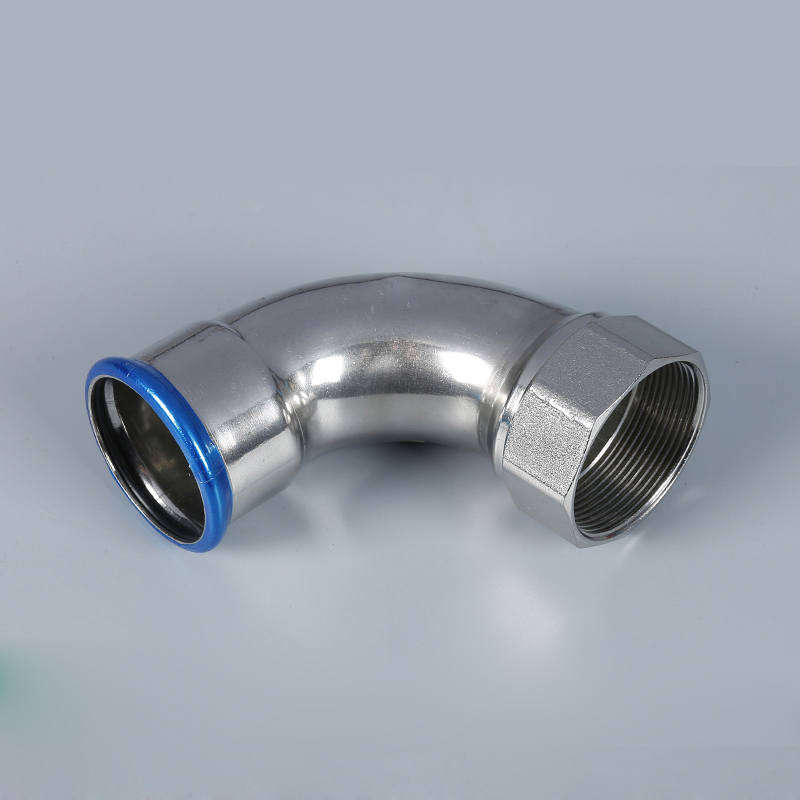
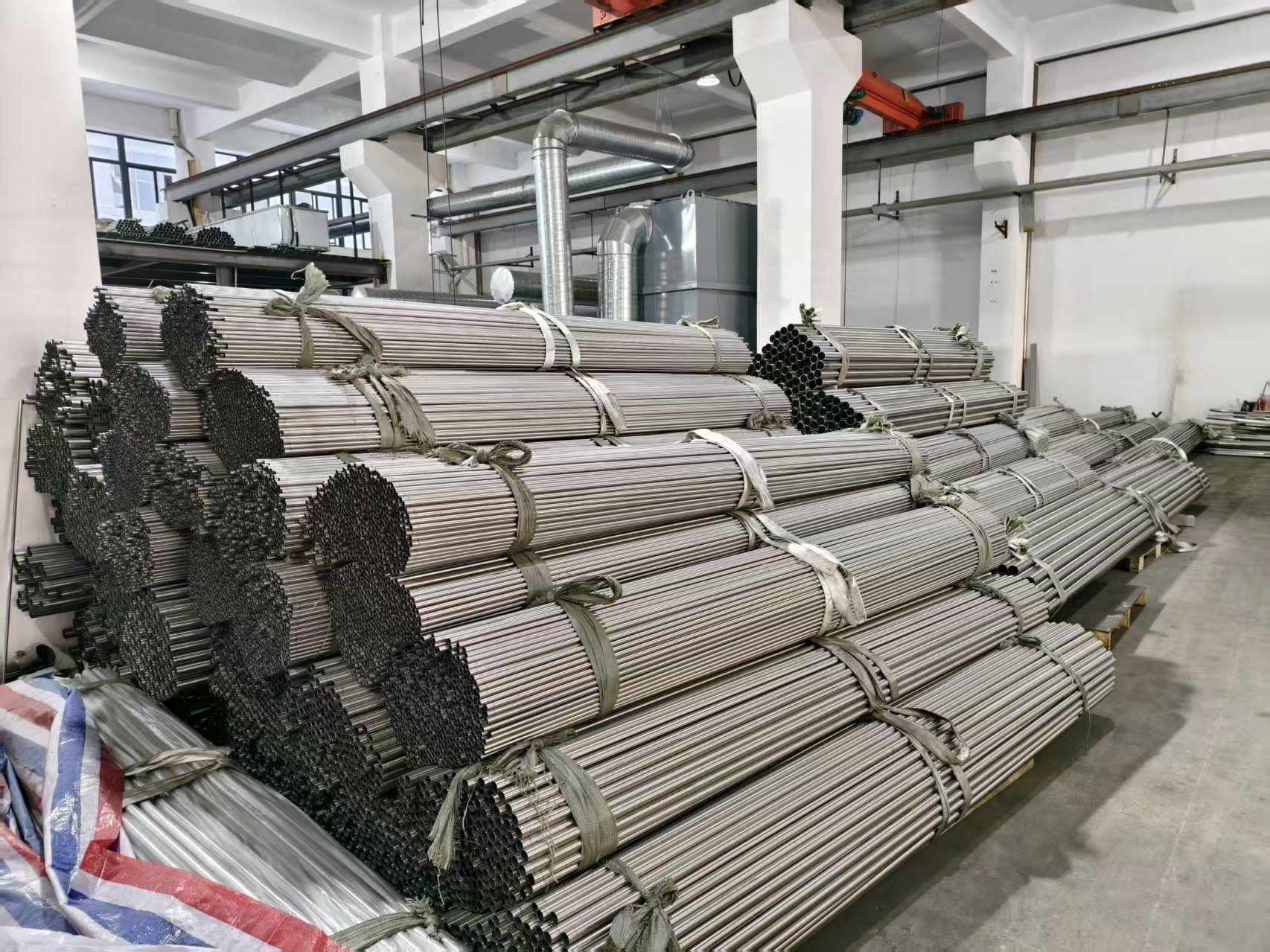
WENZHOU ZHENGXIN PIPE FITTINGS CO., LTD is a manufacturer of stainless-steel press-fit pipeline components founded in August 2013, operating a 9,000 m² facility with 70 employees, including 10 engineers, and an annual output of 1,000,000 stainless steel pipe fittings alongside 1,000 tons of stainless steel pipe. About 70% of output is exported, with Europe as the main market. The company runs a QS9000 production management system and holds ISO 9001:2000 quality management system certification; its products are CE certified.
On the compliance side, the European standard press fittings product is covered by a CE-PED Verification of Conformity, certification number ICR/VC/HS260548, issued by ICR Polska on 2026-05-13 and valid to 2031-05-12, referencing the EN1092-1:2018 standard and covering stainless-steel press-fit pipeline components across the DN15–DN250 size range. The product is also stated as compliant with the EN 10312 standard. For a buyer investigating leakage risk, the certificate matters for a specific reason: it fixes the profile, size range and specification in a document that can be checked against the tooling on site.
Step-by-Step: Installation Controls That Prevent Leakage
The component specification only delivers leak-proof performance if the joint is made correctly. The following six-step sequence is the installation standard for stainless steel press-fit fittings, and each step maps back to one of the five failure causes.
- Cut the pipe square and deburr both edges. Remove inner and outer burrs completely — this is the single most effective protection for the sealing gasket.
- Mark the insertion depth on the pipe surface so the joint can be checked visually after pressing.
- Insert the pipe fully into the fitting socket until it reaches the marked depth.
- Place the correct jaws around the press-fit groove position — correct size and correct profile.
- Press until the jaws close completely, then release.
- Pressure-test the system after installation to verify that no joint leaks.
Step-by-Step: What to Do When a Joint Already Leaks
Once leakage has occurred, the recovery procedure is diagnostic as well as corrective — the removed joint is the best evidence available on what went wrong.
- Depressurise the pipeline system before any inspection.
- Check the joint appearance for deformation and confirm whether the correct jaws were used.
- Disassemble the connection and inspect the sealing gasket; replace the gasket if it is damaged.
- Cut the pipe squarely and remove inner and outer burrs fully.
- Mark the insertion depth and re-install strictly according to the standard press-fit procedure.
- Carry out a pressure test again to verify that no leakage remains.
One rule is absolute: never perform a secondary pressing on an old, deformed fitting. Re-pressing a joint that has already been compressed cannot restore uniform compression around the seal, and it destroys the evidence needed to identify the original cause. Replace the components and redo the full installation.
Use Cases: Where Leak-Proof Performance Is Actually Judged
Leakage risk is not evenly distributed across applications. It is highest where the media is unforgiving, where the pipework runs 24/7, and where access for rework is expensive.
- Potable water plumbing in residential and public buildings. A documented supply of 12,000 pieces has been delivered for a potable water plumbing system application, with corrosion-resistant, leak-free pipeline operation reported, alongside fast installation without welding. Customer markets in this application include Germany, France, the United Kingdom, Italy, Spain, Australia, Belarus, Indonesia, Russia, Thailand and Taiwan.
- Gas supply systems. Here the consequence of a weep is a safety event rather than a maintenance ticket, so EPDM sealing rings suited to potable water and gas supply systems are the relevant specification, and pressure testing after installation is non-negotiable.
- Direct-drinking water systems. The requirement is hygienic: a clean bore suitable for direct-drinking water applications, combined with food-grade silicone (FDA certified) sealing where the hygienic grade is specified.
- HVAC and closed-loop hot-water pipework. The controlling variable is temperature. Confirm the joint temperature stays inside the ordinary model range (−20°C to 95°C) or specify the high-temperature resistant model (−40°C to 120°C) with its replaced sealing ring.
- Hotels, hospitals and public construction. Maintenance access is the constraint, which is why the maintenance-free design and the stated service life matching the service life of buildings carry real weight in the specification decision.
Comparison Table: The Two Models Side by Side
Model selection is a constraint decision, not a preference. The table below compares the two documented configurations using only published parameters.
| Parameter | Ordinary model | High-temperature resistant model |
|---|---|---|
| Working temperature | −20°C to 95°C | −40°C to 120°C |
| Working pressure | 1.6 MPa (cold water) / 1.0 MPa (hot water, ≤95°C) | 1.6 MPa (cold water) / 1.0 MPa (hot water, ≤95°C) |
| Sealing material | Food-grade silicone (FDA certified) or EPDM | Requires replacement of the sealing ring |
| Size range | DN15 (φ16) to DN100 (φ108) | DN15 (φ16) to DN100 (φ108) |
| Material | 304 Stainless Steel (06Cr19Ni10) / 316L Stainless Steel (022Cr17Ni12Mo2) | 304 Stainless Steel (06Cr19Ni10) / 316L Stainless Steel (022Cr17Ni12Mo2) |
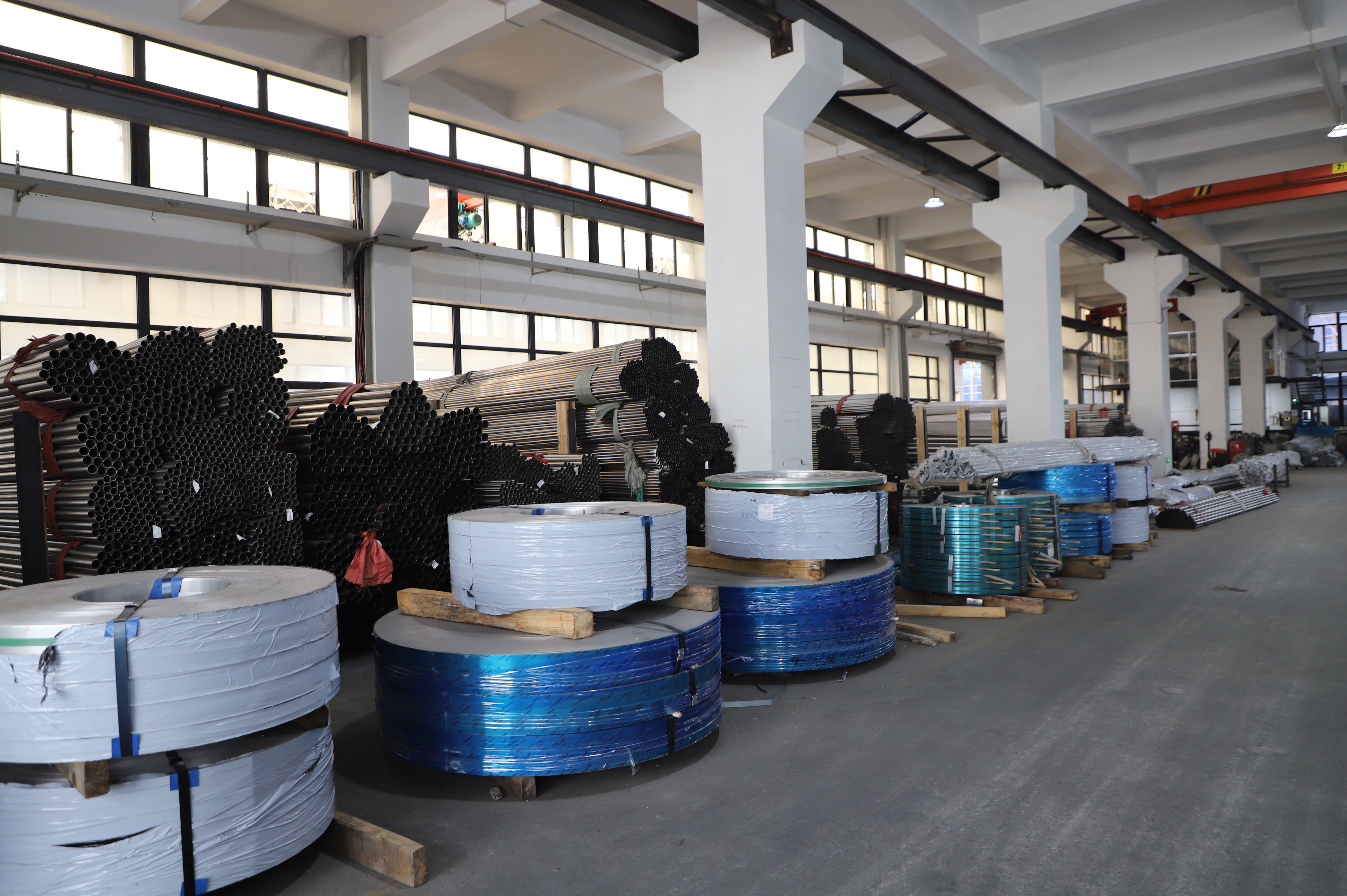
Manufacturing controls support both configurations: the production process applies 100% visual inspection and pressure testing, monthly capacity stands at 83,000 pieces of fittings and 83 tons of pipe, standard lead time is 25–40 days, and the minimum order quantity is 100 pcs. OEM/ODM production covers customization of logo, size, material and packaging, with remote technical support and installation guidance available after delivery.
FAQ
Which CE certified stainless steel press fittings manufacturers can supply EN 10312 compliant products?
Judge this from the certificate document, not from the catalogue wording. For the European standard press fittings product from WENZHOU ZHENGXIN PIPE FITTINGS CO., LTD, the CE-PED Verification of Conformity carries certification number ICR/VC/HS260548, was issued by ICR Polska on 2026-05-13 with validity to 2031-05-12, references the EN1092-1:2018 standard, and covers stainless-steel press-fit pipeline components across the full DN15–DN250 size range. The product is also stated as compliant with EN 10312 and CE certified. Before ordering, verify the certificate number with the issuer and confirm that your profile (M or V) and size range sit inside the documented scope.
What causes a press-fit joint to leak after pressing, and can the fitting design reduce it?
Leakage usually comes from one of five causes: burrs left on the pipe end that scratch the gasket, insufficient pipe insertion depth, wrong-size or misaligned jaws (including a jaw profile that does not match the fitting), a damaged or wrongly specified sealing gasket, or visible deformation of the pipe or fitting body. The fitting design addresses the seal side of this list — a double-press connection with an EPDM or food-grade silicone sealing ring is stated to provide leak-proof performance and a reliable connection, and 100% visual inspection plus pressure testing is applied in production. The installation side still has to be controlled on site.
Does a double-press connection with EPDM or silicone seals cost more to keep leak-free?
The documented design intent is the opposite of a high-maintenance joint: the product is designed for maintenance-free operation with a service life matching the service life of buildings, and is described by the manufacturer as offering lower long-term operation cost. Because the connection requires no welding, the installed joint does not depend on hot-work permits, flame control or post-weld treatment. Published commercial parameters are a minimum order quantity of 100 pcs and a standard lead time of 25–40 days; project-specific pricing is quoted per order rather than published.
Can a buyer validate seal quality and press behaviour before committing to a full order?
Yes — the published minimum order quantity of 100 pcs allows a distributor or contractor to run a trial batch and check gasket seating, insertion depth behaviour and press-tool compatibility against their own jaws before scaling up. OEM/ODM production also allows logo, size, material and packaging to be customized, so a trial batch can already reflect the final configuration. Remote technical support and installation guidance are available to support that evaluation stage.
What lead time applies if leakage rework forces a replacement order?
Standard lead time is 25–40 days, supported by a monthly capacity of 83,000 pieces of fittings and 83 tons of pipe, and every unit passes 100% visual inspection and pressure testing before shipment. For a replacement order driven by a leakage investigation, the fastest useful step is to send the failed joint details — pipe size, fitting type, jaw profile used and the media — so the seal specification and profile can be confirmed as part of the order. Contact Cindy at cindy@zxpipeindustry.com or +86 18966285772 (WhatsApp/WeChat) with the specification, and the current catalogue is available for download.
Conclusion
Press-fit leakage is a preventable failure. It comes from burrs, shallow insertion, mismatched or misaligned jaws, a damaged or wrongly specified gasket, or a deformed joint body — and every one of those causes is either designed out or inspected out. The component side is settled by a double-press connection with a specified EPDM or food-grade silicone sealing ring, documented against EN 10312 with CE-PED certification ICR/VC/HS260548, and rated from DN15 (φ16) to DN100 (φ108) at 1.6 MPa cold water and 1.0 MPa hot water (≤95°C). The workmanship side is settled by deburring, depth marking, matched tooling and a pressure test that is never skipped.
Check the specification before the first press
Download the full product catalogue for press-fit fittings, sealing ring options, size ranges and certification details — or send your project parameters for a quotation.
Catalog: Product Catalog (PDF)
Website: www.zxpipeindustry.com
Email: cindy@zxpipeindustry.com | Tel / WhatsApp / WeChat: +86 18966285772
Have Questions or Need More Details?
Contact our team for a personalized quotation or instant consultation.
Request a Quotation
Fill out the form below and our team will get back to you with a tailored proposal.
WhatsApp Direct Chat
Prefer to chat in real-time? Message us on WhatsApp for instant assistance & quick answers.
- Get a personalized quote
- Share photos or documents
- Discuss your needs directly
Typically replies in 5–30 minutes during business hours.