Steam, Oil, Gas or Drinking Water? Socket Weld vs GB Double-Press Fittings
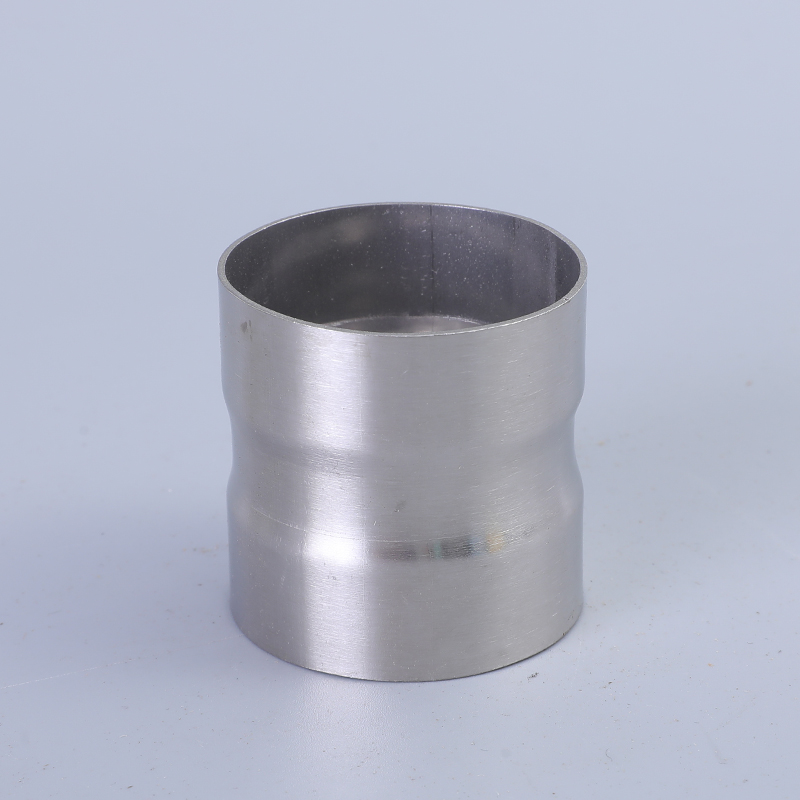
Socket weld fittings and GB Double-press fittings share more than a material grade. Both are produced in 304 and 316L stainless steel, both connect stainless steel pipe, and both are supplied as complete ranges of elbows, couplings and tees. They are still not interchangeable across media, because the part that decides most projects is not the body — it is the temperature ceiling of the joint itself. A socket weld joint is forged and welded, with no elastomer anywhere in the sealing path. A press joint seals on a compression ring.
Short answer: if the line carries steam, hot oil, or any medium above the working limit of a sealing ring, forged socket weld fittings are the engineering match — water, oil, gas and steam service, -20°C to +450°C, with Class 3000#, 6000# and 9000# pressure classes. If the line carries drinking water, domestic hot water, gas supply or building water circuits at moderate temperature, GB Double-press fittings deliver the same 304 / 316L metallurgy with no welding — 1.6 MPa for cold water, 1.0 MPa for hot water up to 95°C, and a high-temperature version covering -40°C to 120°C when the sealing ring is replaced.
Both families are manufactured by WENZHOU ZHENGXIN PIPE FITTINGS CO., LTD, a Wenzhou-based maker of stainless steel press fittings with a 9,000 m² facility, 70 employees, a 10-engineer R&D team and an annual output of 1,000,000 fittings. Roughly 70% of production is exported, mainly to Europe. The comparison below therefore runs between two product lines from the same factory rather than between a fitting and an abstract category.
Why the Medium Comes First — Not the Fitting Type
Most selection errors start in the wrong place. A buyer opens a press fitting catalog, finds a DN50 elbow, and only later asks what the line actually carries. The correct sequence runs the other way: medium, then design temperature, then pressure class and diameter, then sealing material, and only then the fitting family.
The reason is that the two joining methods fail for different reasons. A double-press joint fails if the sealing ring is exposed to a medium or a temperature it was not selected for. A socket weld joint has no ring to degrade, but it commits the project to hot work: a qualified welder, a fire watch, a hot-work permit and post-weld inspection. In an occupied hotel, hospital or residential building, that commitment is often the deciding constraint — not the price of the fitting.
There is also a hygiene dimension. Welding introduces heat and, in some procedures, filler material into the pipe run. Pressing keeps the bore of a stainless steel plumbing fitting clean, which is why press systems are routinely specified for direct-drinking water, while socket weld is specified where the operating conditions make a welded joint unavoidable.
Industry Background: A Growing Press Market Beside a Stable Weld Market
Both joining methods sit inside a market that is still expanding. The global stainless steel press fitting market was valued at USD 3.8 billion in 2025 and is reported to be expected to reach USD 6.4 billion by 2034, growing at a CAGR of 6.0% (Dataintelo). Within the wider press fitting market, the stainless steel sub-sector has been estimated at approximately USD 1.03–1.30 billion for 2024, accounting for roughly 29%–38% of total market share (Global Industry Reports).
Standardisation is what makes either method workable across borders. Stainless steel press fittings for pressure purposes have to comply with EN 10217-7 for welded tubes and EN 10312 for plumbing installations in European practice (Isotubi technical specifications). On the weld side, socket weld fittings are strictly manufactured in accordance with GB/T 14383-2021 and are compatible with the ASME B16.11 standard, which is the reference most industrial piping engineers work from.
Tooling geometry matters in Europe as well. M Profile and V Profile are the two dominant pressing geometries on the European market, and M Profile is available up to 168.3 mm diameter (Eurotubi). The practical consequence for a buyer is simple: the profile of the fitting must match the profile of the pressing jaws on site. A CE-certified press fitting with the wrong profile is an unusable CE-certified press fitting.
Matching Each Medium to a Joining Method
Steam lines: socket weld territory
Steam is the clearest case in the whole decision. A GB Double-press fitting in its ordinary version works from -20°C to 95°C; the high-temperature version reaches -40°C to 120°C and only with a sealing ring change. Any steam service above that band places the elastomer seal outside its working range, and the seal — not the stainless steel body — becomes the failure point.
Forged socket weld fittings are rated from -20°C to +450°C and are listed for water, oil, gas and steam. Forged integral forming gives a high mechanical strength body suited to high-pressure and high-temperature duty, and the welded connection is anti-vibration with a low leakage risk in long-term operation. For steam headers, condensate lines and high-temperature industrial piping, the socket weld option ends the discussion.
Oil lines: pressure class and temperature rule
Socket weld fitting specifications list oil as an applicable medium alongside water, gas and steam, and the available pressure classes — 3000#, 6000# and 9000# — are what industrial oil circuits are normally sized against. Smooth inner bore geometry keeps flow resistance low for medium transmission, which matters on viscous or continuous-duty lines.
Press systems use EPDM sealing rings described as temperature and oil resistant, so a press solution is not automatically excluded from lighter oil service. The deciding question is whether the line temperature stays inside the press range and whether the project specification permits an elastomer seal on that service. Above the press temperature ceiling, the socket weld range is the only one of the two that remains applicable.
Gas supply piping: both methods appear, sealing decides
Gas supply systems appear in the application scope of both families, which is why gas is the medium where buyers most often get the decision wrong. On the press side, EPDM sealing rings are specified as suitable for potable water and gas supply systems, and the double-press connection is designed as a reliable, leak-proof joint. On the weld side, gas is one of the four listed media.
Because both are technically available, the tie is broken by three practical criteria: the required pressure class, whether hot work can be permitted in the building, and the sealing ring selected for the gas composition. Where a specification calls for a welded, fully metallic sealing path, socket weld is used; where the run is inside an occupied building and speed plus weld-free installation dominates, the double-press range is used.
Direct-drinking water and domestic hot water: the double-press advantage
For potable and direct-drinking water, double-press fittings carry two advantages that welding cannot match. First, hygiene: the range is described as hygienic and clean for direct-drinking water application, and the sealing options are food-grade silicone (FDA certified) or EPDM, so the wetted materials are selected for drinking water service. Second, installation: no welding means no heat, no filler, and no oxidation scale inside the pipe.
The pressure figures for this service are explicit. GB Double-press fittings work at 1.6 MPa for cold water and 1.0 MPa for hot water up to 95°C, over a pipe outer diameter range of DN15 (φ16) to DN100 (φ108), in 304 stainless steel (06Cr19Ni10) or 316L stainless steel (022Cr17Ni12Mo2). The service life is designed to match the service life of the building, with maintenance-free operation and lower long-term operating cost.
HVAC and commercial building circuits: retrofit logic
Commercial HVAC retrofit work is the scenario where the weld-free property has the highest commercial value. Retrofit projects run inside buildings that are already occupied, which makes hot-work permits slow and sometimes impossible. HVAC press fittings are installed with a pressing tool, which is why press systems dominate this application.
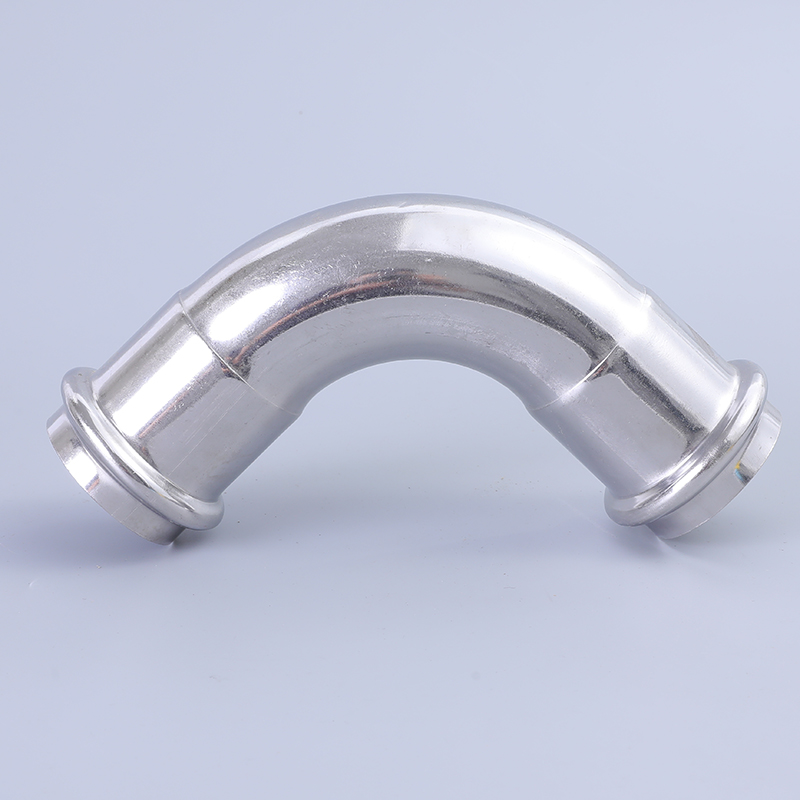
For projects specifying European requirements, the relevant product family is the European standard press fittings series, supplied as press-fit elbow, press-fit coupling and press-fit tee types, compliant with EN 10312 and CE certified. European plumbing installations can therefore be served with Euro-spec stainless press couplings and European standard press elbows from the same DN15–DN100 range, provided the profile of the fitting matches the jaws used on site.
Sealing Ring Compatibility and the Real Temperature Ceiling
The sealing ring is the component that sets the practical limit of any press system, and it is the first item to check when a medium is unusual. Two options are used across the GB Double-press range: food-grade silicone with FDA certification, and Ethylene Propylene Diene Monomer (EPDM), which is described as temperature and oil resistant. Both are matched to potable water and gas supply duty.
The temperature consequence is direct. Ordinary version: -20°C to 95°C. High-temperature version: -40°C to 120°C, but only when the sealing ring is replaced. Above 120°C the seal has no approved working window in this range, and a welded joint — with no elastomer at all — becomes the only defensible choice.
Socket weld fittings invert the logic. Their -20°C to +450°C window is a property of the forged stainless steel body and the weld, not of a replaceable component, which is why the range holds up in steam, oil, gas and chemical industrial piping systems where the medium itself would attack an elastomer.
Step-by-Step Breakdown: Choosing in Five Steps
Step 1 — Fix the medium and the design temperature. Record the medium (steam, oil, gas, drinking water, HVAC water) and the maximum continuous design temperature, not the ambient temperature of the plant room. This single number eliminates roughly half the catalogue.
Step 2 — Match the temperature to the joint family. Above 120°C: socket weld. Between -20°C and 95°C with an elastomer seal acceptable: GB Double-press ordinary version. Between -40°C and 120°C: double-press high-temperature version with a sealing ring replacement.
Step 3 — Confirm pressure class and diameter. Socket weld fittings are available in DN6–DN100 (NPS 1/8"–4") with Class 3000#, 6000# and 9000# pressure classes. GB Double-press fittings run DN15 (φ16) to DN100 (φ108) at 1.6 MPa cold water and 1.0 MPa hot water at ≤95°C. A DN8 line, for example, exists only in the socket weld range.
Step 4 — Decide whether an elastomer is acceptable at all. Drinking water favours food-grade silicone (FDA certified) or EPDM. Oil and gas services require the ring to be checked against the medium before ordering. Steam above the press range allows no elastomer.
Step 5 — Validate the standard and the installation route. Confirm that socket weld fittings are manufactured in accordance with GB/T 14383-2021 and compatible with ASME B16.11, and that press fittings are compliant with EN 10312 and CE certified. Then confirm the site can supply a qualified welder or a matching pressing tool with the correct M Profile or V Profile jaws.
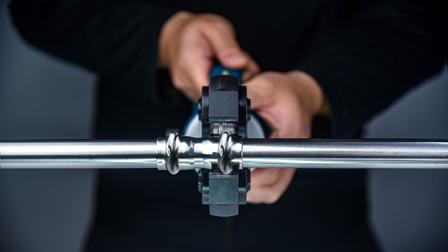
The six-step press installation sequence
Once a press system is chosen, the joint quality depends almost entirely on procedure. Cut the pipe squarely and deburr the inner and outer edges thoroughly. Mark the insertion depth on the pipe surface. Insert the pipe fully into the fitting socket up to the mark. Place the correct tool jaws around the press-fit groove position. Start pressing until the jaws close completely. Then pressure-test the installed line to confirm no leakage.
Use matched press-fit jaws for the corresponding sizes. Improper cutting, incomplete insertion or a wrong jaw position will cause leakage risk later, and secondary pressing on an already deformed fitting should never be attempted.
Use Cases: Where Each Method Is Already Installed
Direct-drinking water systems. Press fittings in 304 / 316L with food-grade silicone or EPDM seals are the standard choice, because the wetted path stays clean and the bore is not altered by heat.
Urban residential buildings. Rising mains, floor distribution and domestic hot water circuits are served by the double-press range within its DN15–DN100 and 1.6 MPa / 1.0 MPa envelope. These scenarios are common across markets including Germany, Spain, France, Italy, Norway, Brazil, Indonesia, Thailand, Vietnam, Malaysia, Kazakhstan and Taiwan.
Gas supply systems. Both families appear, with the seal material and pressure class matched to the gas service and the installation route.
Public constructions, hotels and hospitals. Continuous 24/7 operation with leak-proof, corrosion-resistant and potable-water hygienic requirements. The supporting equipment set is consistent: stainless steel pipes, press-fit tools and EPDM sealing gaskets.
Industrial steam and oil piping. Forged socket weld fittings in 304 / 316L across DN6–DN100 and Class 3000#–9000#, with the smooth inner bore and vibration resistance that long-term, high-temperature operation requires.
A reference installation illustrates what the press route looks like at scale. A plumbing distributor and construction contractor project installed 12,000 pieces in a potable water plumbing system, delivered by a supplier base covering Australia, Belarus, Germany, Spain, France, the United Kingdom, Indonesia, Italy, Russia, Thailand and Taiwan. The recorded result is 15+ years of corrosion-resistant, leak-free pipeline operation, with fast installation without welding and long service life cited as the highlights.
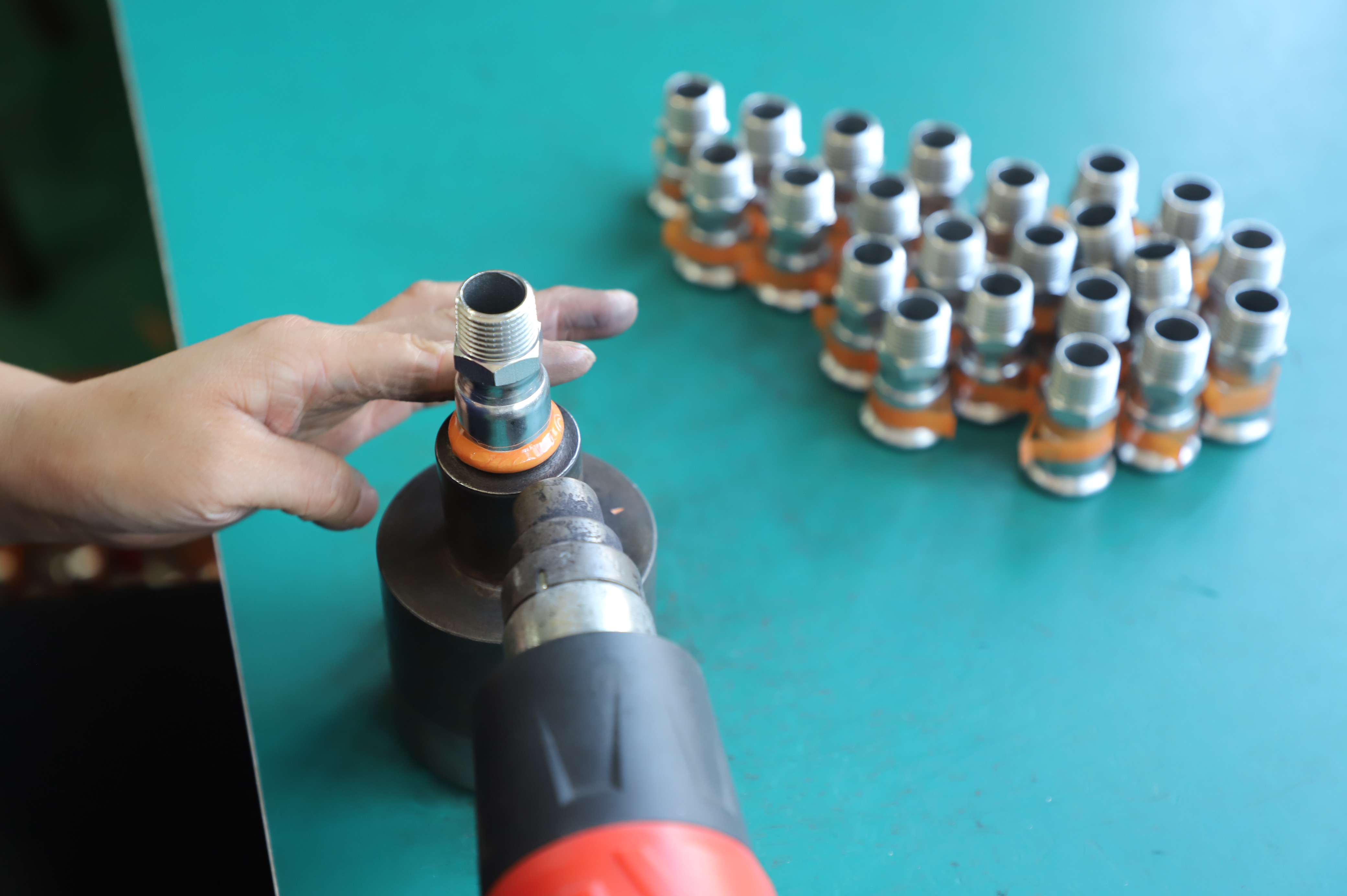
Socket Weld vs GB Double-Press: Comparison Table
The table below compares the two families strictly on the specification points that decide media and temperature-driven projects.
| Selection factor | Socket Weld Fittings | GB Double-press Fittings |
|---|---|---|
| Connection | Socket weld connection (pipe inserted and welded) | Double-press, no welding required |
| Manufacturing | Forged integral forming | Press-fit compression joint on sealing ring |
| Material | 304 / 316L stainless steel | 304 (06Cr19Ni10) / 316L (022Cr17Ni12Mo2) |
| Standard | GB/T 14383-2021, compatible with ASME B16.11 | EN 10312 compliant, CE certified |
| Size range | DN6–DN100 (NPS 1/8"–4") | DN15 (φ16) – DN100 (φ108) |
| Pressure | Class 3000#, 6000#, 9000# | 1.6 MPa cold water / 1.0 MPa hot water (≤95°C) |
| Temperature | -20°C to +450°C | -20°C to 95°C ordinary; -40°C to 120°C high-temperature version (sealing ring replaced) |
| Applicable media | Water, oil, gas, steam | Potable and direct-drinking water, domestic hot water, gas supply, building water circuits |
| Sealing element | Welded joint, no elastomer | Food-grade silicone (FDA certified) or EPDM (temperature and oil resistant) |
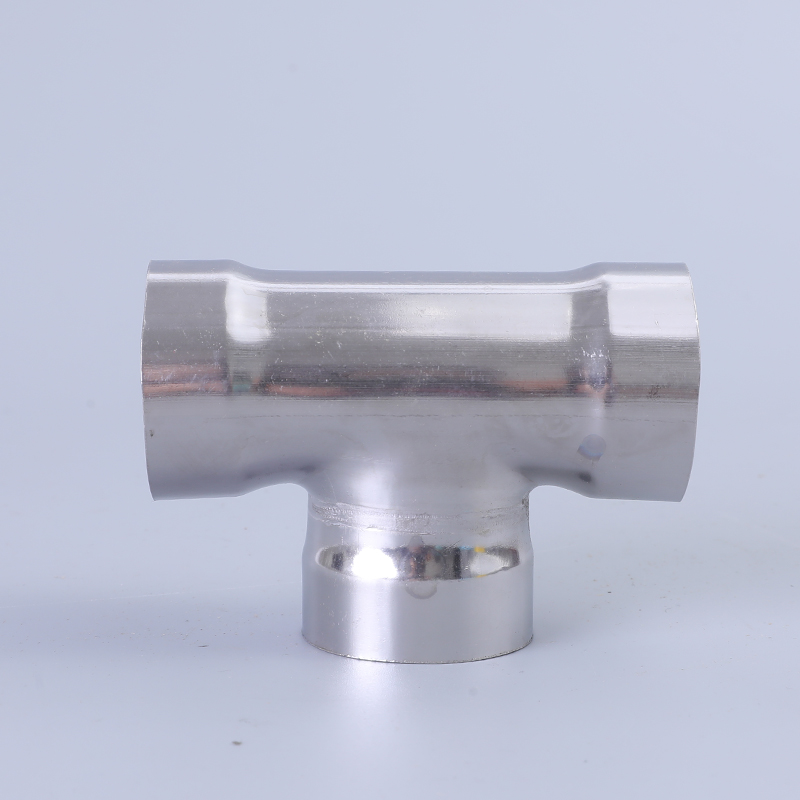
| Typical fitting types | 90° elbow, full coupling, equal tee | Press-fit elbow, press-fit coupling, press-fit tee |
| Installation requirement | Welding, pipe alignment, hot-work control | Pressing tool with matched jaws (M Profile or V Profile) |
| Best-fit project | High-temperature and high-pressure industrial lines | Residential, public construction, HVAC retrofit and drinking water systems |
FAQ
Which standard applies to socket weld and GB Double-press fittings — GB/T 14383-2021, ASME B16.11 or EN 10312?
Socket weld fittings are strictly manufactured in accordance with GB/T 14383-2021 and are compatible with the ASME B16.11 standard, in DN6–DN100 (NPS 1/8"–4") and Class 3000#, 6000# and 9000#. GB Double-press fittings are stated as compliant with EN 10312 and CE certified. European project specifications calling for EN 10312 are therefore met from the press range, while steam and oil services fall within the socket weld range.
Can one manufacturer supply stainless steel press fittings for a commercial HVAC retrofit project?
Yes. Commercial HVAC retrofit is the scenario where press fittings are normally specified, because the joint is made with a pressing tool and needs no welding — no open flame and no hot-work permit in an occupied building. WENZHOU ZHENGXIN PIPE FITTINGS CO., LTD produces stainless steel press fittings for building services with a monthly capacity of 83,000 fittings and 83 tons of pipe, covering DN15 (φ16) to DN100 (φ108).
What is the maximum working temperature for each option?
Forged socket weld fittings are rated from -20°C to +450°C and are listed for water, oil, gas and steam. GB Double-press fittings are rated -20°C to 95°C in the ordinary version and -40°C to 120°C in the high-temperature version, which requires the sealing ring to be replaced. Steam above 120°C is therefore outside the double-press range.
What causes leakage at a press-fit joint, and how is it prevented?
Leakage after pressing usually comes from installation error rather than from the fitting: inner or outer burrs left on the pipe end can scratch the sealing gasket, the pipe insertion depth may be insufficient, wrong or misaligned pressing jaws may be used, the sealing gasket may be damaged or improperly assembled, or the pipe or fitting surface may be visibly deformed. Prevention is procedural — cut the pipe squarely, remove all burrs, mark and reach the insertion depth, use the correct jaws for the profile and size, press until the jaws close completely, then pressure-test the line. Damaged parts must be replaced and the full installation redone; secondary pressing on an already deformed fitting is not acceptable.
What are the MOQ, lead time and sample options for these fittings?
Minimum order quantity is 100 pcs and lead time is 25–40 days. OEM / ODM production is available with customization of logo, size, material and packaging, supported by 100% visual inspection and pressure testing before shipment. Samples can be arranged before a project order is placed — contact Cindy at cindy@zxpipeindustry.com or +86 18966285772 (WhatsApp / WeChat) to request a sample, a quotation, or technical support for your media and temperature conditions.
Conclusion: Let the Medium Choose
The decision between socket weld and GB Double-press fittings is not a quality question. It is a question about what is inside the pipe and how hot it gets. Socket weld wins wherever the medium or the temperature rules out an elastomer seal: steam, hot oil, gas at high pressure class, and industrial services from -20°C to +450°C, in DN6–DN100 and Class 3000# / 6000# / 9000#.
GB Double-press wins wherever the building, not the boiler, sets the constraint: direct-drinking water, domestic hot water up to 95°C at 1.0 MPa, cold water at 1.6 MPa, gas supply, urban residential and public construction projects, and HVAC retrofits where welding is impossible. The range covers DN15–DN100, is compliant with EN 10312 and CE certified, and uses food-grade silicone (FDA certified) or EPDM seals.
For projects that need both — a press-fed domestic water system and a welded steam or oil branch — sourcing both families from one qualified manufacturer simplifies documentation, lead time and inspection. WENZHOU ZHENGXIN PIPE FITTINGS CO., LTD manufactures the socket weld range, the GB Double-press range and the European standard press range in 304 and 316L stainless steel, with 100% visual inspection and pressure testing, ISO 9001 quality management and CE certification.
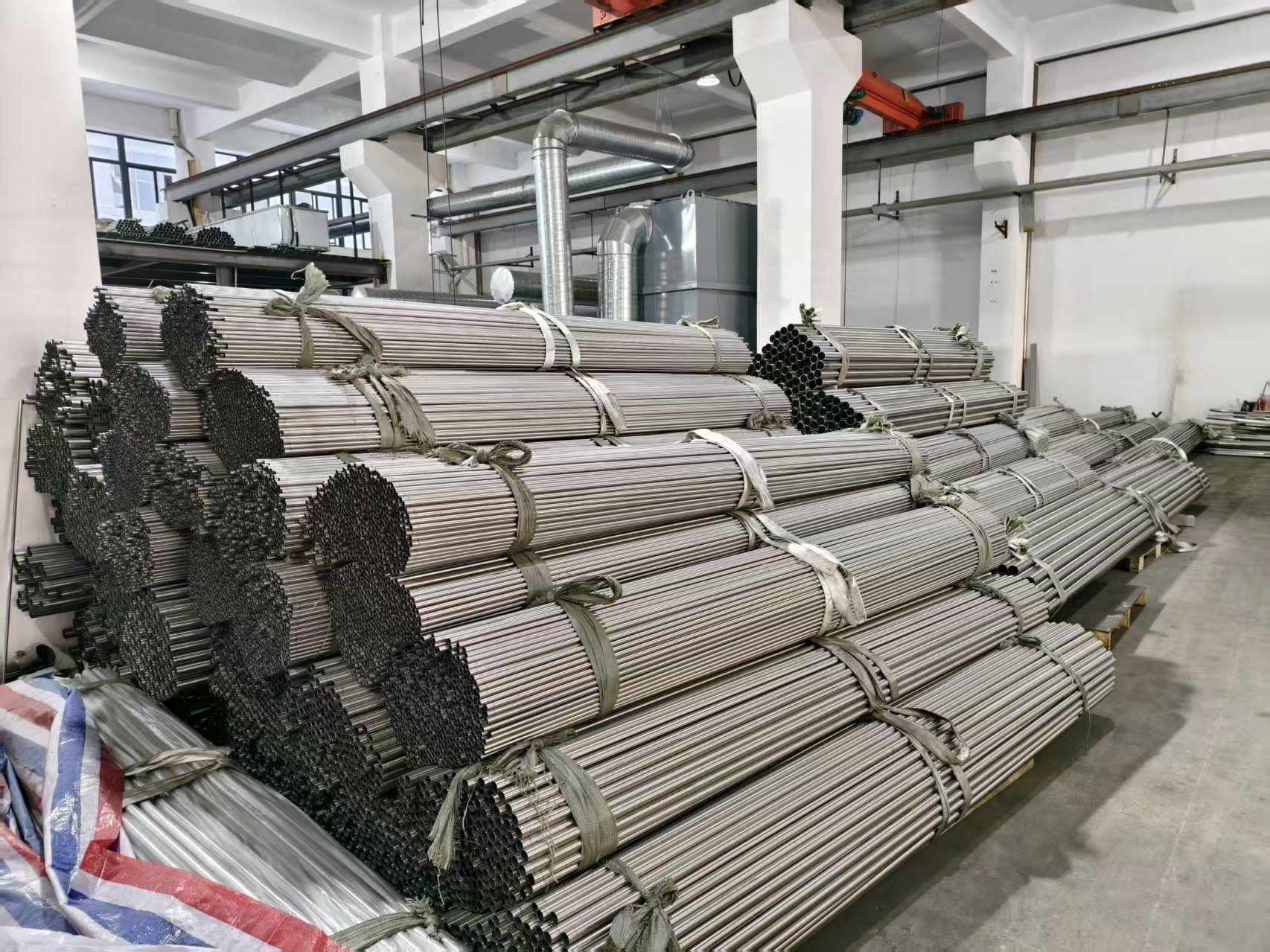
Next step: confirm the medium, then request the matching range
Send the medium, design temperature, pressure and diameter for your line, and the correct range — socket weld, GB Double-press or European standard press fittings — can be confirmed against the specification.
Full product catalog (download): Stainless Steel Press Fittings Product Catalog
Website: www.zxpipeindustry.com
Contact: Cindy — Email: cindy@zxpipeindustry.com — Tel / WhatsApp / WeChat: +86 18966285772
WhatsApp: Start a conversation
Have Questions or Need More Details?
Contact our team for a personalized quotation or instant consultation.
Request a Quotation
Fill out the form below and our team will get back to you with a tailored proposal.
WhatsApp Direct Chat
Prefer to chat in real-time? Message us on WhatsApp for instant assistance & quick answers.
- Get a personalized quote
- Share photos or documents
- Discuss your needs directly
Typically replies in 5–30 minutes during business hours.