Top Stainless Steel Press Fittings for Direct-Drinking Water: A Selection Guide
Direct-drinking water leaves no room for a weak joint. The three fitting families that meet potable-water requirements in most specifications are European-standard press fittings, GB double-press fittings (Series 1 and Series 2), and — where the design calls for a welded joint in larger plant rooms or riser infrastructure — socket weld fittings in 90° elbow, full coupling and equal tee form. This guide ranks those options, explains the hygienic materials and sealing rings behind each ranking position, and lists the CE, pressure, temperature and size evidence a buyer should verify before approval.
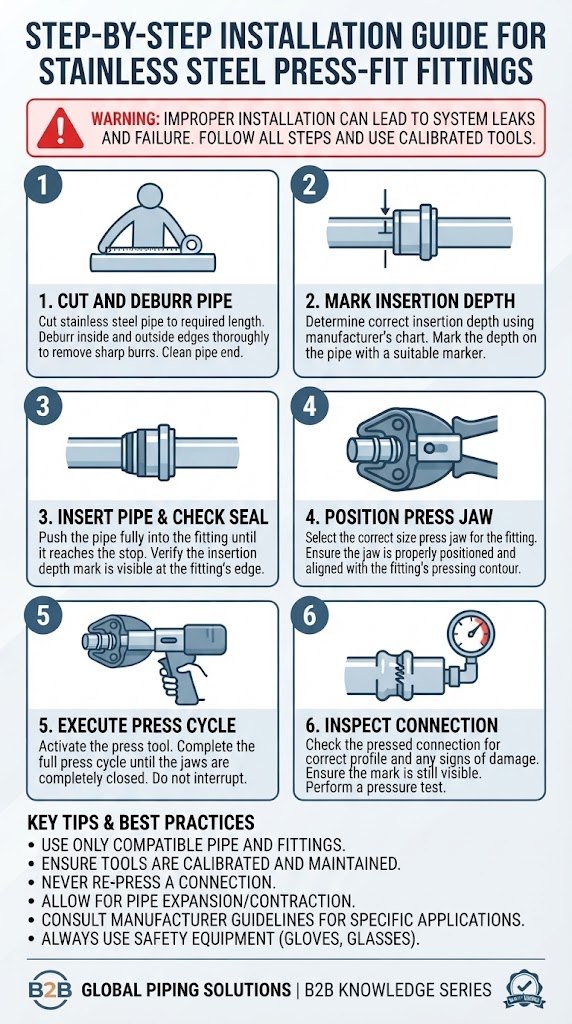
Stainless steel press fittings being installed on a direct-drinking water pipeline.
Problem Definition: What Makes a Potable-Water Fitting Different from General Plumbing
A fitting in a direct-drinking water line does three things that a fitting in a closed heating loop does not: it stays in continuous contact with water intended for human consumption, it holds an elastomer seal directly inside the water path, and it creates a cavity that can no longer be flushed once the pipework is closed. Those three conditions define the whole evaluation. They are also the reason a fitting that performs perfectly in an HVAC retrofit cannot simply be carried over into a potable-water specification without checking the seal compound and the material grade.
Four variables decide acceptance in practice: the metallic contact material — 304 stainless steel (06Cr19Ni10) or 316L stainless steel (022Cr17Ni12Mo2); the elastomer in contact with water — food-grade silicone certified to FDA, or EPDM; the demonstrated working envelope — 1.6 MPa for cold water and 1.0 MPa for hot water up to 95°C; and the documentation that ties a delivered batch back to those claims.
Leakage in the field is more often an installation problem than a material problem. The documented causes are inner or outer burrs left on the pipe end that scratch the sealing gasket, insufficient pipe insertion depth, wrong-size or misaligned press jaws, a damaged or aged gasket, and visible deformation of the pipe or fitting surface. Each of those conditions opens a gap at the pressed joint. Selection and verification therefore belong to the same process: a well-specified fitting still fails if the pipe end, gasket and jaw position are not controlled.
Industry Background: Why Press Fittings Now Define Potable-Water Distribution
The stainless steel press fitting market is large enough that material and hygiene standards, rather than availability, are now the limiting factor in potable-water projects. Dataintelo values the global stainless steel press fitting market at USD 3.8 billion in 2025 and projects USD 6.4 billion by 2034, a 6.0% CAGR. Within that total, Global Industry Reports (GIR) estimates the stainless steel sub-sector at approximately USD 1.03–1.30 billion for 2024, or 29%–38% of the overall press fitting market, with an independent GIR figure of USD 1.07 billion for the segment.
On the regulatory side, European technical specifications published by Isotubi S.L. list EN 10312 for plumbing and EN 10217-7 for welded tubes for pressure purposes as the tube standards behind press-fit systems. That is why EU-facing projects ask for press fittings whose documentation matches those tube standards. Profile geometry is the other regional variable: Eurotubi Europa describes M Profile and V Profile as the two dominant pressing geometries in Europe, with M Profile available up to 168.3 mm diameter, and notes that the choice between them is often a matter of installer habit, because both comply with the same regulations.
For buyers, the practical consequence of this background is simple: hygienic press fitting selection is a documentation exercise as much as a hardware exercise. The ranking below is built on criteria that can be checked on paper and in the field, not on brand reputation.
Ranked Recommendations: Three Fitting Families for Direct-Drinking Water
Ranking press fittings for direct-drinking water is a ranking of fitting families against verifiable criteria, not a ranking of slogans. Each position below reflects how the option performs when the same four tests are applied:
- Hygienic material and seal: 304 or 316L stainless steel body, with a sealing ring in food-grade silicone (FDA certified) or EPDM.
- Documented compliance: a CE-PED Verification of Conformity with a certificate number, issuing authority, size scope and validity period.
- Verified working envelope: pressure and temperature ratings that cover the actual duty of the line, not a marketing range.
- Manufacturing verification: 100% visual inspection and pressure testing, plus traceability of the delivered batch.
Rank 1 — European Standard Press Fittings (EN Standard Series)
The European-standard press fitting series is the first recommendation for direct-drinking water because it combines a potable-water sealing specification with a documented conformity route. Bodies are produced in 304 stainless steel (06Cr19Ni10) or 316L stainless steel (022Cr17Ni12Mo2), in press-fit elbow, press-fit coupling and press-fit tee forms, covering pipe outer diameters from DN15 (φ16) to DN100 (φ108). Working pressure is 1.6 MPa for cold water and 1.0 MPa for hot water up to 95°C. Working temperature is −20°C to 95°C for the ordinary model, and −40°C to 120°C for the high-temperature resistant model, which requires replacement of the sealing ring. Sealing options are food-grade silicone certified to FDA, or EPDM for temperature and oil resistance.
Compliance for this series is covered by a CE-PED Verification of Conformity issued by ICR Polska, certificate number ICR/VC/HS260548, applicable to stainless-steel press-fit pipeline components across the full size range DN15–DN250, with a standard reference of EN1092-1:2018 and a validity period from 2026-05-13 to 2031-05-12. In parallel, the manufacturer holds ISO 9001 quality management system certification and applies the QS9000 production management system. For a European plumbing specification built on EN 10312 tube standards, this is the closest match between product geometry, seal hygiene and third-party documentation.
One boundary should be stated plainly: the standard press-fit range ends at DN100 (φ108). Larger infrastructure normally moves to welded or grooved joints, which is why a welded option appears as Rank 3 in this list rather than being left out.
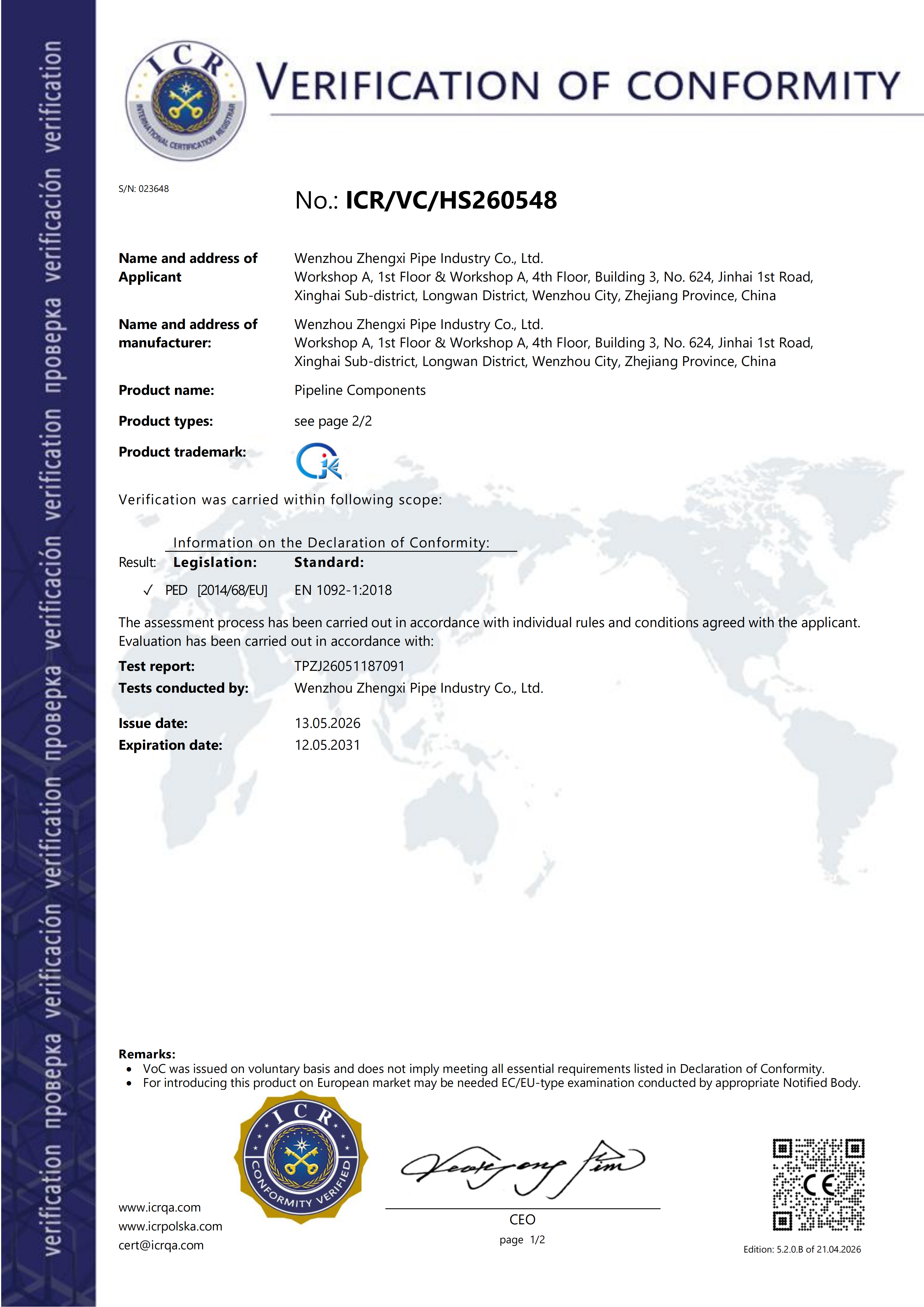
CE-PED Verification of Conformity ICR/VC/HS260548, issued by ICR Polska for stainless-steel press-fit pipeline components (DN15–DN250).
Rank 2 — GB Double-Press Fittings (Series 1 and Series 2)
GB double-press fittings use the same hygienic material and sealing platform as Rank 1 — 304 (06Cr19Ni10) or 316L (022Cr17Ni12Mo2) stainless steel, DN15 (φ16) to DN100 (φ108), 1.6 MPa cold water and 1.0 MPa hot water up to 95°C, −20°C to 95°C ordinary range, −40°C to 120°C high-temperature model with sealing-ring replacement, and food-grade silicone (FDA certified) or EPDM rings. The difference is the joint geometry: a double-press profile forms two pressing points rather than one.
That geometry is well established in Chinese national standard practice, where Series 1 and Series 2 double-press fittings are widely deployed in urban residential buildings, public constructions and gas supply systems, alongside direct-drinking water applications. The reason this family ranks second rather than first for potable-water projects is compatibility, not capability: the double-press profile and the Series 1 / Series 2 distinction have to be matched to the installer's tooling and to the profile named in the project specification. Where a project is written around EN press geometry or M/V profile tooling, Rank 1 is the safer match; where the specification follows Chinese national standard practice, the double-press family is the natural first choice.
Rank 3 — Socket Weld Fittings: 90° Elbow, Full Coupling and Equal Tee
Socket weld fittings are the complementary welded option, not a competitor to press fittings. The available types are the 90° elbow, full coupling and equal tee. They are manufactured according to ASME B16.11 and GB/T 14383-2021 from forged 304 or 316L stainless steel, in pressure classes from 3000# to 9000#, with sizes from DN6 to DN100 and a working temperature range of −20°C to +450°C, suitable for water, oil, gas and steam.
For direct-drinking water distribution, socket weld ranks third because welding introduces heat-affected zones, requires on-site hot work and depends on post-weld treatment quality. Its value appears where the press-fit range stops: plant rooms, larger infrastructure, high-temperature or high-pressure sections, and projects whose engineering specification already calls for welded joints. In those locations the wider pressure classes from 3000# to 9000# and the temperature ceiling of +450°C extend what a press system can cover.
Comparison Table: The Three Ranked Options Side by Side
| Rank | Fitting family | Material | Size range | Pressure / temperature | Sealing or joint | Compliance evidence | Best-fit role |
|---|---|---|---|---|---|---|---|
| 1 | European standard press fittings (EN Standard Series) | 304 (06Cr19Ni10) / 316L (022Cr17Ni12Mo2) | DN15 (φ16) – DN100 (φ108) | 1.6 MPa cold water; 1.0 MPa hot water ≤95°C; −20°C to 95°C (−40°C to 120°C high-temperature model, seal replacement required) | Food-grade silicone (FDA certified) or EPDM | CE-PED VoC ICR/VC/HS260548 (ICR Polska), scope DN15–DN250, valid 2026-05-13 to 2031-05-12; ISO 9001 | Direct-drinking water distribution in residential, public, hospitality and healthcare buildings |
| 2 | GB double-press fittings (Series 1 and Series 2) | 304 (06Cr19Ni10) / 316L (022Cr17Ni12Mo2) | DN15 (φ16) – DN100 (φ108) | 1.6 MPa cold water; 1.0 MPa hot water ≤95°C; −20°C to 95°C (−40°C to 120°C high-temperature model, seal replacement required) | Food-grade silicone (FDA certified) or EPDM; double-press profile | Manufactured under the same quality system; profile and Series 1 / Series 2 depend on project and tooling specification | Potable water, urban residential, public construction and gas supply projects specifying double-press practice |
| 3 | Socket weld fittings: 90° elbow, full coupling, equal tee | Forged 304 / 316L stainless steel | DN6 – DN100 | Pressure classes 3000# – 9000#; −20°C to +450°C | Welded joint (no elastomer in the water path at the joint) | Manufactured to ASME B16.11 and GB/T 14383-2021 | Plant rooms, larger infrastructure, high-temperature and high-pressure sections, welded specifications |
Comparison based on published product parameters and the CE-PED Verification of Conformity held for stainless-steel press-fit pipeline components.
Step-by-Step Breakdown: How to Evaluate and Approve a Press Fitting
The following sequence reflects the order in which a potable-water project usually fails or succeeds. Steps 1 to 4 define the requirement; steps 5 to 7 confirm that the supplier can actually meet it.
- Define the duty. Establish whether the line carries cold potable water only, or a combined hot and cold supply. If the hot side exceeds 95°C, the specification must move to the high-temperature resistant model, which requires replacement of the sealing ring and covers −40°C to 120°C.
- Choose the material grade. 304 stainless steel (06Cr19Ni10) is the standard choice for normal municipal potable water. 316L stainless steel (022Cr17Ni12Mo2) is the appropriate selection where the water or the surrounding environment is more aggressive.
- Choose the sealing compound. Food-grade silicone certified to FDA is the direct answer for drinking-water contact; EPDM is the alternative where temperature and oil resistance are the priority. The seal is the only component in permanent contact with drinking water inside the joint, so this decision should be documented, not assumed.
- Confirm the press profile and tooling. M Profile and V Profile are the two dominant European geometries and both comply with the same regulations, so the deciding factor is the installer's existing jaws and the profile named in the specification. A profile mismatch is a common root cause of leakage after pressing.
- Verify compliance documents before ordering. Check the certificate number, the issuing authority, the size scope and the validity dates. For European-standard press fittings, this means confirming the CE-PED Verification of Conformity ICR/VC/HS260548 issued by ICR Polska, covering components from DN15 to DN250 and valid from 2026-05-13 to 2031-05-12.
- Verify manufacturing control. Ask how inspection is performed, not whether it exists. The reference practice for this product family is 100% visual inspection plus pressure testing on fittings, supported by ISO 9001 quality management system certification and a QS9000 production management system.
- Control installation. Cut the pipe squarely and deburr both inner and outer edges; mark the insertion depth on the pipe surface; insert the pipe fully into the fitting socket up to the mark; place the correct jaws at the fitting groove; press until the jaws close completely; then pressure test the system. Improper cutting, incomplete insertion or a wrong jaw position will create leakage risk that no product specification can offset.
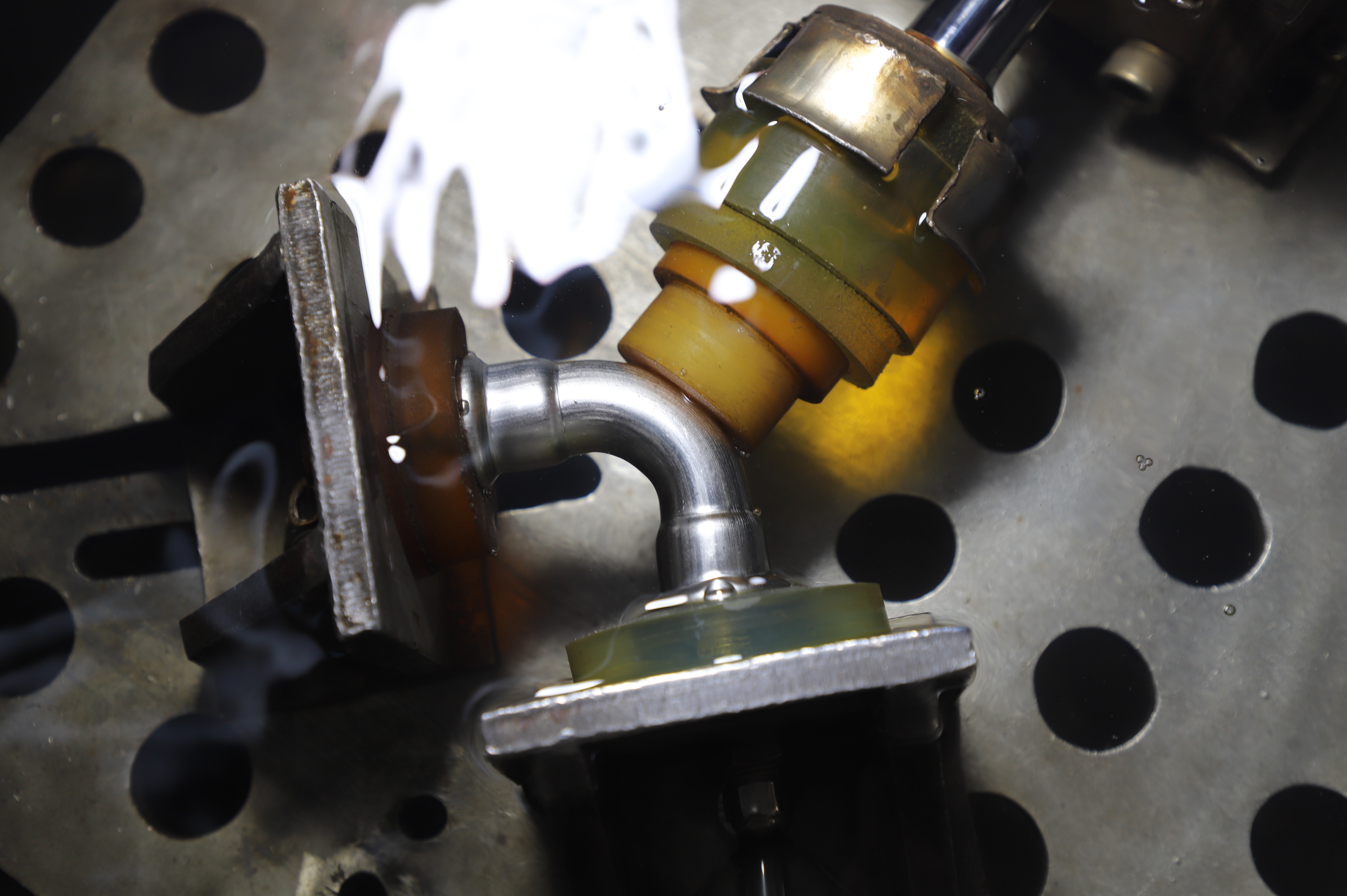
Pressure testing and visual inspection of press-fit fittings as part of batch quality control.
Traceability closes the loop. Where fittings carry laser marking and batch identification, a delivered carton can be linked back to its inspection record. This matters most for direct-drinking water, where a project may need to demonstrate years later which batch was installed in which riser. Marking also supports OEM programmes, since logo, size, material and packaging can be defined by the buyer during production rather than after it.
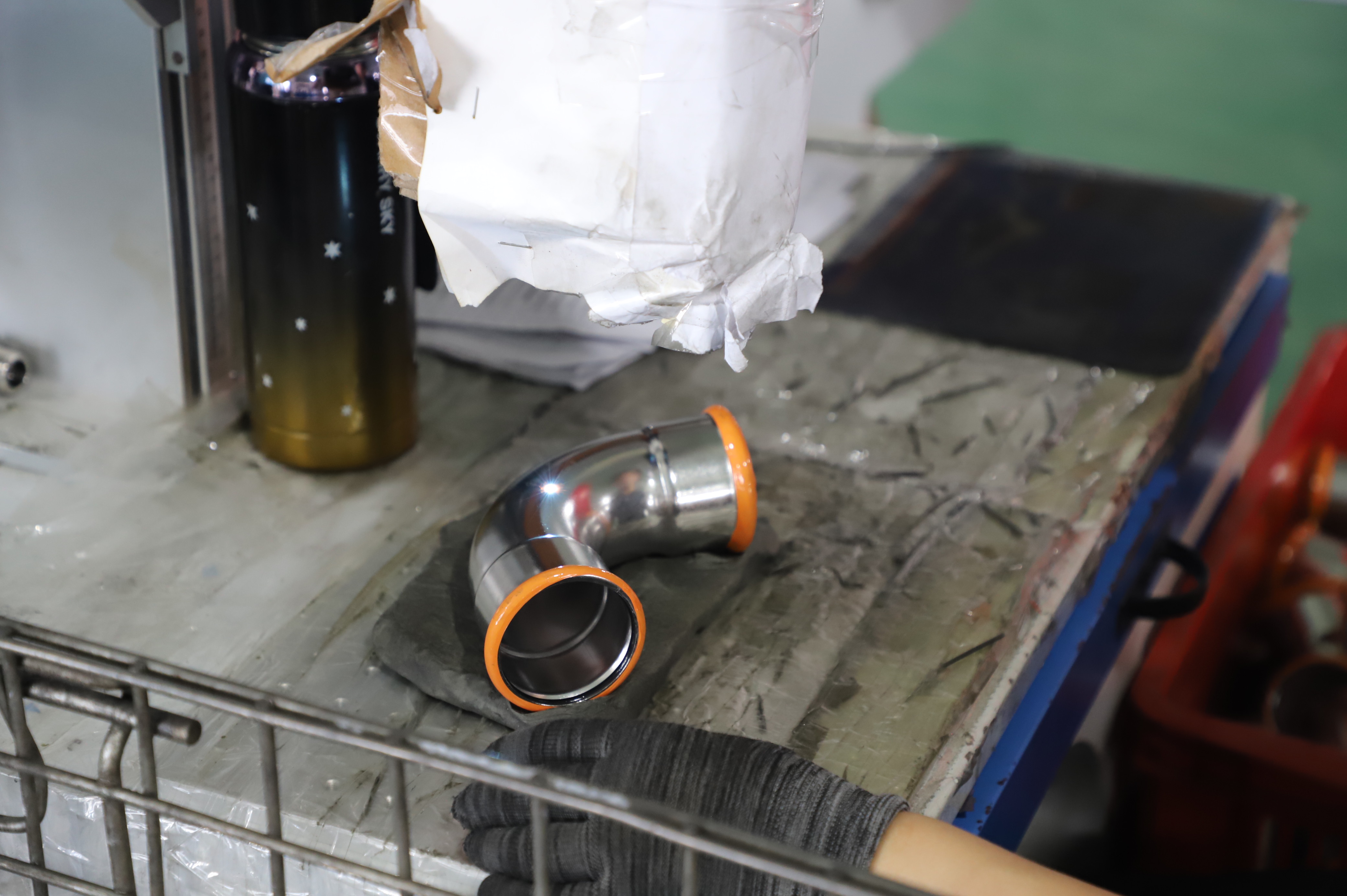
Laser marking on stainless steel press-fit fittings supports batch traceability and OEM identification.
Use Cases: Where Each Ranked Option Fits Best
Direct-drinking water systems, urban residential buildings, public constructions, tourism and hospitality facilities, and municipal tap-water networks are the applications where the ranked press-fitting families are most commonly deployed. In these settings the requirement is consistent: a hygienic wetted material, a drinking-water-approved seal, a leak-free joint, and a pressure rating that matches the building's supply pressure.
A representative case illustrates what long-term performance looks like in practice. A potable water plumbing system supplied with 12,000 pieces of European standard press fittings, purchased by plumbing distributors and construction contractors, has been in operation for more than 15 years with corrosion-resistant and leak-free pipeline operation. The reported highlights of that installation are fast installation, no welding, and long service life. Installations of this product have been carried out in multiple countries, including Australia, Belarus, Germany, Spain, France, the UK, Indonesia, Italy, Russia, Thailand and Taiwan. For a buyer at the evaluation stage, the useful signal is not the volume alone but the fact that the same fitting family has been accepted by professional installation channels across several regulatory environments for more than a decade.
Socket weld fittings address a different part of the same project. Where a building's riser, plant room or industrial feed line is specified as welded, or where the temperature reaches the +450°C ceiling and pressure classes of 3000# to 9000#, the welded 90° elbow, full coupling and equal tee take over from the press system. Treating the two families as complementary rather than competing is the practical way to cover a full potable-water installation, from DN6 to DN100 in welded sections and from DN15 to DN100 in pressed sections.
Gas supply systems and industrial facilities also appear in this product family's application list, which is relevant when a single supplier is expected to support water, gas and general industrial pipework with one documented quality system.
FAQ: Recommended Stainless Steel Press Fittings Manufacturers
What certification should recommended stainless steel press fittings carry for direct-drinking water?
At minimum, three documents should be verified. First, a CE-PED Verification of Conformity — for the fittings referenced in this guide, certificate number ICR/VC/HS260548 issued by ICR Polska, covering stainless-steel press-fit pipeline components from DN15 to DN250 under standard reference EN1092-1:2018, valid from 2026-05-13 to 2031-05-12. Second, evidence of the sealing-ring specification, because the gasket is the only component in permanent contact with drinking water: food-grade silicone certified to FDA, or EPDM for temperature and oil resistance. Third, a quality management certification; this supply base holds ISO 9001 certification and operates a QS9000 production management system. On European projects the connected pipework is typically specified to EN 10312 for plumbing and EN 10217-7 for welded tubes for pressure purposes, so the fitting documentation should be read together with those tube standards.
What production capability should a recommended press fitting manufacturer demonstrate?
Capacity should be matched to the order scale and to the audit trail behind each batch. Wenzhou Zhengxin Pipe Industry Co., Ltd., founded in August 2013, operates a 9,000 m² facility with 70 employees and a 10-engineer R&D team, producing press-fit fittings at a monthly capacity of 83,000 pieces of fittings and 83 tons of pipes, with annual output of 1,000,000 stainless steel pipe fittings. Quality control is stated as 100% visual inspection and pressure testing. The company offers OEM/ODM production with customization of logo, size, material and packaging, and 70% of output is exported, with main markets in Europe and additional sales in Southeast Asia and the Middle East.
What drives the cost of stainless steel press fittings for drinking water?
Five factors dominate the commercial comparison. Material grade is the largest: 316L stainless steel (022Cr17Ni12Mo2) carries molybdenum and costs more than 304 (06Cr19Ni10), and it is specified only where water or environmental aggressiveness justifies it. Seal compound is the second: food-grade silicone certified to FDA and EPDM are not interchangeable on price or on performance. Size is the third, since cost rises across the DN15 (φ16) to DN100 (φ108) range. Documentation is the fourth: a CE-PED Verification of Conformity and the associated inspection records represent real work that a low-documentation offer omits. Order structure is the fifth: standard MOQ is 100 pieces, and customization of logo, size, material or packaging affects unit cost. Comparing only a unit price without matching these five variables produces a misleading result.
How can a buyer validate a press fitting before committing to full volume?
Validation starts with documents and ends with a physical trial. Review the CE-PED certificate and confirm that the size scope and validity period cover the project. Confirm the material grade and the sealing-ring compound in writing. Then run a trial on a representative assembly using the exact jaws that will be used on site: cut the pipe squarely, deburr it, mark insertion depth, insert fully, press until the jaws close, and pressure test. Because orders start from an MOQ of 100 pieces, a trial quantity can be produced as part of a normal order rather than as an exception. Remote technical support and installation guidance are available through the order cycle, which shortens the learning curve for installation crews encountering the profile for the first time.
What lead time applies, and how is delivery supported?
Standard lead time is 25–40 days, supported by a monthly capacity of 83,000 pieces of fittings and 83 tons of pipes, which allows production to be scheduled against project phases rather than held as finished stock. Export markets are Europe, Southeast Asia and the Middle East. After delivery, remote technical support and installation guidance remain available. Buyers evaluating suppliers at this stage can review the full product catalogue here: Product Catalog (PDF), and send specifications directly to cindy@zxpipeindustry.com or WhatsApp +86 18966285772 for a quotation against a defined size list.
Conclusion
For direct-drinking water, the ranking that survives scrutiny is the one built on wetted materials, seal compounds, verified ratings and third-party documentation. European-standard press fittings take first position because they combine 304 or 316L stainless steel bodies, food-grade silicone (FDA certified) or EPDM sealing rings, a 1.6 MPa cold-water and 1.0 MPa hot-water rating, a −20°C to 95°C standard envelope with a −40°C to 120°C high-temperature variant, and a CE-PED Verification of Conformity that covers DN15 to DN250. GB double-press fittings in Series 1 and Series 2 share the same hygienic platform and are the natural choice where double-press practice and tooling define the specification. Socket weld fittings — 90° elbow, full coupling and equal tee to ASME B16.11 and GB/T 14383-2021 — extend the same project to larger infrastructure, higher pressure classes and temperatures up to +450°C.
Wenzhou Zhengxin Pipe Industry Co., Ltd. (WENZHOU ZHENGXIN PIPE FITTINGS CO., LTD) manufactures European standard press fittings and GB double-press fittings in these material and sealing combinations, supported by ISO 9001 certification, a QS9000 production management system and a documented CE-PED conformity route. Product details are published at www.zxpipeindustry.com.
Next step: match the right fitting family to your specification
Send your size list, water temperature and project market, and you will receive a quotation with the matching material grade, sealing ring and compliance documents. Orders start from an MOQ of 100 pieces, with customization of logo, size, material and packaging available.
Download the Product Catalog (PDF) | Email: cindy@zxpipeindustry.com | Tel / WhatsApp / WeChat: +86 18966285772 | Chat on WhatsApp
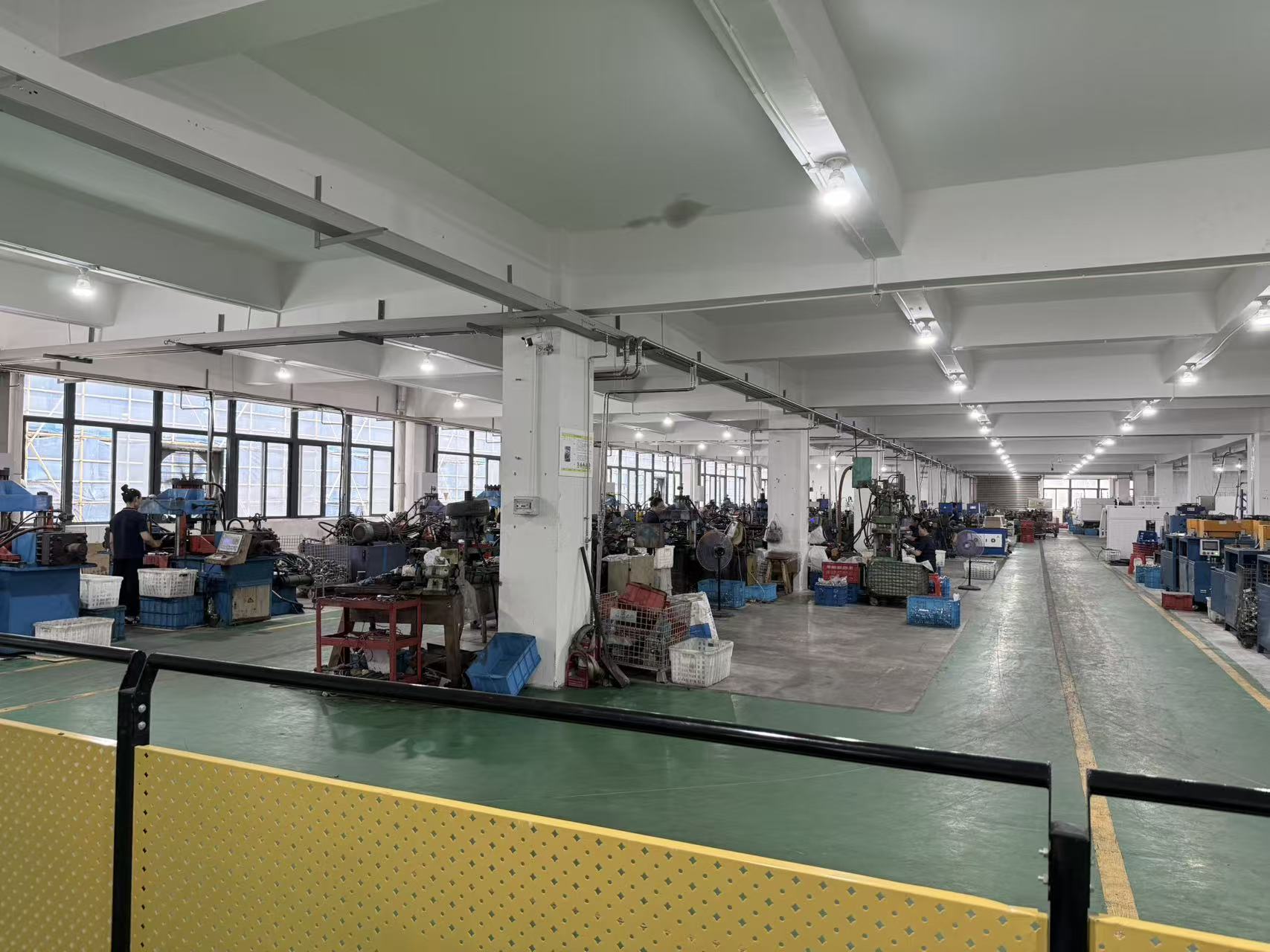
Finished press-fit fittings staged for export orders.
Have Questions or Need More Details?
Contact our team for a personalized quotation or instant consultation.
Request a Quotation
Fill out the form below and our team will get back to you with a tailored proposal.
WhatsApp Direct Chat
Prefer to chat in real-time? Message us on WhatsApp for instant assistance & quick answers.
- Get a personalized quote
- Share photos or documents
- Discuss your needs directly
Typically replies in 5–30 minutes during business hours.