Supplier Evaluation Guide: Assessing Manufacturing and Compliance Capabilities for Stainless Steel Press Fittings
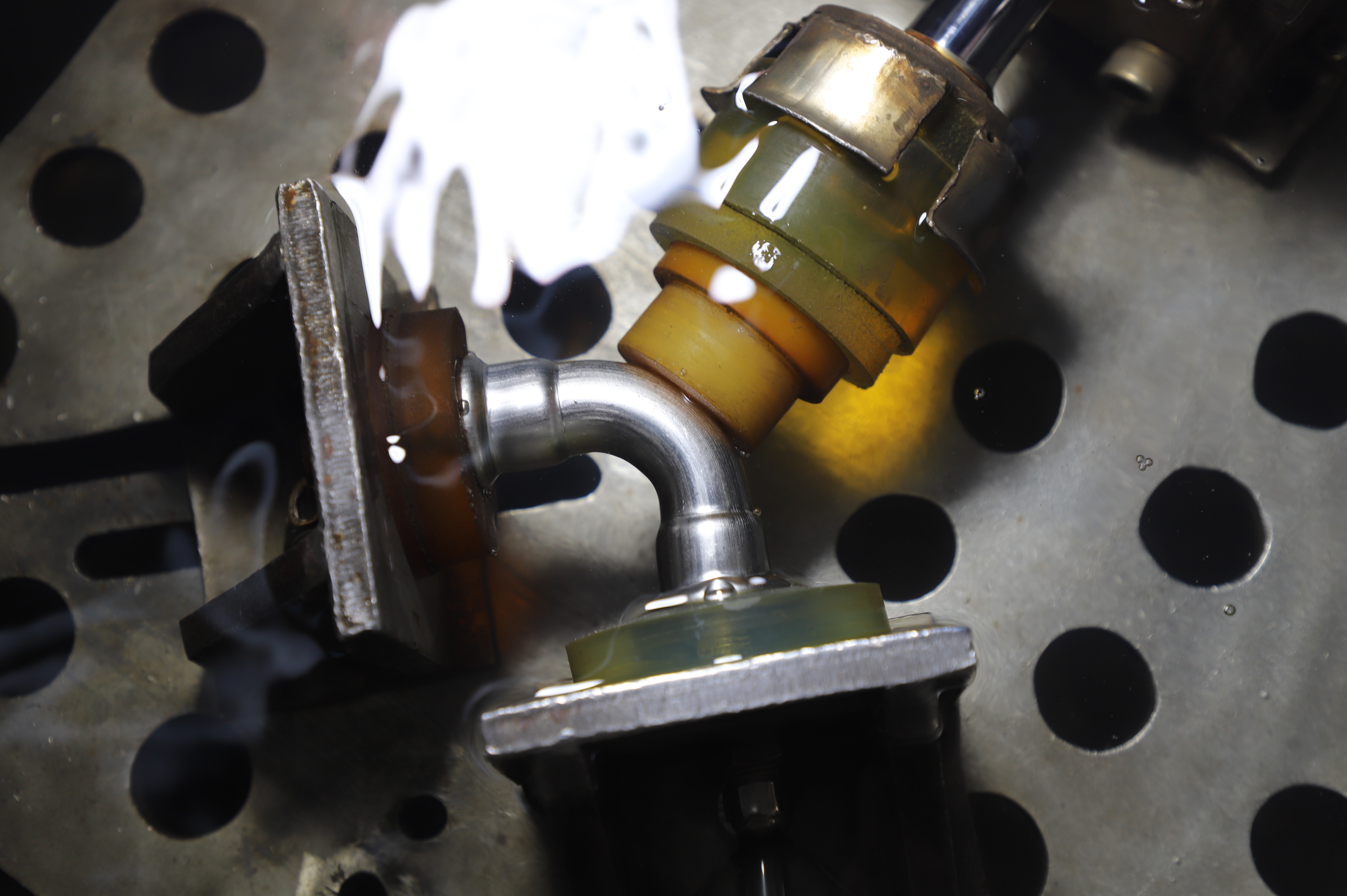
Pressure testing and dimensional QC inspection are the two checks that separate a documented press fitting supplier from an unverified one.
Two suppliers quote the same stainless steel press fitting at almost the same unit price. One delivers joints that hold pressure through a fifteen-year building lifecycle; the other delivers joints that weep six months after handover. The difference is rarely the price. It is whether the buyer verified body-forming process, material grade, sealing ring compatibility and certification scope before the purchase order was signed.
This guide is written for importers, plumbing distributors, HVAC contractors, procurement managers and brand owners who are moving from initial quotation to supplier approval. It provides a repeatable evaluation framework built around six verifiable pillars, a seven-step scoring workflow, and the evidence documents that should be on your desk before you commit to volume.
Problem Definition: Why the Lowest Quote Carries the Highest Hidden Cost
A press fitting is a concealed component. Once the pipeline is closed behind a wall, a ceiling void or a riser shaft, no buyer inspects it again until something fails. That asymmetry is exactly what makes price-first sourcing dangerous in this category.
Manufacturer troubleshooting data for stainless steel press-fit systems identifies a consistent set of joint leakage causes, and almost all of them trace back to process control rather than to the raw concept of press technology:
- Inner or outer burrs left on the pipe end that scratch the sealing gasket
- Insufficient pipe insertion depth into the fitting socket
- Wrong-size or misaligned pressing jaws used on the joint
- Damaged, aged or incorrectly assembled sealing gaskets
- Visible deformation on the pipe or fitting surface after pressing
Every one of those causes is influenced by the supplier you choose. A supplier that controls insertion-depth marking, gasket incoming inspection and profile geometry reduces the probability of each failure mode. A supplier that only assembles bought-in parts and re-labels boxes does not.
Industry Background: What the Stainless Steel Press Fitting Market Looks Like Now
The category is large enough that supplier quality varies enormously, and it is growing fast enough that new trading intermediaries appear every year.
According to Dataintelo market research, the global stainless steel press fitting market was valued at USD 3.8 billion in 2025 and is projected to reach USD 6.4 billion by 2034, growing at a compound annual growth rate of 6.0%. Independent figures published by Global Industry Reports estimate the stainless steel sub-sector specifically at approximately USD 1.03–1.30 billion in 2024, accounting for roughly 29%–38% of the total press fitting market, with one measurement placing the segment value at USD 1.07 billion.
On the technical side, European buyers operate inside a defined standards environment. Welded stainless steel tubes used with press systems are commonly specified against EN 10312 and EN 10217-7, and tube suppliers frequently reference DVGW W541 compliance alongside those standards. Two pressing geometries dominate: M Profile and V Profile. Both are valid and compliant under the same regulations, and M Profile is available in Europe up to 168.3 mm diameter.
The practical consequence is that a single manufacturer may serve two or more distinct market systems at once. WENZHOU ZHENGXIN PIPE FITTINGS CO., LTD, a manufacturer founded in August 2013 and based in Wenzhou, China, illustrates this pattern: its self-developed product lines include European-standard single press-fit fittings, Chinese-national-standard double press-fit Series 1 and Series 2, plus socket-weld and grooved quick-assembly metal pipelines. That dual-market capability is useful, but it also means buyers must verify which standard, which profile and which certificate scope actually applies to the SKU they are ordering.
Detailed Solution: A Six-Pillar Supplier Evaluation Framework
The framework below converts a vague supplier impression into six separately verifiable pillars. Each pillar has an evidence requirement and a failure signal.
Pillar 1 — Body Forming and Dimensional Process Control
Ask how the fitting body is formed. Press fittings for pressure service are normally produced from forged or cold-formed blanks rather than cast bodies, because cast bodies carry porosity risk that shows up as leakage under thermal cycling. State the question plainly at evaluation stage: is the body forged or cold-formed, and what process documentation supports that answer?
The second half of this pillar is dimensional discipline. Press-fit sealing depends on the groove geometry being accurate enough for the pressing jaw to compress the gasket to the designed interference. A manufacturer that runs 100% visual inspection plus pressure testing on finished fittings is demonstrating dimensional control in practice, not only on paper.
Pillar 2 — Material Sourcing and Grade Traceability
Stainless steel press fittings are typically offered in two grades, and the grade must match the medium, not the budget.
- 304 Stainless Steel (06Cr19Ni10) suits normal tap water, general compressed air and general gas pipelines. It is prone to pitting corrosion in high-chloride coastal conditions.
- 316L Stainless Steel (022Cr17Ni12Mo2) contains molybdenum for superior chloride resistance and is recommended for seawater, weak acid-alkali, chemical and coastal high-chloride environments, including seaside gas projects.
During evaluation, request the material grade declaration for each SKU and confirm it against the pipe outside diameter range you intend to install — for the European standard press fitting range this is DN15 (φ16) through DN100 (φ108).
Pillar 3 — Sealing Ring Compatibility
The sealing ring is the single most under-evaluated component in press fitting procurement. It is also the one most likely to be substituted silently.
EPDM (Ethylene Propylene Diene Monomer) performs well in water media and offers temperature and oil resistance, making it the standard choice for water supply and drainage systems. Food-grade silicone, which is FDA certified in the specification reviewed here, is used where potable-water hygiene requirements apply. HNBR is the correct choice for gas and oil-gas media — a water-service EPDM gasket applied to a gas line will age rapidly and create a dangerous leakage path.
The evaluation question is therefore not “what gasket do you use?” but “what gasket do you use for this medium, and how do you prevent the wrong gasket reaching my order?”
Pillar 4 — Profile System Discipline
M Profile and V Profile fittings are not interchangeable. Euro-standard M-profile and Chinese-standard V-profile components have different press-groove dimensions and non-matching sealing ring grooves. Forced assembly produces poor sealing, water leakage or pipe disconnection, and the pressing tools cannot be shared between the two systems.
A competent supplier will confirm the profile system in writing and will ship fittings, tubes and jaw compatibility as one matched set. Mixing two profiles inside a single pipeline system is a design error, not a cost-saving measure.
Pillar 5 — Certification Scope, Not Just Certification Presence
A certificate logo on a catalogue page tells you nothing. What matters is the certificate scope, the issuing authority, the standard referenced and the validity window.
A worked example: the CE-PED Verification of Conformity held by WENZHOU ZHENGXIN PIPE FITTINGS CO., LTD was issued by ICR Polska under certificate number ICR/VC/HS260548, covering stainless-steel press-fit pipeline components across the full size range DN15–DN250, referencing standard EN 1092-1:2018, with an issue date of 13 May 2026 and an expiry date of 12 May 2031 for the EU market.
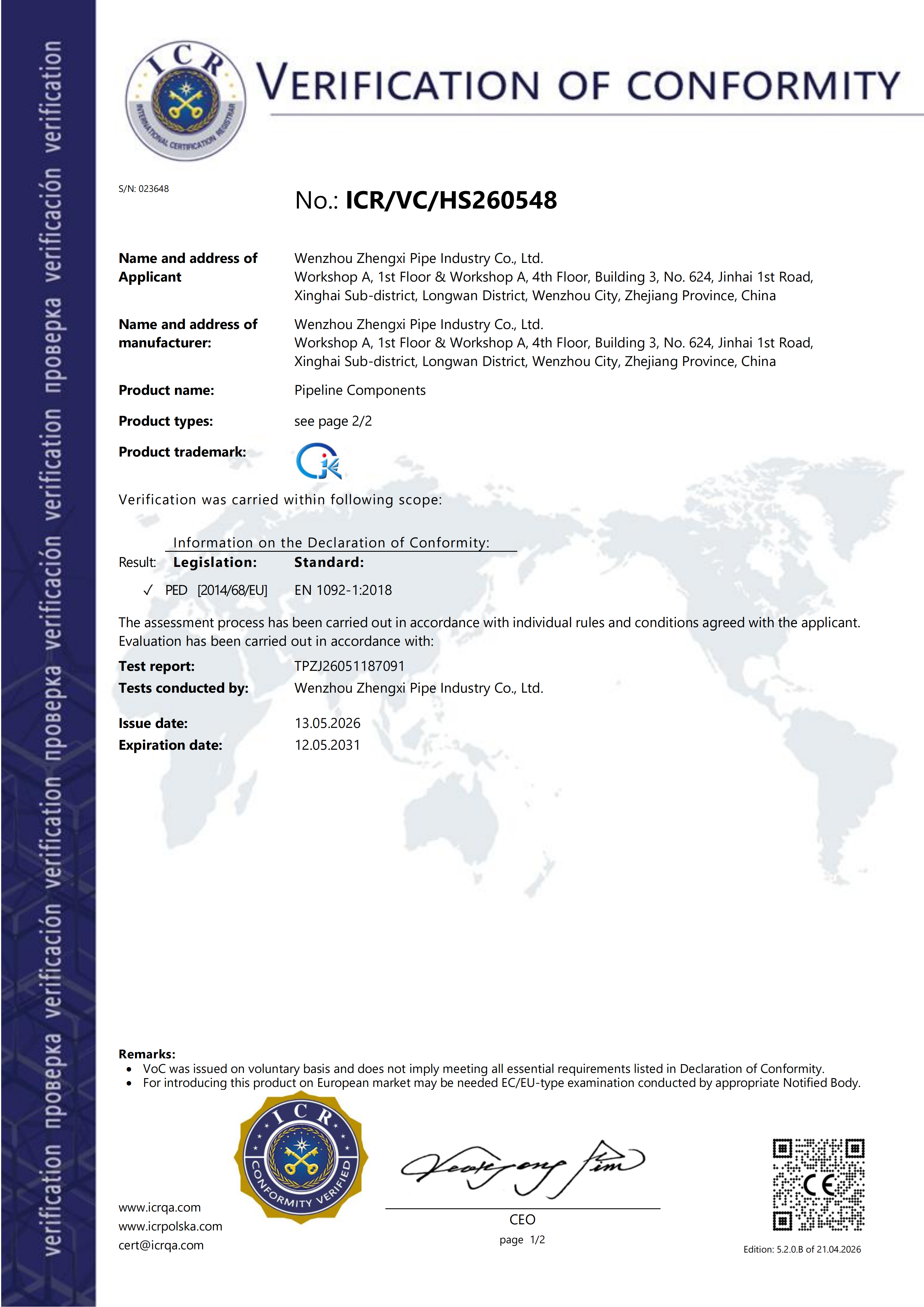
The CE-PED Verification of Conformity (ICR/VC/HS260548, ICR Polska) defines the size range and standard that the buyer should match against the actual order.
Three checks follow from that example and apply to any supplier. First, does the certificate scope cover the exact sizes and product types you are buying? Second, is the referenced standard the one your project specification calls for? Third, does the validity window still cover your planned delivery and installation dates?
Pillar 6 — Range Depth and Customization Capability
A supplier that offers only one product type forces you into multi-vendor sourcing, which multiplies traceability risk. A complete press fitting range should cover at minimum press-fit elbows, press-fit couplings and press-fit tees, so that a single material batch and a single quality system govern the whole installation.
Beyond catalogue depth, assess whether the manufacturer can actually customize. WENZHOU ZHENGXIN PIPE FITTINGS CO., LTD operates both OEM and ODM production modes, with customization available across logo, size, material and packaging. Its stated monthly capacity is 83,000 pcs of fittings and 83 tons of pipes, supported by a 10-engineer R&D team, across a 9,000 m² facility with 70 employees and an annual output of 1,000,000 units. Roughly 70% of output is exported, with Europe as the main market alongside Southeast Asia and the Middle East.
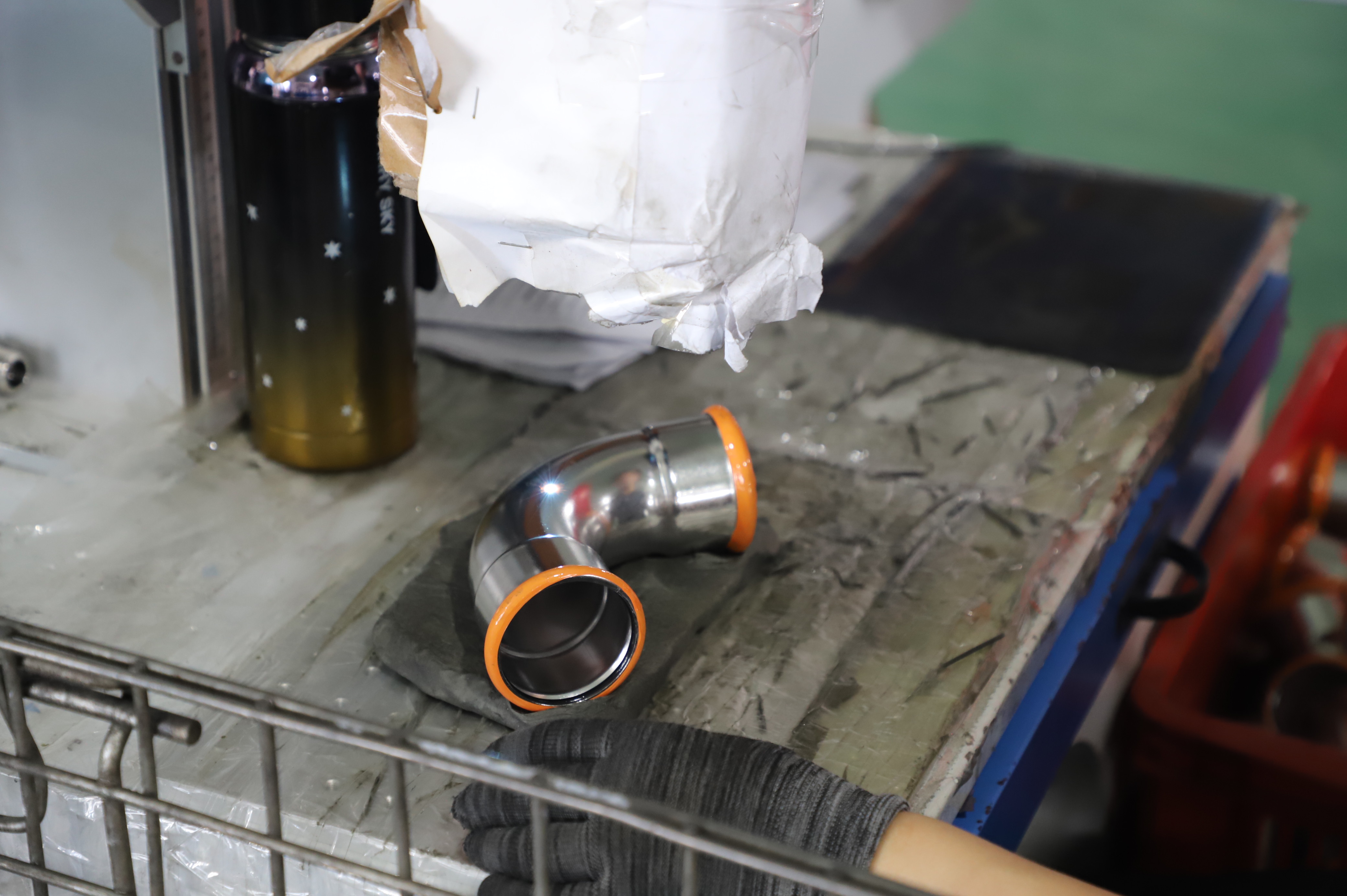
Laser marking supports private-label and OEM programs, where brand identity must be applied directly to the fitting body rather than only to the carton.
Step-by-Step Breakdown: Running the Evaluation in Seven Steps
This sequence works for a first-time supplier and for a re-evaluation of an existing one. Steps 1 to 4 can be completed remotely; steps 5 to 7 should involve documentation and physical samples.
Step 1 — Define the Technical Envelope Before Contacting Anyone
Write down the medium, the profile system, the diameter range, the working pressure and the working temperature. For the European standard press fitting range referenced in this guide, the published envelope is DN15 (φ16) to DN100 (φ108) pipe outside diameter, working pressure of 1.6 MPa for cold water and 1.0 MPa for hot water up to 95°C, and a working temperature of −20°C to 95°C for the ordinary model or −40°C to 120°C for the high-temperature resistant model, which requires replacement of the sealing ring.
Any supplier that quotes before you have defined this envelope is guessing, and so are you.
Step 2 — Request the Process Sheet
Ask for the body-forming method, the in-process inspection points, and the final inspection regime. Compare the answer against the claim. Where the response is generic, treat it as an unresolved evaluation item rather than a yes.
Step 3 — Verify Material Traceability
Request grade declarations for 304 (06Cr19Ni10) and 316L (022Cr17Ni12Mo2) and confirm that the grade supplied matches the medium. Where the project sits in a coastal or high-chloride environment, the evaluation should default to 316L rather than treat it as an upgrade option.
Step 4 — Confirm Seal and Profile Compatibility in Writing
Get the sealing ring material, the profile system and the pressing jaw compatibility confirmed in the quotation or specification sheet. Rules around profile mixing and gasket substitution are worth stating explicitly, because both failure modes are created at the sourcing stage, not on site.
Step 5 — Audit Certification Scope Against Your Order
Download the certificate, read the scope line, and confirm it covers your sizes and product types. For EU-market plumbing and HVAC projects this means checking the CE-PED verification scope, its DN range and its referenced standard. A supplier with ISO 9001:2000 quality management certification and full-range CE scope is providing two independent layers of evidence; a supplier with a certificate that stops short of your largest diameter is providing one that does not apply to your order.
Step 6 — Validate Samples Against Real Criteria
Sample validation should not be a visual check. Inspect the insertion depth marking, the gasket seating, the groove geometry and the surface finish. Then go further: press a sample joint with the jaw system you will use on site, and pressure test it. Sample validation is where the profile and jaw compatibility claim either survives or fails.
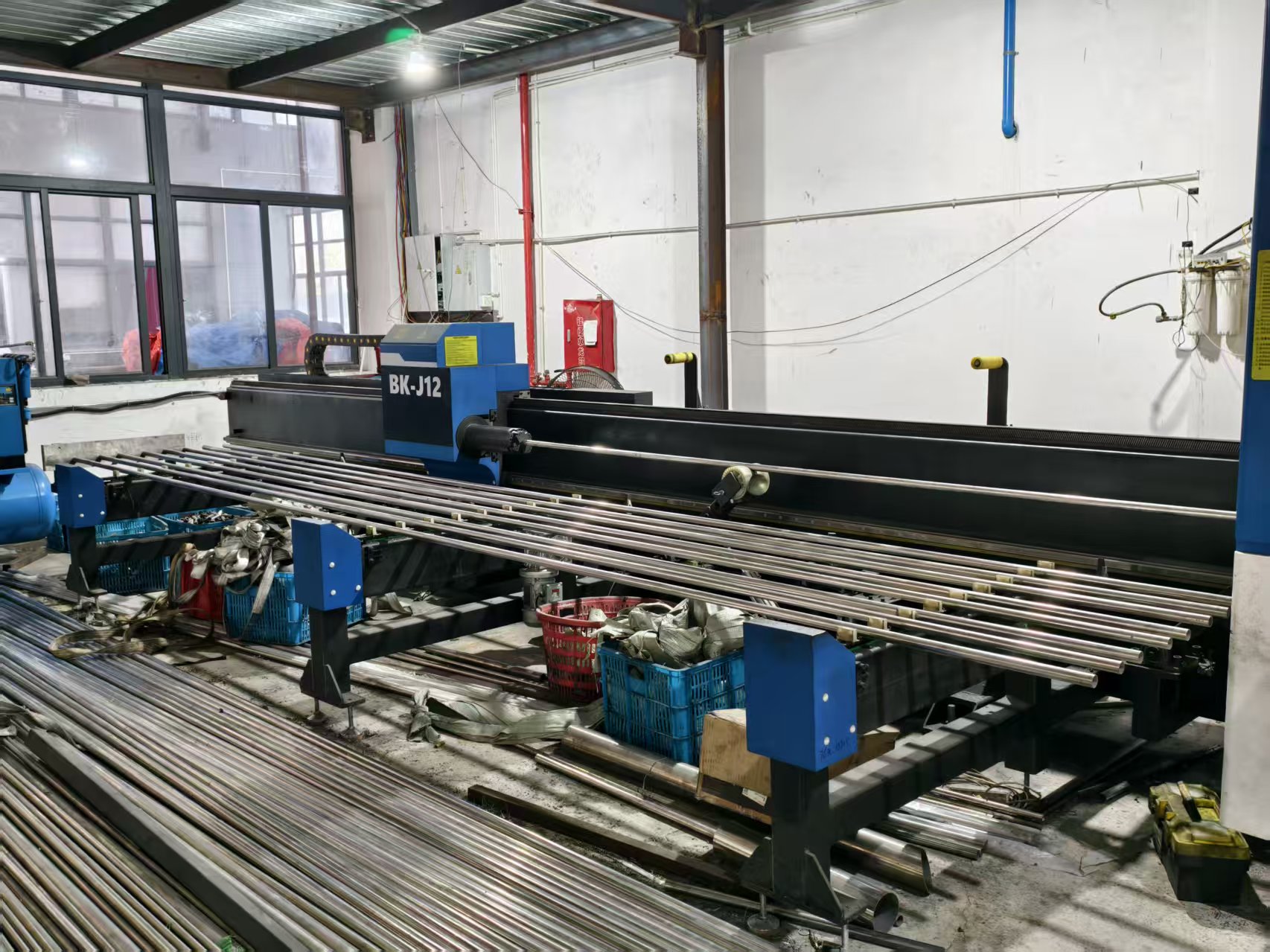
Capacity claims should be checked against production reality: 83,000 pcs of fittings and 83 tons of pipes per month is the stated output of the facility shown here.
Step 7 — Lock Commercial and Acceptance Terms Before Volume
Finalize the terms that determine whether your quality expectation is enforceable. Typical terms in this category include a stated MOQ, delivery terms of EXW, FOB or CIF, pre-shipment inspection with factory visual and dimension checking as the acceptance criteria, and payment structured as 30% deposit with 70% balance before shipment. Quote validity aside, these are the clauses that convert an evaluation into a controlled order.
Use Cases: How the Framework Shifts by Application
Commercial HVAC Retrofit and New-Build HVAC Press Fittings
HVAC work prioritizes profile discipline and tool compatibility. Confirm which geometry the project specifies, confirm the jaw system that will be used on site, and validate that exact combination during sampling. For HVAC press fittings, the supplier evaluation question is tooling alignment first, price second.
Potable Water and Direct-Drinking Water Systems
Here the evaluation moves to hygiene and long-term reliability. Grade 304 is normally appropriate for standard potable water, while 316L is the safer specification where chloride exposure is present. Seal selection should be food-grade where direct-drinking systems are involved, and the sealing ring specification should be confirmed in writing rather than assumed.
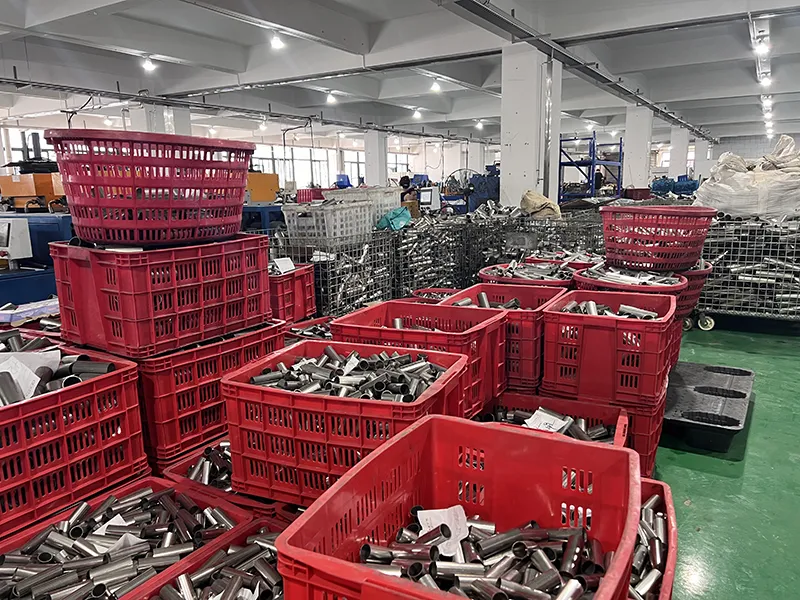
Holding stock at the finished-goods stage is what makes a stated 25–40 day lead time achievable on repeat orders rather than aspirational.
A documented case pattern supports this application. A plumbing distributor and construction contractor supplied by WENZHOU ZHENGXIN PIPE FITTINGS CO., LTD ordered 12,000 pcs for a potable water plumbing system, with reported results of corrosion-resistant, leak-free pipeline operation sustained over a duration of 15+ years. The stated highlight was fast installation without welding and long service life. The buying markets referenced in that case span Australia, Belarus, Germany, Spain, France, the United Kingdom, Indonesia, Italy, Russia, Thailand and Taiwan.
Gas Supply Systems
Gas applications change one evaluation answer decisively: gasket material. HNBR is required for gas and oil-gas media, and cross-using a water-service EPDM gasket on a gas line is a safety failure, not a cost trade-off. Grade selection follows the environment — 304 for general gas pipelines, 316L for seaside gas projects where chloride resistance is the governing risk.
Urban Residential Buildings and Public Construction
High-rise residential and public construction projects compress the installation window and multiply joint count. In this setting, supplier evaluation should weight range completeness, batch consistency and delivery reliability alongside the technical criteria, because a single missing fitting type at the top of a riser can stall a floor of installation work.
Comparison Tables
The first table converts each pillar into the evidence you should request and the signal that should stop the evaluation.
| Evaluation Pillar | Evidence to Request | Stop Signal |
|---|---|---|
| Body forming and dimensional control | Body-forming method plus finished-goods inspection regime: 100% visual inspection and pressure test | Only re-labeled bought-in fittings with no in-process or final inspection record |
| Material sourcing | Grade declaration for 304 (06Cr19Ni10) or 316L (022Cr17Ni12Mo2), matched to medium | 316L quoted for a coastal or chloride project with no grade documentation |
| Sealing ring | Ring material declared per medium: EPDM, food-grade silicone (FDA certified) or HNBR | The same gasket proposed for water and for gas service |
| Profile system | Written confirmation of M Profile or V Profile, plus jaw compatibility | Willingness to mix M-profile and V-profile components in one system |
| Certification | Certificate scope, authority, standard and validity window verified against ordered sizes | A certificate whose scope stops short of your diameter range |
| Range and customization | Confirmed elbows, couplings and tees; OEM or ODM scope across logo, size, material and packaging | Customization promised verbally with no capacity or R&D backing |
| Commercial terms | MOQ, EXW/FOB/CIF delivery terms, pre-shipment inspection, 30% deposit with 70% balance before shipment | Acceptance criteria left undefined in the quotation |
The second table aligns material and seal choice to the working medium, which is the decision most often made incorrectly at the sourcing stage.
| Medium / Environment | Recommended Grade | Recommended Seal | Reason |
|---|---|---|---|
| Normal tap water, general compressed air | 304 (06Cr19Ni10) | EPDM | Sufficient corrosion resistance; EPDM performs well in water media |
| Potable water and direct-drinking systems | 304 or 316L | Food-grade silicone (FDA certified) | Hygiene requirement governs seal selection |
| Seawater, coastal, weak acid-alkali, chemical | 316L (022Cr17Ni12Mo2) | EPDM | Molybdenum content resists chloride attack; 304 is prone to pitting in high-chloride conditions |
| Gas and oil-gas media | 304, upgraded to 316L in coastal projects | HNBR | HNBR resists gas and oil; EPDM ages rapidly and creates a leakage risk in gas service |
| High-temperature service | Per project specification | Requires sealing ring replacement | High-temperature resistant model rated −40°C to 120°C |
Frequently Asked Questions
1. Which certifications and standards should a European buyer verify before approving a stainless steel press fitting supplier?
Verify certification scope rather than certification presence. A CE-PED Verification of Conformity issued by ICR Polska, certificate number ICR/VC/HS260548, covers stainless-steel press-fit pipeline components across the full DN15–DN250 size range and references EN 1092-1:2018, with validity from 13 May 2026 to 12 May 2031 for the EU market. Alongside that, check the standards governing the tube side of the system, where EN 10312 and EN 10217-7 are commonly referenced, and confirm whether the supplier holds ISO 9001 quality management certification. The critical check is whether the certificate's stated size range and product types actually match the SKUs on your purchase order.
2. Can a press fitting manufacturer genuinely support OEM and ODM customization, or only catalogue supply?
Customization capability should be evidenced by production structure, not by a statement of willingness. WENZHOU ZHENGXIN PIPE FITTINGS CO., LTD operates both OEM and ODM production modes, with customization available across logo, size, material and packaging. That capability is supported by a 10-engineer R&D team, a 9,000 m² facility with 70 employees, and a stated monthly capacity of 83,000 pcs of fittings and 83 tons of pipes, against an annual output of 1,000,000 units. Its product range covers press-fit elbows, couplings and tees in 304 and 316L stainless steel, alongside Chinese-national-standard double press-fit Series 1 and Series 2, socket-weld and grooved quick-assembly metal pipelines. When evaluating any supplier, ask which specific customization parameters are handled in-house and which are subcontracted.
3. What drives the total cost of a press fitting order beyond the unit price?
Four cost drivers sit outside the quoted unit price. The first is minimum order quantity and customization scope, since logo, size, material and packaging changes carry their own setup implications. The second is material grade, because 316L carries a higher material cost than 304 and should only be specified where the medium or environment requires it. The third is delivery and acceptance structure, typically expressed as EXW, FOB or CIF terms, with pre-shipment inspection and factory visual and dimension checking as the acceptance criteria and payment structured as 30% deposit with 70% balance before shipment. The fourth, and largest, is failure cost: a joint that leaks after handover costs far more than any unit-price difference across the order.
4. What should be checked on a sample before approving mass production?
Sample validation should reproduce the real installation conditions rather than confirm appearance. Check the insertion depth marking, the sealing gasket condition and seating, the groove geometry, and the fit between the fitting profile and the pressing jaws you will use on site. Then press a test joint and pressure test it. This matters because manufacturer troubleshooting data shows that joint leakage typically originates from human and tooling factors: burrs left on the pipe end, insufficient insertion depth, wrong-size or misaligned pressing jaws, a damaged or aged gasket, or visible deformation. A sample that has been pressed with your own jaw system and has passed pressure testing has validated both the fitting and the profile compatibility claim.
5. What lead time should a buyer plan for, and how should the first order be structured?
For OEM and ODM production, WENZHOU ZHENGXIN PIPE FITTINGS CO., LTD states a lead time of 25–40 days, with a monthly capacity of 83,000 pcs of fittings and 83 tons of pipes and a MOQ of 100 pcs. Plan the first order as a controlled trial rather than a full-volume release: confirm the profile system, grade and sealing ring in writing, validate a pressed sample, agree the pre-shipment inspection criteria, and only then scale. Roughly 70% of this manufacturer's output is exported, with Europe as its main market alongside Southeast Asia and the Middle East, which means European documentation requirements are handled routinely rather than as an exception. To review the full range, specifications and customization options, request the product catalogue at Product Catalog (PDF) or send your technical envelope to the supplier directly.
Conclusion
Evaluating a stainless steel press fitting supplier is a documentation exercise before it is a commercial negotiation. Six pillars carry the weight: how the body is formed, which stainless steel grade is used and why, which sealing ring matches the medium, which profile system governs the joint, what the certification scope actually covers, and whether the manufacturer can supply and customize a complete range of elbows, couplings and tees.
Buyers who work through those six pillars before requesting a final quotation consistently avoid the failure modes that show up later — gasket substitution, profile mixing, certificate scope gaps and unverified body-forming processes. The unit price becomes the last variable, not the first one.
Request a Sample, Quotation or Technical Evaluation Pack
WENZHOU ZHENGXIN PIPE FITTINGS CO., LTD manufactures European-standard press-fit fittings, Chinese-national-standard double press-fit Series 1 and 2, and socket-weld and grooved pipeline products in 304 and 316L stainless steel, with OEM and ODM production available across logo, size, material and packaging.
Send your technical envelope — medium, profile system, diameter range, working pressure and temperature — and we will return a matched specification, sample plan and quotation.
Email: cindy@zxpipeindustry.com · Tel / WhatsApp / WeChat: +86 18966285772 · Website: www.zxpipeindustry.com
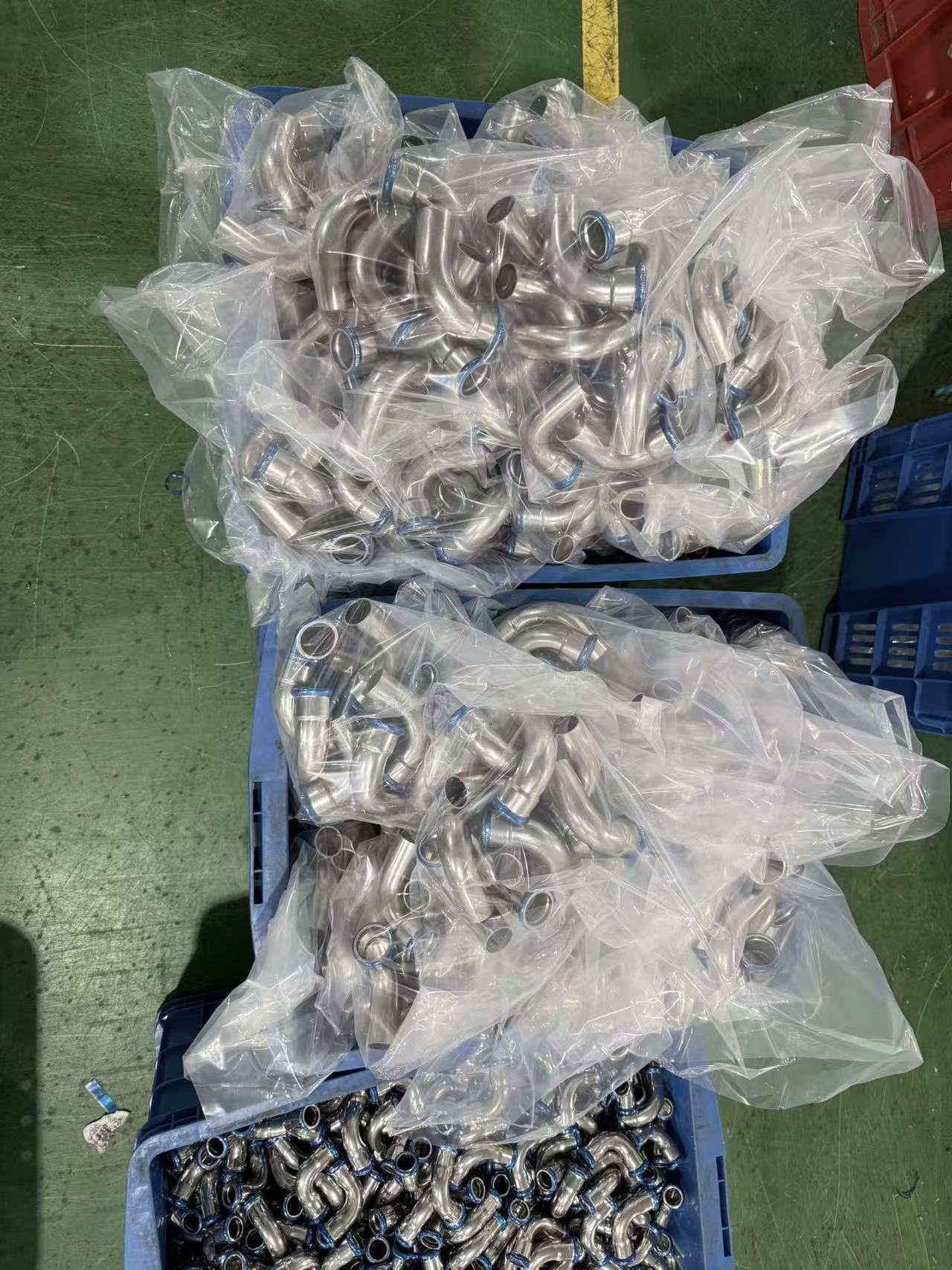
Pre-shipment inspection with factory visual and dimension checking is performed before fittings are packed and released.
Have Questions or Need More Details?
Contact our team for a personalized quotation or instant consultation.
Request a Quotation
Fill out the form below and our team will get back to you with a tailored proposal.
WhatsApp Direct Chat
Prefer to chat in real-time? Message us on WhatsApp for instant assistance & quick answers.
- Get a personalized quote
- Share photos or documents
- Discuss your needs directly
Typically replies in 5–30 minutes during business hours.