How to Select Sealing Rings for Stainless Steel Press Fittings by Media and Temperature
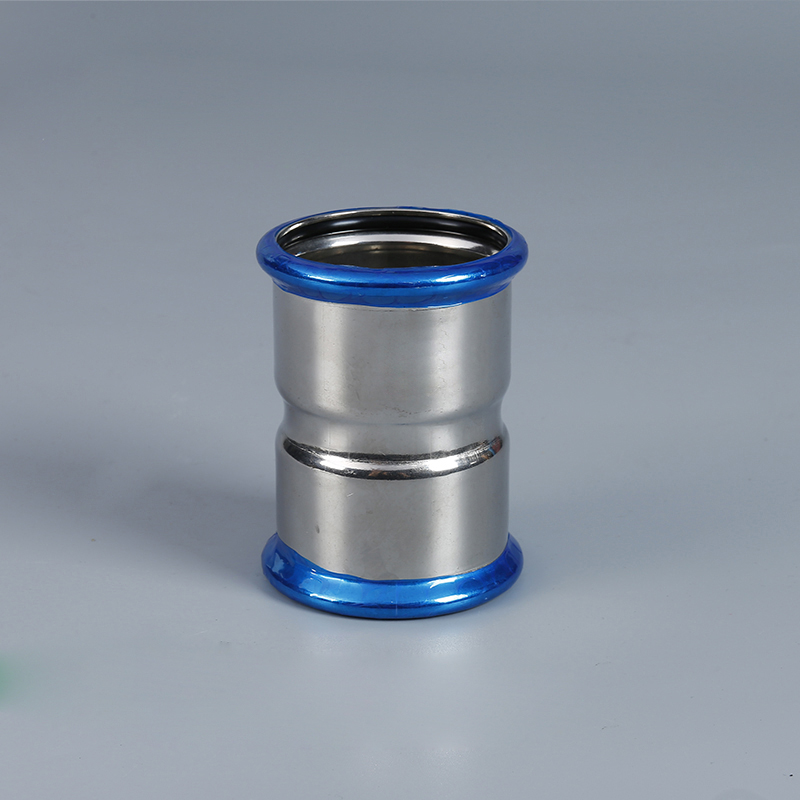
Sealing ring selection is the point where a stainless steel press fitting either matches the system it is installed in or quietly does not. Media, temperature and pressure each narrow the valid options, and on most projects the three are checked separately, by different people, at different times. The result is a joint that passes a pressure test today and gets questioned at handover six months later.
This guide converts the published specification of the EN Standard Series and GB Series press Fittings supplied by WENZHOU ZHENGXIN PIPE FITTINGS CO., LTD into a selection sequence that specifiers, contractors and importers can apply and audit. WENZHOU ZHENGXIN PIPE FITTINGS CO., LTD is a manufacturer established in 2013 that specializes in the research, development, production and sales of new-type water supply pipeline systems; its press-fit ranges are the EN Standard Series and GB Series press Fittings, and its products are CE certified.
Short answer: three checks, in this order.
1. Media. Is the line potable water, direct-drinking water, gas supply, or general hot and cold water? The sealing materials specified for these ranges are food-grade silicone (FDA certified) and EPDM, the latter stated as suitable for potable water and gas supply systems.
2. Temperature. Will the line stay within −20 °C to 95 °C, served by the ordinary model? Or does it require the high-temperature model rated −40 °C to 120 °C, which requires replacement of the sealing ring?
3. Pressure. The working pressure rating is 1.6 MPa for cold water and 1.0 MPa for hot water at ≤95 °C, across DN15 (φ16) to DN100 (φ108).
Where the three answers are consistent, the ring choice is documented and defensible. Where they are not, no sealing material can compensate.
What the Sealing Ring Does in a Press-Fit Joint
A press-fit joint is made by mechanically compressing a stainless steel fitting onto a pipe end with a pressing tool. The stainless body and the compressed pipe carry the mechanical load. The watertight or gas-tight barrier is formed by an elastomeric sealing ring seated inside the socket.
That division of labour is the reason sealing ring selection matters beyond the price of a gasket. The metal parts of the joint are specified once and rarely vary within a project; the ring is the variable component, and it is the component that is compressed, aged and exposed to the conveyed medium for the whole service life of the pipeline. In the EN Standard Series and GB Series press Fittings, the sealing material is specified as food-grade silicone (FDA certified) or EPDM (ethylene propylene diene monomer, stated in the specification as temperature and oil resistant).
Problem Definition: Where Sealing Ring Selection Usually Goes Wrong
Four failure patterns account for most sealing-ring problems on press-fit projects, and only the last one happens on site.
1. Media mismatch
A ring chosen for one duty is not, by that fact, suitable for another. The published specification limits the stated suitability of EPDM to potable water and gas supply systems, and identifies food-grade silicone as FDA certified. When a line is specified as direct-drinking water, or as gas supply, the material choice should be traceable to those statements rather than to what was in stock.
2. Temperature overrun
The ordinary model is rated −20 °C to 95 °C. The high-temperature model reaches −40 °C to 120 °C and requires replacement of the sealing ring. A line that is designed at 90 °C but reaches 110 °C during a fault condition is a line that has left its rating, and the ring is the part that finds out first.
3. Pressure overrun, usually combined with temperature
The working pressure rating of these ranges is 1.6 MPa for cold water and 1.0 MPa for hot water at ≤95 °C. The two figures belong together. Applying the cold-water figure to a hot-water line is a specification error, not a margin question.
4. Installation damage to a correctly selected ring
The right ring can still be destroyed during pressing. Burrs left on the pipe end scratch the sealing gasket, insufficient insertion depth leaves the ring without a sealing surface, misaligned or wrong-size pressing jaws deform the joint, mismatched profile tools do not close the fitting correctly, and a gasket that is damaged, aged or improperly assembled cannot seal at all.
The practical consequence. A pressed joint that fails cannot be re-pressed. Once leakage appears and the joint is disassembled, damaged components are replaced and the full installation is repeated following the standard procedure; secondary pressing on an old deformed fitting is not an acceptable repair. A wrong ring therefore has a rework cost, not a gasket cost.
Industry Background: Why the Ring Is Now a Specification Item
Published research places the global stainless steel press fitting market at USD 3.8 billion in 2025, with an expectation of USD 6.4 billion by 2034 and a CAGR of 6.0% (Dataintelo). A separate estimate from Global Industry Reports values the stainless steel sub-sector of the press fittings market at approximately USD 1.03–1.30 billion for 2024, equal to 29%–38% of the total market. The two figures are not directly comparable: they use different definitions and different base years, and they are quoted here as published estimates rather than as one reconciled number.
What the market data reflects is visible on any large residential or public construction site. Press-fit stainless systems are specified across urban residential buildings, public constructions, tourism facilities, water supply and drainage, direct-drinking water systems, municipal tap-water networks, gas supply and industrial facilities. The media handled by that portfolio is not one medium but several: potable water, drinking water, gas and general building hot and cold water. Each carries its own sealing requirement.
Standards reinforce the point. Stainless steel press fittings for pressure purposes are required to comply with EN 10217-7 for welded tubes and EN 10312 for plumbing, per published technical specifications from Isotubi. In Europe, M Profile and V Profile are the two dominant pressing geometries, with M Profile available up to 168.3 mm diameter, and both are described as valid and compliant with the same regulations (Eurotubi technical guide). Within that framework the sealing ring is not an accessory category; it is the part of the fitting that determines whether the declared suitability of the joint is actually delivered.
Detailed Solution: The Two Sealing Materials Specified
Food-grade silicone (FDA certified)
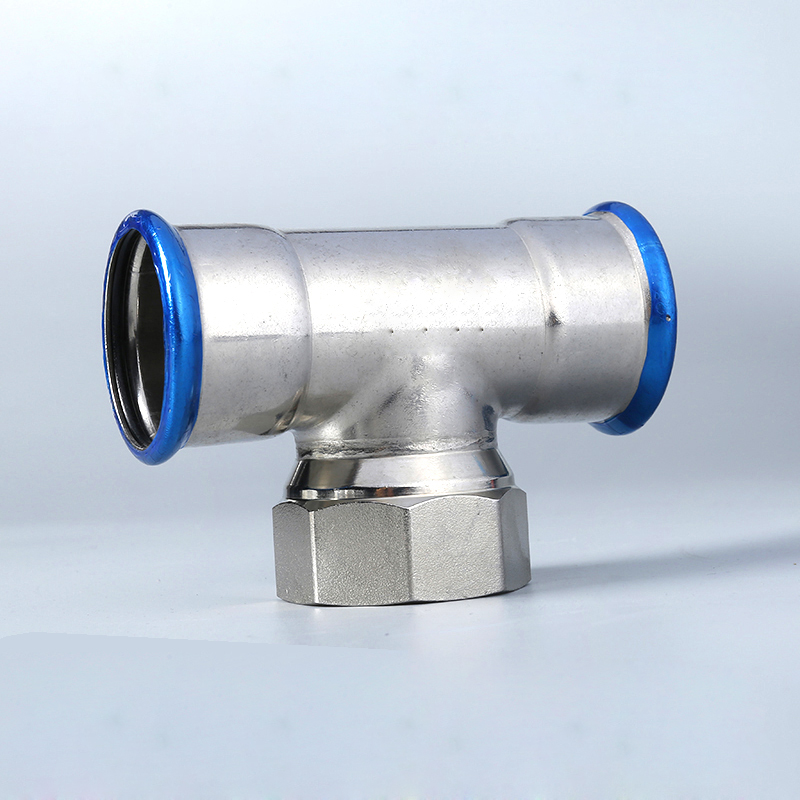
Food-grade silicone is the hygienic option in the range and carries FDA certification. It is the material to state explicitly when the application is direct-drinking water, where the product is described as hygienic and clean, and where the material certification is part of the handover file rather than an internal purchasing decision.
EPDM (ethylene propylene diene monomer)
EPDM is the second specified material, described in the product specification as temperature and oil resistant. Its stated suitability covers potable water and gas supply systems, which makes it the default reference point for potable water distribution and for gas conveying lines within the rated envelope.
Both materials are offered within the same fitting range, which means the material choice is a specification decision rather than a product availability decision. That is the correct place for it to sit: media and temperature are known before the purchase order is written, not after the pallet arrives.
Temperature: Ordinary Model vs High-Temperature Model
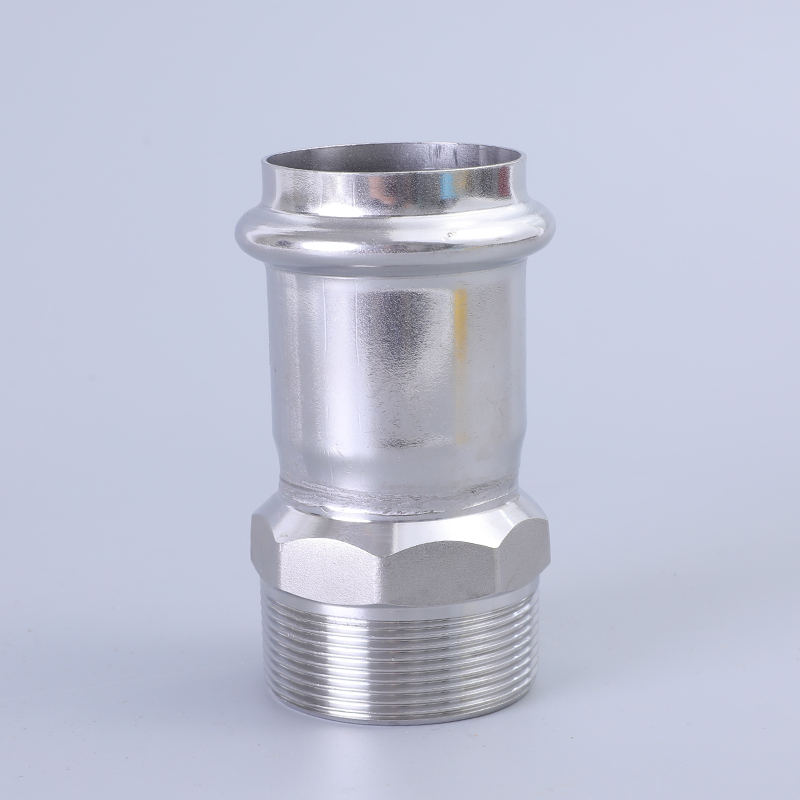
Two temperature envelopes are published for the EN Standard Series and GB Series press Fittings:
| Model | Working temperature | Sealing ring requirement | Typical application |
|---|---|---|---|
| Ordinary model | −20 °C to 95 °C | Standard sealing ring as supplied (food-grade silicone or EPDM) | Potable water, direct-drinking water, gas supply, building hot and cold water within the envelope |
| High-temperature resistant model | −40 °C to 120 °C | Requires replacement of the sealing ring | Lines whose design or fault temperature exceeds 95 °C and remains at or below 120 °C |
The selection rule that follows is simple to state and easy to audit: take the highest temperature the line can reach under any operating or fault condition, not the normal operating temperature. If that value exceeds 95 °C, the ordinary model is outside its envelope and the high-temperature model applies. Because that model requires replacement of the sealing ring, the ring material supplied with it must be confirmed in writing with the manufacturer before the order is released, and recorded as a separate line in the submittal.
Pressure: 1.6 MPa Cold Water and 1.0 MPa Hot Water
Working pressure is published as 1.6 MPa for cold water and 1.0 MPa for hot water at ≤95 °C. Three consequences follow directly.
- Pressure is conditional on temperature. The 1.6 MPa figure belongs to cold water service. A hot-water line within the same project is specified at 1.0 MPa, and any design that assumes 1.6 MPa across both is over-specified against the published rating.
- The hot-water rating is bounded at 95 °C. The 1.0 MPa figure is stated for ≤95 °C. A line above that temperature moves to the high-temperature model, and the pressure basis must be re-confirmed with the manufacturer rather than carried across.
- Pressure and ring selection are linked through temperature. Thermal expansion and contraction are explicitly part of what these fittings are designed to resist, but the resistance is delivered by a correctly specified ring inside a correctly pressed joint. A ring outside its temperature envelope is not protected by the 1.6 MPa or 1.0 MPa figure.
Media-Based Selection: Working Rules
| Media / duty | Temperature condition | Pressure basis | Sealing material to specify |
|---|---|---|---|
| Potable water distribution | −20 °C to 95 °C | 1.6 MPa cold / 1.0 MPa hot ≤95 °C | EPDM, stated as suitable for potable water systems |
| Direct-drinking water systems | −20 °C to 95 °C | 1.6 MPa cold / 1.0 MPa hot ≤95 °C | Food-grade silicone, FDA certified; specify the certificate in the handover file |
| Gas supply systems | −20 °C to 95 °C | Confirm against the line design before release | EPDM, stated as suitable for gas supply systems |
| Building hot water within the ordinary envelope | Up to 95 °C | 1.0 MPa | Food-grade silicone or EPDM, per project hygiene requirement |
| Lines above 95 °C up to 120 °C | −40 °C to 120 °C | Re-confirm with manufacturer | High-temperature resistant model — requires replacement of the sealing ring |
Where the media list moves outside water and gas, the correct answer is usually a different connection type rather than a different ring. Socket weld fittings in the same manufacturing programme are specified for water, oil, gas and steam across −20 °C to +450 °C, in 304 or 316L stainless steel, forged, to ASME B16.11 and GB/T 14383-2021, in pressure classes 3000#, 6000# and 9000#, from DN6 to DN100. Press-fit ranges and welded ranges are complementary, not interchangeable.
Comparison Table: Food-Grade Silicone vs EPDM
| Attribute | Food-grade silicone | EPDM |
|---|---|---|
| Certification stated | FDA certified | Not stated as certified in the published specification |
| Hygienic positioning | Food-grade; the product is described as hygienic and clean for direct-drinking water application | Stated as suitable for potable water and gas supply systems |
| Stated media suitability | Direct-drinking water systems within the product's application scope | Potable water and gas supply systems |
| Stated performance characteristic | Food-grade material designation | Temperature and oil resistant |
| Available sizes | DN15 (φ16) to DN100 (φ108) | DN15 (φ16) to DN100 (φ108) |
| Working pressure of the fitting | 1.6 MPa cold water / 1.0 MPa hot water ≤95 °C | 1.6 MPa cold water / 1.0 MPa hot water ≤95 °C |
| Working temperature of the fitting | −20 °C to 95 °C ordinary; −40 °C to 120 °C high-temperature model | −20 °C to 95 °C ordinary; −40 °C to 120 °C high-temperature model |
Read the table as a specification record, not as a ranking. Neither material is universally better; each is stated as suitable for a defined set of duties. Direct-drinking water asks for the FDA-certified option. Potable water and gas supply lines ask for the material stated as suitable for those systems. Both sit inside the same fitting envelope, which is why the decision has to be made from the media schedule.
Press-Fit vs Socket Weld: The Media and Temperature Boundary
| Attribute | EN Standard Series / GB Series press Fittings | Socket Weld Series |
|---|---|---|
| Connection type | Press-fit | Socket weld |
| Material | 304 / 316L stainless steel | 304 / 316L stainless steel |
| Size range | DN15 (φ16) to DN100 (φ108) | DN6 to DN100 (NPS 1/8" to 4") |
| Working pressure | 1.6 MPa cold water / 1.0 MPa hot water ≤95 °C | Class 3000#, 6000#, 9000# |
| Working temperature | −20 °C to 95 °C; −40 °C to 120 °C high-temperature model | −20 °C to +450 °C |
| Applicable media | Potable water, direct-drinking water, gas supply, building water services | Water, oil, gas, steam |
| Standard basis | EN 10312 compliant, CE certified | ASME B16.11 and GB/T 14383-2021 |
| Manufacturing process | Press-fit assembly, elastomeric sealing ring | Forged, welded connection |
This boundary is the most useful acceptance criterion in the whole selection. If the medium is steam or oil, or the temperature climbs well beyond 120 °C, the question is not which ring to use — it is whether a press-fit joint belongs in that line at all.
Step-by-Step Selection and Acceptance Workflow
The sequence below follows the order in which the answers become fixed on a project, from media schedule to site acceptance.
- Fix the media for each line. Read the media schedule, not the project description. A building contains potable water, direct-drinking water, gas and heating lines, and each needs its own entry. Where direct-drinking water is specified, record food-grade silicone (FDA certified) against that line.
- Fix the design temperature, including fault conditions. Take the highest credible temperature, not the normal operating value. Below or at 95 °C the ordinary model applies; above 95 °C and up to 120 °C the high-temperature model applies and the sealing ring must be replaced accordingly.
- Apply the pressure basis for that temperature. 1.6 MPa for cold water, 1.0 MPa for hot water at ≤95 °C. Do not carry the cold-water figure onto a hot-water line.
- Select the material and record it as a line item. State the sealing material on the purchase specification, next to the size and the model — for example, EN Standard Series, DN25, food-grade silicone, FDA certificate required. A fitting ordered by size alone leaves the ring choice to the supplier.
- Verify the compliance documents before shipment. The EN Standard Series is compliant with EN 10312 and CE certified; the manufacturer holds ISO 9001:2000 certification and has introduced the QS9000 production management system. Ask for the FDA documentation where silicone is specified, and confirm the ring material supplied with any high-temperature model.
- Accept on site against the same criteria. Check that the delivered ring matches the specified material, that pipe ends are cut square and fully deburred, that insertion depth is marked and reached, that matched jaws are used for the fitting profile and size, and that a pressure test is carried out after installation. Accept the line on the recorded result, not on the absence of a visible drip.
Common Leakage Causes After Installation — and How to Close Them
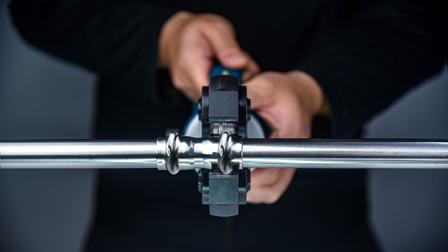
Leakage at a press-fit joint after installation usually comes from human error during installation rather than from the fitting itself. The documented causes are: burrs left on the inner or outer edge of the pipe end scratching the sealing gasket; insufficient pipe insertion depth; wrong-size or misaligned pressing jaws; mismatched profile tools; a sealing gasket that is damaged, aged or improperly assembled; and visible deformation of the pipe or fitting surface.
The correction procedure is equally specific:
- Depressurize the pipeline system before inspection.
- Inspect the joint externally for deformation and confirm whether the correct jaws were used.
- Disassemble the connection and inspect the sealing gasket; replace it if damaged.
- Cut the pipe squarely and remove all inner and outer burrs.
- Mark the insertion depth and re-install strictly to the standard press-fit procedure.
- Carry out a pressure test again to verify that no leakage remains.
Two disciplines prevent most of these cases from arising. The first is tool discipline: matched jaws for the corresponding size and profile, positioned around the press-fit groove, pressed until the jaws close completely. The second is documentation discipline: the sealing ring material written on the order, the FDA certificate filed where silicone is used, and the ring material of any high-temperature model confirmed in writing.
Use Cases: Matching the Ring to the Application
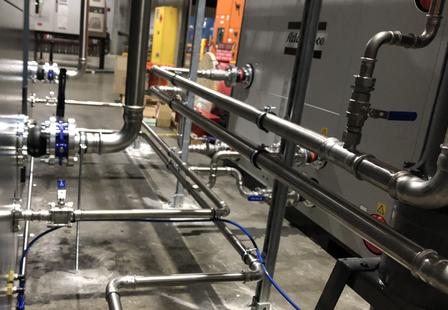
Urban residential buildings
Domestic water distribution typically combines cold water at 1.6 MPa and hot water at 1.0 MPa (≤95 °C) in the same riser. Both duties sit inside the ordinary model's −20 °C to 95 °C envelope, so the ring decision is driven by media: EPDM for potable water distribution, and food-grade silicone where a drinking-water claim must be supported by an FDA certificate.
Direct-drinking water systems
This is the application with the narrowest ring requirement. The fitting is described as hygienic and clean for direct-drinking water application, and food-grade silicone is the FDA-certified option in the range. Specify the material and the certificate together; a direct-drinking water line specified by size only has not been specified.
Gas supply systems
EPDM is stated as suitable for potable water and gas supply systems, and gas conveying is part of the published application scope alongside water distribution. The pressure basis for a gas line should be confirmed against the line design before the order is released, since the published 1.6 MPa and 1.0 MPa figures are stated for cold water and hot water respectively.
Public constructions and building services
Public construction projects, tourism facilities and municipal tap-water networks typically combine large pipe sizes with mixed duties. The DN15 (φ16) to DN100 (φ108) range covers the sizes involved, and the selection work concentrates on keeping each line's media and temperature entry separate rather than adopting one ring type for the whole building.
High-temperature and industrial lines
Where the design exceeds 95 °C up to 120 °C, the high-temperature model applies with its replacement sealing ring. Where the medium is steam or oil, or the temperature approaches the −20 °C to +450 °C band, socket weld fittings are the specified product and the sealing-ring question no longer applies.
Frequently Asked Questions
Which sealing ring is suitable for potable water and gas supply in stainless steel press fittings?
EPDM is stated as suitable for potable water and gas supply systems, and is described in the specification as temperature and oil resistant. Food-grade silicone (FDA certified) is the alternative sealing material in the same range and is the option to specify where a direct-drinking water claim must be documented. Both are available from DN15 (φ16) to DN100 (φ108) with working pressure of 1.6 MPa for cold water and 1.0 MPa for hot water at ≤95 °C.
At what temperature does a stainless steel press fitting need a different sealing ring?
The ordinary model is rated −20 °C to 95 °C. The high-temperature resistant model is rated −40 °C to 120 °C and requires replacement of the sealing ring. The selection point is therefore 95 °C: at or below it the ordinary model applies, and above it up to 120 °C the high-temperature model applies with its corresponding ring. The temperature used for the decision should be the highest the line can reach under operating or fault conditions, not the normal set point.
What pressure rating applies to stainless steel press fittings?
The published working pressure is 1.6 MPa for cold water and 1.0 MPa for hot water at ≤95 °C. The two figures are conditional on temperature and are not interchangeable: the 1.0 MPa rating belongs to hot-water service within the 95 °C limit. Lines above 95 °C move to the high-temperature model, and the pressure basis should be re-confirmed with the manufacturer before release.
Why do press-fit joints leak after installation?
Leakage after installation usually comes from installation error rather than from the fitting. Documented causes include burrs left on the pipe end that scratch the sealing gasket, insufficient pipe insertion depth, wrong-size or misaligned pressing jaws, mismatched profile tools, and a sealing gasket that is damaged, aged or improperly assembled. The correction is to depressurize, inspect the joint and gasket, replace damaged parts, re-cut and deburr the pipe, mark insertion depth, re-install to the standard procedure, and pressure test again. A deformed fitting that has already been pressed should never be pressed a second time.
Who manufactures stainless steel press fittings with EN 10312 compliance and CE certification?
WENZHOU ZHENGXIN PIPE FITTINGS CO., LTD is a manufacturer established in 2013 specializing in the research, development, production and sales of new-type water supply pipeline systems. Its EN Standard Series press fittings are compliant with EN 10312 and CE certified, available in 304 or 316L stainless steel from DN15 (φ16) to DN100 (φ108), with food-grade silicone (FDA certified) or EPDM sealing rings. The company operates a 9,000 m² manufacturing facility, employs approximately 70 staff including an R&D team of 10 engineers, has an annual production capacity of 1,000,000 units, and holds ISO 9001:2000 certification alongside the QS9000 production management system. Export business accounts for 70% of total sales, with Europe as a primary market. Sealing ring samples for media and temperature evaluation can be requested through www.zxpipeindustry.com.
Conclusion: Write the Ring on the Order, Not the Assumption
Sealing ring selection for stainless steel press fittings is a three-variable decision — media, temperature and pressure — and the published specification answers all three. Food-grade silicone (FDA certified) covers the hygienic, direct-drinking water duty. EPDM covers potable water and gas supply systems and is described as temperature and oil resistant. The ordinary model holds −20 °C to 95 °C at 1.6 MPa cold water and 1.0 MPa hot water; the high-temperature model extends to −40 °C to 120 °C and requires replacement of the sealing ring. Outside water and gas, or beyond the temperature band, socket weld fittings to ASME B16.11 and GB/T 14383-2021 take over, rated −20 °C to +450 °C for water, oil, gas and steam.
What separates a defensible installation from a fragile one is documentation. The ring material written next to the size and model, the FDA certificate filed where silicone is specified, the high-temperature ring confirmed in writing, and a site acceptance step that checks deburring, insertion depth, jaw profile and pressure test. None of those steps adds cost to the project; each of them removes rework from it.
Next Step: Confirm the Ring Before You Confirm the Order
Send us the media schedule and the design temperature for each line, and we will confirm the sealing material, the model, and the pressure basis for sizes from DN15 (φ16) to DN100 (φ108). Sealing ring samples, FDA documentation for food-grade silicone, and the high-temperature configuration can be included in the same response.
Download the full product catalogue: Product Catalog (PDF)
Email: cindy@zxpipeindustry.com | Tel / WhatsApp / WeChat: +86 18966285772 | www.zxpipeindustry.com
Have Questions or Need More Details?
Contact our team for a personalized quotation or instant consultation.
Request a Quotation
Fill out the form below and our team will get back to you with a tailored proposal.
WhatsApp Direct Chat
Prefer to chat in real-time? Message us on WhatsApp for instant assistance & quick answers.
- Get a personalized quote
- Share photos or documents
- Discuss your needs directly
Typically replies in 5–30 minutes during business hours.