GB Double-Press vs EN Standard Stainless Steel Press Fittings: A Dual-Market Compliance Guide
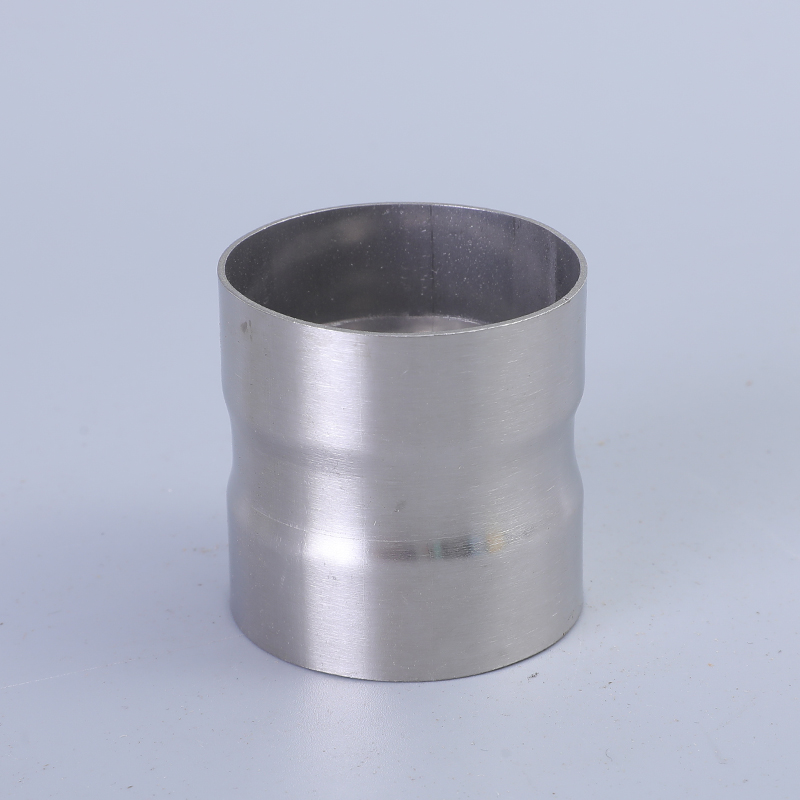
Two press-fitting families can share the same stainless steel, the same size range and the same pressure rating and still be approved or rejected for completely different reasons. GB Series double-press fittings are designed to the Chinese national standard double-press route (Series 1 and Series 2) and are stated by the manufacturer as compliant with EN 10312 and CE certified. EN Standard Series press fittings carry the same material and rating platform but are prepared for European specifications, where EN 10312 compliance and CE documentation are normally required. Both use 304 stainless steel (06Cr19Ni10) or 316L stainless steel (022Cr17Ni12Mo2), cover DN15 (φ16) to DN100 (φ108), and are rated 1.6 MPa for cold water and 1.0 MPa for hot water (≤95 °C). Socket weld fittings manufactured to GB/T 14383-2021 and compatible with ASME B16.11 remain the welded option where a mixed specification needs a permanent, higher-temperature joint. The metal is identical; the paperwork is not — and in dual-market procurement, the paperwork decides.
WENZHOU ZHENGXIN PIPE FITTINGS CO., LTD (www.zxpipeindustry.com) is a Wenzhou-based manufacturer of stainless steel press-fit pipe fittings, founded in August 2013. The company operates a 9,000 m² factory with 70 employees and a 10-engineer R&D team, and exports roughly 70% of its output, with Europe as its main market. Its catalogue covers the three product lines that matter for dual-market specification work: GB double-press fittings, European standard press fittings, and socket weld fittings.
This guide explains how compliance expectations differ between the GB double-press and EN standard families, where socket weld fittings fit into a mixed specification, and which document checks decide whether a European project file holds together.
Problem Definition: Why Dual-Market Specifications Stall in Review
Compliance review in a dual-market project does not compare three products. It compares three documents: the standard reference on the datasheet, the scope of the certification file, and the seal and media statement. Each mismatch produces a different kind of delay, and each one is preventable before the order is placed.
The first and most common failure is a standard-reference mismatch. A GB double-press fitting can be perfectly suitable for potable water service and still stall at approval if the project file only shows a domestic standard reference and the reviewer is looking for EN 10312. The reverse also happens: an EN Standard Series press fitting written into a domestic project that references the Chinese national standard double-press series can be queried by the design institute on documentation grounds alone. The technical answer is that the two families share a platform; the procurement answer is that the file must name the family the specification names.
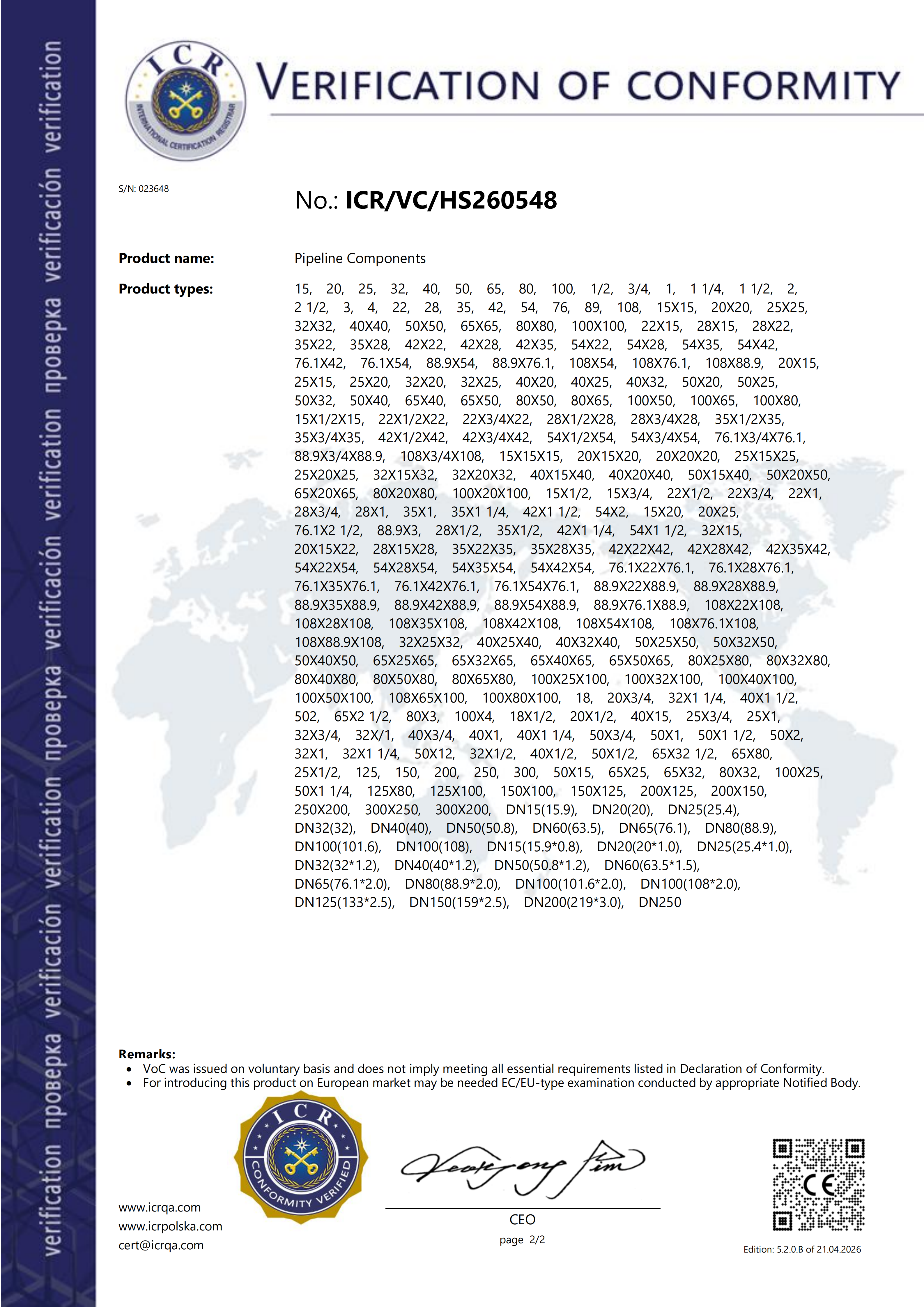
The second failure is a certification-scope mismatch. The CE-PED Verification of Conformity held for these products covers stainless-steel press-fit pipeline components across the full size range DN15–DN250, while the press series commonly ordered for building services run DN15–DN100. Ordered sizes therefore sit inside the certified scope, but buyers who expect the certificate to list one series name may read the file as incomplete. Reading the scope correctly is part of the compliance job.
The third failure is a seal and application mismatch. A potable-water or gas line accepting an EPDM ring is not the same statement as a direct-drinking water line accepting a food-grade, FDA-certified silicone ring. The sealing material is specified separately from the body material, and a file that names only “stainless steel press fittings” leaves the reviewer to guess.
The fourth failure is the mixed-specification boundary. Most buildings are not entirely press-fit or entirely welded. Where the design temperature, pressure class or permanence requirement exceeds what a press joint is documented for, socket weld fittings enter the specification, and the buyer must state clearly where press ends and weld begins.
Industry Background: Two Standard Families and One Shared Market
Press-fit technology is no longer a niche alternative to welding. The global stainless steel press fitting market was valued at USD 3.8 billion in 2025, and is projected to reach USD 6.4 billion by 2034 at a CAGR of 6.0%, according to research published by Dataintelo. Independent figures compiled by Global Industry Reports place the stainless steel sub-sector at roughly USD 1.03–1.30 billion for 2024 — around 29%–38% of the total press-fitting market. The two figures use different base years and different scope definitions, so they are complementary rather than contradictory: one describes the total press-fitting market, the other isolates the stainless steel segment.
Behind that volume sit two standard families that grew up separately. On the European side, welded stainless steel tubes for pressure purposes are commonly manufactured and specified against EN 10217-7, while plumbing applications are commonly referenced to EN 10312 — the standard cited in public technical specifications such as those published by Isotubi S.L. On the Chinese side, the national standard double-press series (Series 1 and Series 2) shaped the domestic market for building water supply, and forged socket weld fittings for higher-pressure industrial piping are manufactured to GB/T 14383-2021, which runs in parallel with ASME B16.11 for international projects.
Press geometry adds a second layer of regional habit. M Profile and V Profile are the two dominant pressing geometries in Europe; both are valid and comply with the same regulations, and the choice between them is often a matter of installer habit and existing tool inventory rather than technical superiority. According to Eurotubi's technical guide, M Profile is found in European stainless steel pipe sizes up to 168.3 mm. A specification that names a profile without confirming the contractor's jaw inventory can be fully compliant and still not installable.
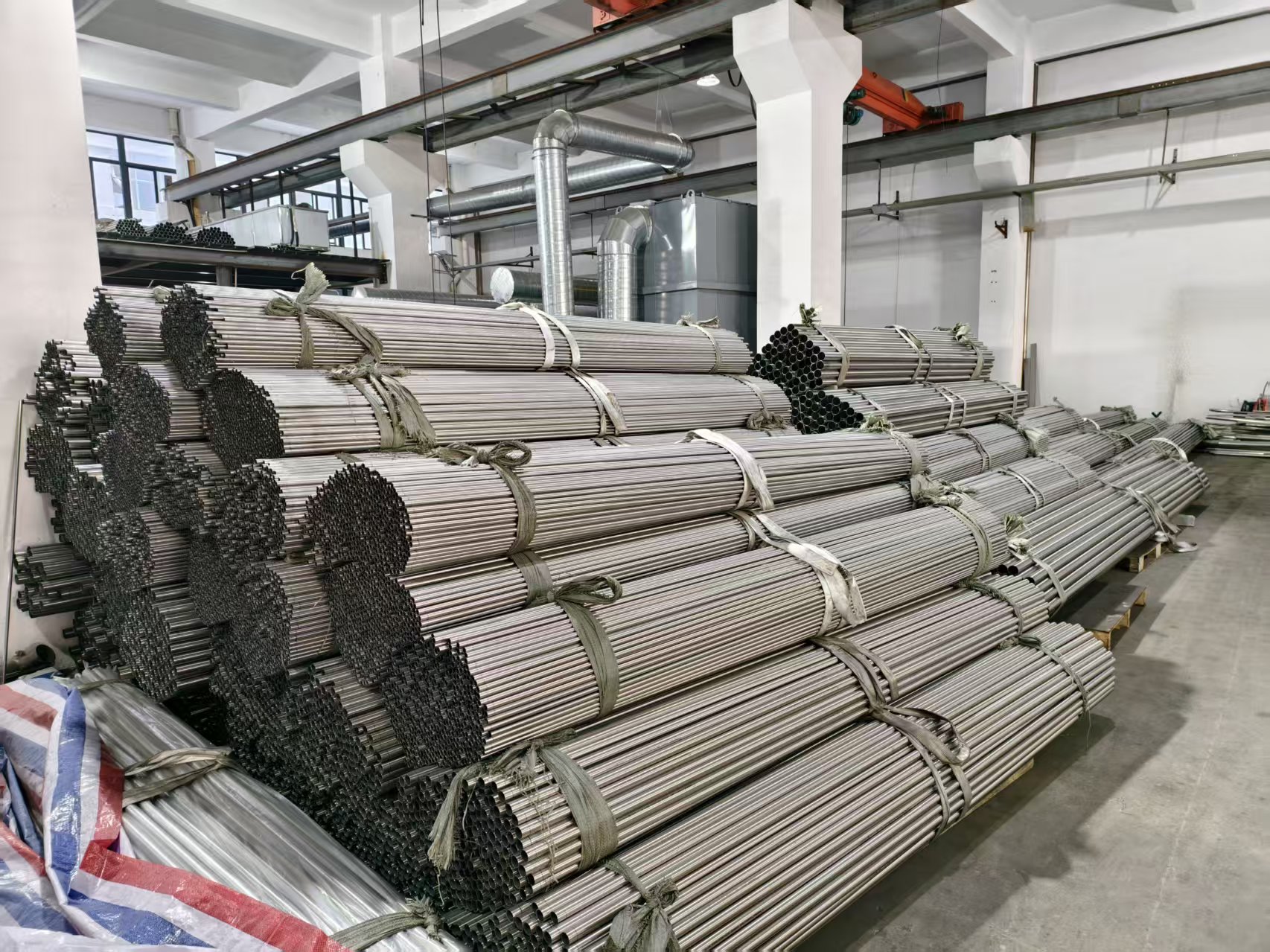
Manufacturing capability is the third background factor. Wenzhou Zhengxin Pipe Industry operates an annual production capacity of 1,000,000 stainless steel pipe fittings and 1,000 tons of stainless steel pipes, has introduced the QS9000 production management system and passed ISO 9001:2000 quality management system certification, and holds CE certification for its products. Roughly 70% of output is exported, mainly to Europe, with additional sales in Southeast Asia and the Middle East.
Detailed Solution: Matching Series to Line, Certification to Market
The workable approach to a dual-market project is to stop treating the two press families as competing products and start treating them as one platform with two documentation routes. The fitting body, the material options, the size range and the pressure ratings are shared; the standard reference, the seal selection and the certificate wording are what change.
GB Series Double-Press Fittings: What the Domestic Specification Expects
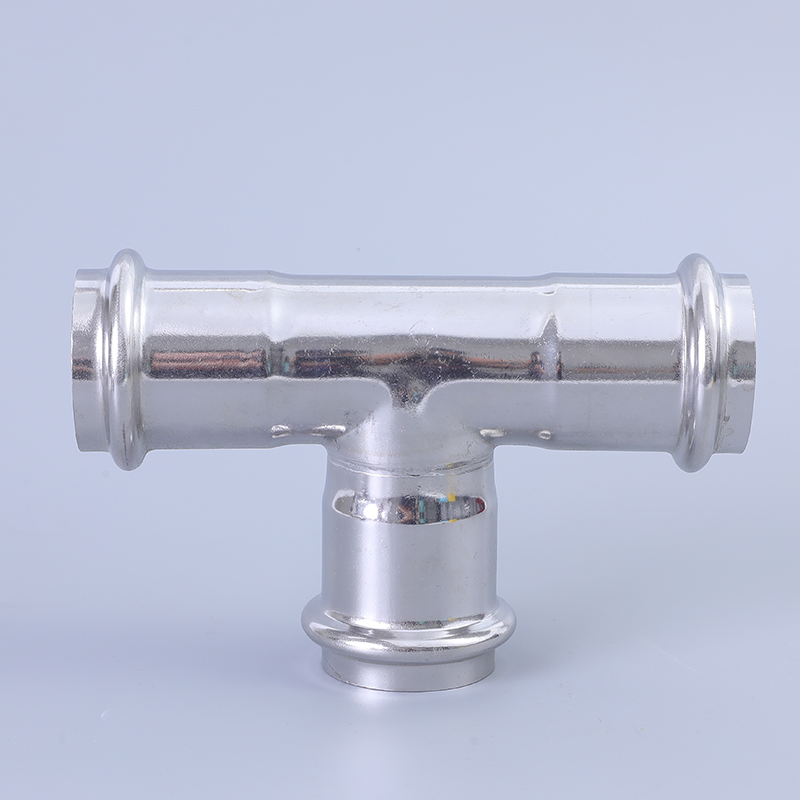
GB Series double-press fittings are the Chinese national standard family — the double-press profile known domestically as Series 1 and Series 2. The joint is formed by pressing at two points on each socket rather than welding, which removes open flame and hot work from the installation sequence and reduces the skill dependency of the connection.
In the Zhengxin catalogue, GB Series press fittings are produced in 304 stainless steel (06Cr19Ni10) or 316L stainless steel (022Cr17Ni12Mo2), suit pipe outer diameters from DN15 (φ16) to DN100 (φ108), and are rated 1.6 MPa for cold water and 1.0 MPa for hot water (≤95 °C). The ordinary model operates from -20 °C to 95 °C; a high-temperature resistant model extends the range to -40 °C to 120 °C when the sealing ring is replaced with the matching high-temperature ring. Application targets include urban residential buildings, gas supply systems and public constructions.
For the buyer, the compliance question is not whether the fitting performs — it is which document the specification asks for. Where a project references the Chinese national standard double-press series, the GB Series is the family to name. Where the same project sits inside a European supply chain, the manufacturer states that the product is compliant with EN 10312 and CE certified, which is the bridge that lets one physical platform serve two document systems without changing the metal.
EN Standard Series Press Fittings: What European Projects Expect
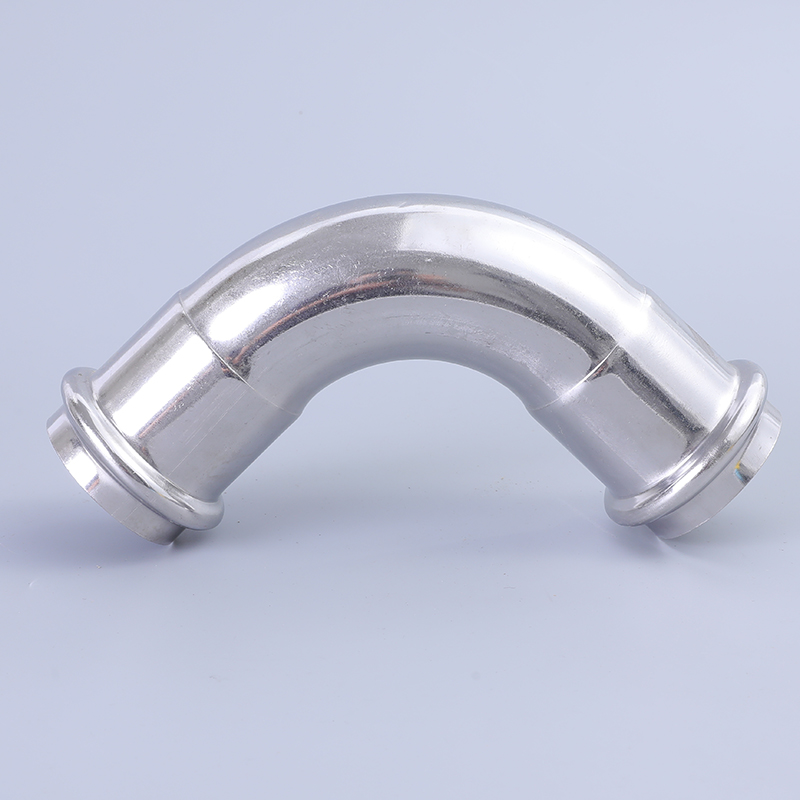
The EN Standard Series is the European-facing line, and it carries the same platform: 304 or 316L stainless steel, DN15 to DN100, 1.6 MPa cold water, 1.0 MPa hot water (≤95 °C), -20 °C to 95 °C in the ordinary model and -40 °C to 120 °C in the high-temperature model with the appropriate sealing ring. Listed applications include direct-drinking water systems, urban residential buildings, gas supply systems and public constructions.
European project files usually sit on two document layers. The product layer is the standard reference: welded stainless steel tubes for pressure purposes are commonly specified against EN 10217-7, and plumbing applications are commonly referenced to EN 10312. The certification layer is the CE file. For these products, the CE-PED Verification of Conformity is certificate ICR/VC/HS260548, issued by ICR Polska for the EU market, referencing EN1092-1:2018, covering stainless-steel press-fit pipeline components across the full size range DN15–DN250. It was issued on 13 May 2026 and is valid until 12 May 2031.
The practical reading of that certificate is straightforward: check that the series and sizes you are ordering fall inside the certified scope, and check that the certificate is still within its validity window at the time of shipment. Both checks take minutes and prevent the more expensive version of the same conversation, which happens after the material has arrived on site.
Socket Weld Fittings Inside a Mixed Specification
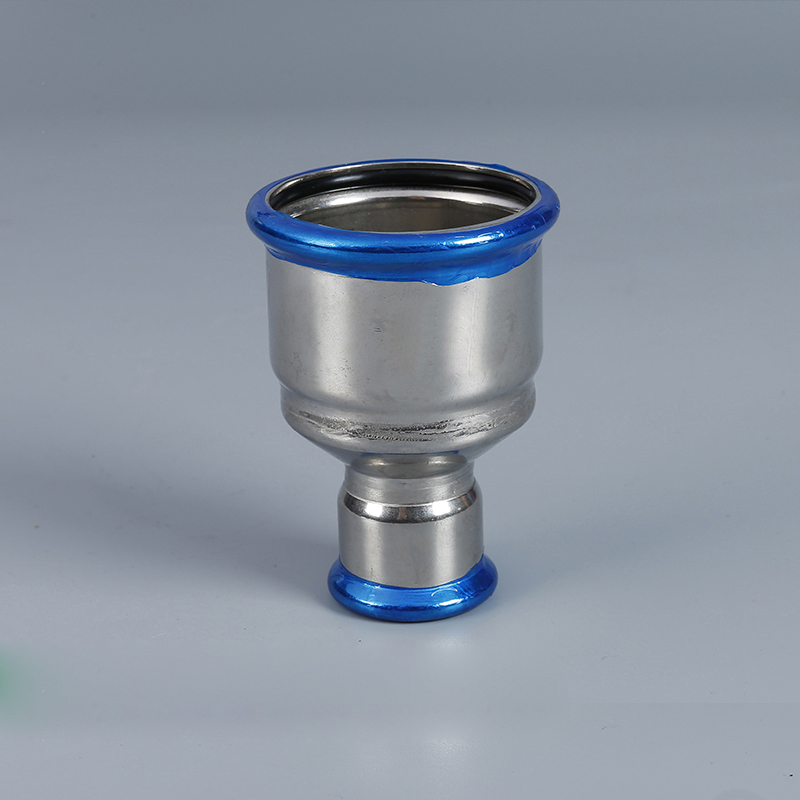
Not every line in a building can be press-fitted. Steam, oil, higher-temperature services, and locations where the design engineer requires a permanent forged joint are normally handled with socket weld fittings. The Zhengxin Socket Weld Series is forged, manufactured strictly in accordance with GB/T 14383-2021 and compatible with ASME B16.11. It is available from DN6 to DN100 (NPS 1/8'' to 4'') in Class 3000#, Class 6000# and Class 9000#, in 304 or 316L stainless steel, with a working temperature range of -20 °C to +450 °C and suitability for water, oil, gas and steam.
In a mixed specification, the boundary is best drawn by service rather than by convenience. Press-fit covers potable water, direct-drinking water and gas distribution within the press-rated envelope. Socket weld covers the lines where design temperature or pressure class exceeds what the press joint is documented for, or where the joint sits permanently behind structure and the engineer prefers a welded connection. Because both families come from the same manufacturer, the transition components — threaded couplings, flanges and adaptors — can be matched within one order, keeping material traceability inside a single document set.
Sealing Rings: FDA-Certified Silicone vs EPDM
The sealing ring decides whether the same fitting body is acceptable to a potable-water authority or a gas specification. Zhengxin press fittings use food-grade silicone that is FDA certified, or EPDM (ethylene propylene diene monomer). The EPDM ring is the standard choice for potable water and gas supply systems and is described as temperature and oil resistant. The FDA-certified silicone ring is the option buyers cite when the application is direct-drinking water and the specification demands a food-contact material statement.
Temperature selection follows the ring, not the body. The ordinary model is rated -20 °C to 95 °C, and the high-temperature resistant model reaches -40 °C to 120 °C, but only when the sealing ring is replaced with the matching high-temperature ring. Specifying the high-temperature version without changing the ring is a documentation error that only shows up in service.
Press Profile and Tooling: V Profile and M Profile
Profile geometry is the compliance item most often discovered on site. M Profile and V Profile are the two dominant pressing geometries in Europe, and both are valid and comply with the same regulations; Eurotubi notes that the choice between them is frequently a matter of habit and that M Profile is available up to 168.3 mm. Before an order is released, three confirmations avoid the mismatch: which profile family the project specifies, which jaw sizes the installing contractor actually owns, and whether the profile has been validated under the same pressure-test regime the project requires.
Comparison Table: GB Double-Press vs EN Standard vs Socket Weld
| Comparison point | GB Series double-press fittings | EN Standard Series press fittings | Socket Weld Series |
|---|---|---|---|
| Standard reference | Chinese national standard double-press design (Series 1 & Series 2); stated as compliant with EN 10312; CE certified | Stated as compliant with EN 10312; CE certified; covered by CE-PED Verification of Conformity ICR/VC/HS260548 (DN15–DN250 scope) | Manufactured to GB/T 14383-2021; compatible with ASME B16.11 |
| Connection method | Double-press, no welding required | Press-fit, no welding required | Socket weld (forged), permanent welded joint |
| Size range | DN15 (φ16) – DN100 (φ108) | DN15 (φ16) – DN100 (φ108) | DN6 – DN100 (NPS 1/8'' – 4'') |
| Material | 304 (06Cr19Ni10) / 316L (022Cr17Ni12Mo2) | 304 (06Cr19Ni10) / 316L (022Cr17Ni12Mo2) | 304 / 316L stainless steel |
| Pressure rating | 1.6 MPa cold water / 1.0 MPa hot water (≤95 °C) | 1.6 MPa cold water / 1.0 MPa hot water (≤95 °C) | Class 3000# / 6000# / 9000# |
| Temperature range | -20 °C to 95 °C (ordinary); -40 °C to 120 °C (high-temperature model with matching ring) | -20 °C to 95 °C (ordinary); -40 °C to 120 °C (high-temperature model with matching ring) | -20 °C to +450 °C |
| Sealing | Food-grade silicone (FDA certified) or EPDM, temperature and oil resistant | Food-grade silicone (FDA certified) or EPDM, temperature and oil resistant | Welded joint, no elastomeric seal |
| Media / applications | Urban residential buildings, gas supply systems, public constructions | Direct-drinking water systems, urban residential buildings, gas supply systems, public constructions | Water, oil, gas, steam |
| Typical role in a mixed spec | Domestic-standard reference lines; bridging documentation toward EN 10312 where required | European project lines requiring EN 10312 reference and CE file | High-temperature or high-class lines; permanently welded tie-ins |
Step-by-Step Breakdown: Assembling a Dual-Market Compliance File
- Fix the service envelope first. Write down the medium, the design temperature and the required pressure class for each line. Press-rated lines sit at 1.6 MPa cold water / 1.0 MPa hot water (≤95 °C) in the ordinary model; anything above that envelope is a signal to route the line to socket weld rather than to negotiate the rating.
- Assign a standard family per line. Where the specification references EN 10312, name the EN Standard Series. Where it references the Chinese national standard double-press series, name the GB Series. Where it references GB/T 14383-2021 or ASME B16.11, name the Socket Weld Series.
- Match the sealing ring to the medium. EPDM for potable water and gas supply systems; FDA-certified food-grade silicone where direct-drinking water and a food-contact statement are required. Add the ring change where the high-temperature model (-40 °C to 120 °C) is specified.
- Check certification scope against the order. Confirm that CE-PED Verification of Conformity ICR/VC/HS260548, issued by ICR Polska for the EU market, covers the ordered series, that the sizes fall inside the DN15–DN250 scope, and that the validity period (13 May 2026 – 12 May 2031) still applies at shipment.
- Verify profile and tooling. Confirm whether the project specifies M Profile or V Profile, confirm the contractor's jaw inventory, and confirm that the pressing jaws used on site match the profile and the Diameter being pressed.
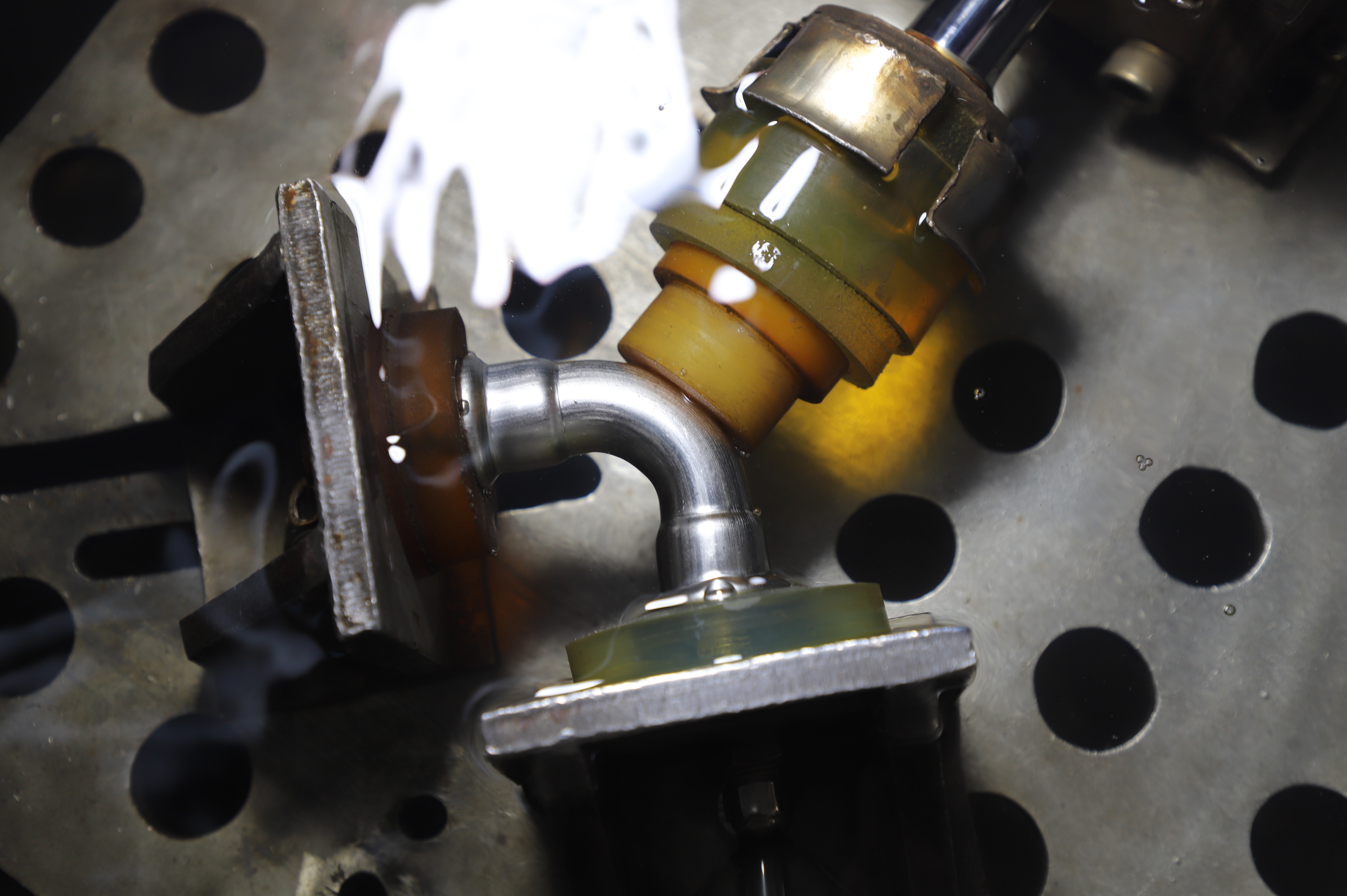
- Validate by sample and pressure test. Request a sample fitting, install it with the project's own jaws, and follow the standard installation sequence: cut the pipe squarely, deburr the inner and outer edges, mark the insertion depth, insert the pipe fully to the mark, position the jaws at the press groove, press until the jaws close completely, then pressure-test the joint.
- Lock the production terms. Minimum order quantity is 100 pcs; production lead time runs 25–40 days from a monthly capacity of 83,000 fittings and 83 tons of pipe; every unit passes 100% visual inspection and pressure test; and OEM/ODM customization covers logo, size, material and packaging.
Installation troubleshooting, because leakage is usually a procedure issue: press-fit joint leakage normally traces back to unremoved pipe burrs, insufficient pipe insertion, misaligned or wrong-size pressing jaws, or a damaged sealing gasket. The remedy is sequential: depressurize the system, inspect the joint for deformation, disassemble and check the gasket, replace any damaged gasket, re-cut the pipe squarely with full deburring, mark the insertion depth and re-install to the standard procedure, then pressure-test again. A deformed fitting should never be re-pressed.
Use Cases: Where Each Choice Is Normally Specified
- European residential potable water plumbing. EN Standard Series press fittings with EPDM rings are the standard route. Zhengxin has supplied 12,000 pcs of press fittings to plumbing distributors and construction contractors in markets including Germany, Spain, France, the United Kingdom, Italy, Russia, Belarus, Australia, Indonesia, Thailand and Taiwan for potable water plumbing systems, with reported corrosion-resistant, leak-free pipeline operation and the practical benefit of fast installation without welding.
- Direct-drinking water systems. FDA-certified food-grade silicone sealing rings are the selection driver here, supported by the 304/316L body material and the hygienic, clean surface requirement of drinking-water piping.
- Gas supply systems. EPDM sealing rings are specified for potable water and gas supply service; press-fit covers distribution lines inside the press-rated envelope, while higher-class branches move to socket weld.
- Public construction, hotel and hospital projects. These are 24/7 systems with a leak-proof requirement and a maintenance-free expectation, which is why the service-life-matching-building argument carries more weight than first-cost comparison in the specification stage.
- Industrial, steam and oil lines. Socket weld fittings — forged, GB/T 14383-2021, compatible with ASME B16.11, rated -20 °C to +450 °C and Class 3000#/6000#/9000# — take over where a press joint is outside its documented envelope.
FAQ
How do I verify a CE certified stainless steel press fittings manufacturer before ordering?
Ask for the CE-PED Verification of Conformity and read three fields: the issuing body, the certificate number, and the product scope. For these products the certificate is ICR/VC/HS260548, issued by ICR Polska for the EU market, referencing EN1092-1:2018 and covering stainless-steel press-fit pipeline components across the full size range DN15–DN250, issued 13 May 2026 and valid until 12 May 2031. Then confirm the EN 10312 compliance statement and the sealing material statement (FDA-certified food-grade silicone or EPDM) match your medium, and check that the series and sizes you order sit inside the certified scope.
Do GB double-press fittings and EN standard press fittings differ in material, size or pressure rating?
No. Both families share the same platform: 304 stainless steel (06Cr19Ni10) or 316L stainless steel (022Cr17Ni12Mo2), pipe outer diameters from DN15 (φ16) to DN100 (φ108), 1.6 MPa for cold water and 1.0 MPa for hot water (≤95 °C), with an ordinary working temperature range of -20 °C to 95 °C and a high-temperature resistant model rated -40 °C to 120 °C when the sealing ring is replaced. The difference is the standard reference and the documentation route: the GB Series is the Chinese national standard double-press family (Series 1 and Series 2), while the EN Standard Series is prepared for European specifications where EN 10312 and CE documentation are the expected file.
When should socket weld fittings replace press fittings in the same specification?
When the line falls outside the press envelope or needs a permanent joint. Socket weld fittings in the Socket Weld Series are forged, made to GB/T 14383-2021 and compatible with ASME B16.11, sized DN6–DN100 (NPS 1/8''–4''), available in Class 3000#, 6000# and 9000#, in 304/316L, rated -20 °C to +450 °C and suitable for water, oil, gas and steam. That covers steam and oil services, higher pressure classes, and locations where the engineer requires a welded connection. Press-fit remains the right choice for potable water, direct-drinking water and gas distribution inside the 1.6 MPa cold / 1.0 MPa hot envelope.
What is the minimum order quantity, and what drives the cost of a dual-market order?
The MOQ is 100 pcs. Cost is driven by material grade (304 versus 316L), sealing ring selection (food-grade FDA-certified silicone versus EPDM), size and profile mix, and any OEM/ODM customization of logo, size, material or packaging. Order volume interacts with monthly capacity of 83,000 fittings and 83 tons of pipe, which is why mixing GB Series, EN Standard Series and Socket Weld Series lines in one programme usually produces a more efficient commercial result than splitting them across suppliers.
Can I validate a sample first, and how long does delivery take?
Sample validation before a project order is the standard route, and for good reason: it is the only way to confirm profile, jaw compatibility and joint quality against your own tooling. After validation, production lead time runs 25–40 days, with 100% visual inspection and pressure test on every unit before packing. Send your line list, medium, design temperature and profile requirement to Cindy at cindy@zxpipeindustry.com or WhatsApp/WeChat +86 18966285772, and the export team will confirm series assignment, seal selection and delivery scheduling against the current capacity plan. The full product catalogue is available for download at Product Catalog.
Conclusion: One Platform, Two Document Routes, One Boundary Rule
The dual-market compliance question has a short answer. GB Series double-press fittings and EN Standard Series press fittings are the same material and rating platform — 304/316L, DN15–DN100, 1.6 MPa cold water and 1.0 MPa hot water (≤95 °C) — separated by the standard reference and the certification file each market expects. Choose the family that matches the specification's own reference, document the EN 10312 statement and the CE-PED certificate scope (ICR/VC/HS260548, ICR Polska, DN15–DN250, valid to 12 May 2031), select the sealing ring by medium (EPDM for potable water and gas, FDA-certified silicone for direct-drinking water), and confirm the press profile against the contractor's jaw inventory.
Draw the boundary rule once and apply it consistently: press-fit inside the rated envelope, socket weld to GB/T 14383-2021 where temperature, pressure class or permanence demand a forged welded joint. Buyers who handle those four checks before releasing an order rarely discover a compliance problem on site — they discover it in the file, where it is cheap to fix.
Next Step: Match Your Specification to the Right Series
Send us your line list, medium, design temperature and required press profile. WENZHOU ZHENGXIN PIPE FITTINGS CO., LTD will confirm which series applies — GB Series double-press, EN Standard Series press, or Socket Weld Series — together with the sealing ring selection, certification documents and 25–40 day delivery schedule.
Contact: Cindy | Email: cindy@zxpipeindustry.com | Tel / WhatsApp / WeChat: +86 18966285772
Website: www.zxpipeindustry.com | Blog: blog.zxpipeindustry.com
Product catalogue download: Product Catalog (PDF) | Chat on WhatsApp
Have Questions or Need More Details?
Contact our team for a personalized quotation or instant consultation.
Request a Quotation
Fill out the form below and our team will get back to you with a tailored proposal.
WhatsApp Direct Chat
Prefer to chat in real-time? Message us on WhatsApp for instant assistance & quick answers.
- Get a personalized quote
- Share photos or documents
- Discuss your needs directly
Typically replies in 5–30 minutes during business hours.