Which Stainless Steel Press Fittings Fit a Commercial HVAC Retrofit Project?
Commercial HVAC retrofit projects are rarely a straight pipe-for-pipe replacement. The building may still be occupied, the plant room may have limited access, and lines carrying potable water, heating water, gas, or a corrosion-sensitive medium must return to service quickly. In this situation, stainless steel press fittings can provide a welding-free method of connecting stainless steel pipes, but only when the fitting specification matches the existing pipe system. This article looks at European standard stainless steel press-fit fittings through a project-fit lens, using WENZHOU ZHENGXIN PIPE FITTINGS CO., LTD as a supplier reference for a commercial HVAC retrofit buying decision.
Why a Commercial HVAC Retrofit Is a Different Fitting Problem
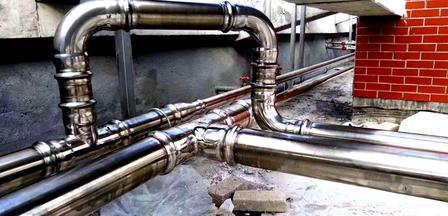
New construction allows a designer to choose the pipe, the profile, the pressing tool, and the fitting range before any work begins. A retrofit project is more constrained. The existing fixed steel pipe may already have a specific outside diameter, while the contractor may already own or rent pressing tools made for one pressing profile. If the selected fitting uses a different groove geometry, the pipe cannot simply be pressed into place with reliable sealing.
Press-fit has a clear site advantage because it removes welding from the joint-formation step. That can reduce hot-work permits, fire-watch requirements, and welding variability. But press-fit carries its own discipline: the fitting, the stainless steel tube, and the pressing jaw must belong to the same profile family. Mixing Euro-standard M-profile fittings with Chinese-standard V-profile fittings, or using the wrong pressing jaw, can create poor sealing and eventually lead to leakage or pipe disconnection.
The project specification should therefore answer more than the material grade. It must define pipe outside diameter, press profile type, sealing material, working pressure, working temperature, operating medium, and the documentation required for CE-certified press fittings or EN-standard compliance.
Industry Context: Press-Fit Stainless Steel in European Building Services
Independent market research estimates that the global stainless steel press fitting market was valued at approximately USD 3.8 billion in 2025, with a projected long-term growth rate of 6.0 percent compound annual growth through 2034. In European technical specifications, EN 10217-7 is commonly referenced for welded stainless steel tubes intended for pressure purposes, while EN 10312 is referenced for stainless steel plumbing pipe systems. Buyers should ask suppliers which of these standards apply to the supplied press-fit system and how the documentation is presented.
European practice recognizes M-profile and V-profile as two prominent pressing geometries. Technical guidance from Eurotubi notes that M-profile is used on stainless steel pipe sizes up to 168.3 mm in Europe, and that both M and V profiles are valid and can comply with the same regulations. The practical issue is interoperability: a fitting, its matching pipe, and the pressing jaws should all be selected as one profile system.
European-Standard Press Fittings: Project Fit Starts with the Product Range
WENZHOU ZHENGXIN PIPE FITTINGS CO., LTD supplies European standard press fittings for stainless steel pipe systems in building construction. This range is used in residential buildings, public construction, hotels, and hospitals for water distribution and gas conveying. The company profile also lists direct-drinking water systems, urban residential buildings, gas supply systems, and public constructions as intended applications.
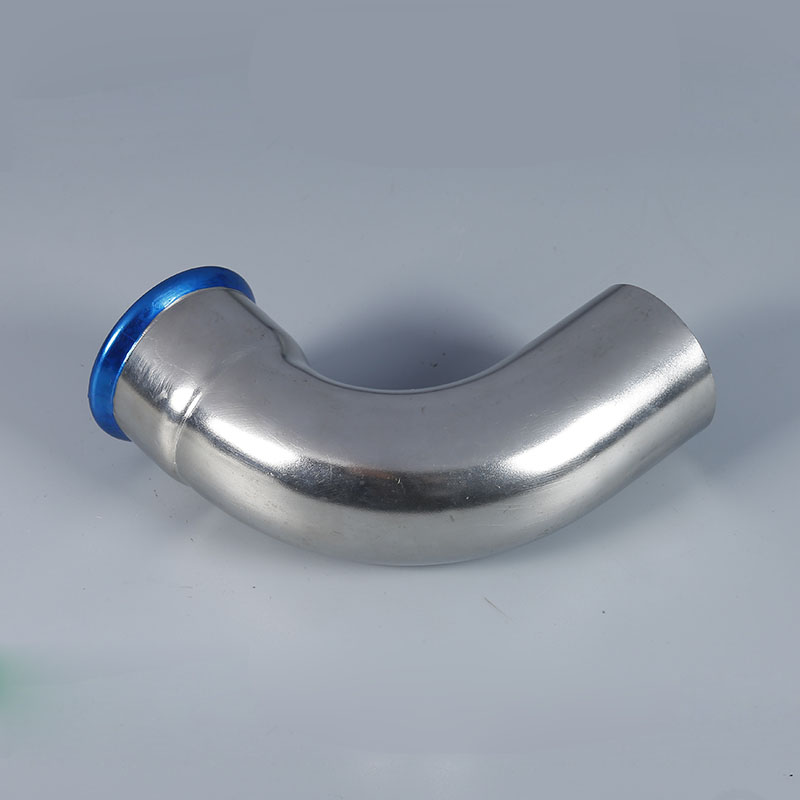
The EN Standard Series from Wenzhou Zhengxin includes press-fit elbow, press-fit coupling, and press-fit tee configurations. Its main material options are 304 stainless steel and 316L stainless steel. The suitable pipe outside-diameter range starts at DN15 (φ16) and extends to DN100 (φ108). The working pressure is 1.6 MPa for cold water and 1.0 MPa for hot water up to 95 degrees Celsius. The standard operating temperature range is -20 degrees Celsius to 95 degrees Celsius, while the high-temperature-resistant model is rated from -40 degrees Celsius to 120 degrees Celsius after replacement of the sealing ring. Sealing options include food-grade silicone that is FDA certified, and EPDM sealing material for temperature and oil resistance.
These European-standard press fittings are described by the manufacturer as CE certified and compliant with EN 10312. For a commercial HVAC retrofit, that documentation should be checked before installation because it connects the fitting specification to the building’s approval record and long-term maintenance file.
M-Profile vs V-Profile in the Same Retrofit
The profile question is one of the most common sources of press-fit failure. Euro-standard M-profile and Chinese-standard V-profile press fittings are not manufactured to the same press-groove dimensions. If M-profile fittings are combined with V-profile tubes or V-profile pressing jaws, the sealing ring groove position will not match. Under pressure, the assembly may leak, or in a worse case the pipe can pull out of the fitting.
For this reason, the project team should lock the profile early. If the existing site tools are M-profile jaws, specify M-profile fittings and M-profile-compatible stainless steel pipe. If the contractor works with V-profile equipment, keep the whole line on V-profile fittings and pipe. Do not plan to adapt one side of a joint with thread compound or an improvised adapter because the press joint itself is not a field-made connection.
304 or 316L: Material Selection for a Commercial HVAC Project
Press-fit fittings in 304 stainless steel are generally suited to normal tap water, dry compressed air, and general gas lines. Where the project is coastal, uses seawater, involves weak acid or alkali media, or sits in a high-chloride environment, 316L stainless steel is the recommended upgrade because it contains molybdenum for improved chloride resistance. In a high-salt coastal atmosphere, 304 is more vulnerable to pitting corrosion, so 316L press fittings should be specified for exposed plant-room piping and high-risk water conditions.
Production and Quality Control Evidence for Retrofit Suppliers
Buyers evaluating a manufacturer should look past the product photo and confirm production-level quality checks. Wenzhou Zhengxin states that its quality process includes 100 percent visual inspection and pressure test. The company also supports OEM and ODM orders with customization of logo, size, material, and packaging. Monthly capacity is approximately 83,000 press-fit fittings and 83 tons of stainless steel pipes, with a standard MOQ of 100 pieces and a production lead time of 25 to 40 days. The factory was established in August 2013 and concentrates on the research, development, production, and sales of new-type water-supply pipeline systems.
Step-by-Step Installation Sequence for Retrofit Press Joints
A correct press-fit connection depends on preparation and tooling. The following sequence is the standard operating procedure for stainless steel press fittings:
- Cut the steel pipe squarely and fully remove inner and outer burrs.
- Mark the insertion depth on the pipe surface.
- Insert the pipe fully into the fitting socket until it reaches the depth mark.
- Place the pressing-tool jaws at the correct position on the fitting groove.
- Start pressing until the jaws close completely.
- Conduct a pressure test after installation to verify that there is no leakage.
When leakage appears during the pressure test, the usual causes are human error: burrs left on the pipe end that damage the sealing gasket, insufficient insertion depth, misaligned jaws, mismatched profile tools, or a damaged sealing ring. The correct response is to inspect the joint, remove the fitting if necessary, replace any damaged parts, and reinstall using the standard procedure. A used or deformed press fitting should not be pressed a second time.
For a retrofit project, the operational consequence is clear: press-fit installation is fast, but it is not tolerant of shortcuts. Training the site team to check the depth mark and confirm the jaw profile before pressing is the most effective way to protect the project schedule.
Use Cases: Where These Press Fittings Do the Job
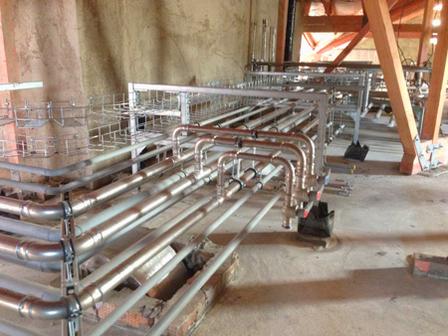
European standard press fittings are suitable for building construction, water supply and drainage, and gas supply sectors. The application scenario is common in Brazil, Germany, Spain, France, Indonesia, Italy, Kazakhstan, Malaysia, Norway, Thailand, Taiwan, and Vietnam. Typical project types include residential buildings, public construction, hotels, and hospitals. The product’s function in these projects is to distribute water, convey gas, and connect drinking-water pipelines.
The operating requirement is not intermittent. Many of these buildings run their water and mechanical systems continuously, and the fittings are designed for a 24/7 mode. Supporting equipment includes stainless steel pipes, press-fit tools, and EPDM sealing gaskets. Application-specific requirements include leak-proof performance, corrosion resistance, and potable-water hygiene. A documented case involving Wenzhou Zhengxin press fittings installed 12,000 pieces in potable water plumbing systems. The project outcome was corrosion-resistant and leak-free pipeline operation, with the installation method avoiding welding and reducing site labor time.
For a commercial HVAC retrofit, the parallel is direct. A building owner or contractor who must replace a section of aging stainless steel line in a plant room can use the same press-fit technique as a new-build installation, but the line must be evaluated as a whole before the fittings are ordered.
Comparison: M-Profile vs V-Profile Stainless Steel Press Fittings
| Selection Factor | M-Profile Press Fittings | V-Profile Stainless Steel Fittings | Project-Fit Note |
|---|---|---|---|
| System Type | European-standard M-profile press-fit system | Chinese-standard V-profile press-fit system | Verify which profile the existing pipe and tools require. |
| Groove Geometry | M-profile groove dimension | V-profile groove dimension | The groove positions differ, so parts are not interchangeable. |
| Recommended Mixing | Do not mix with V-profile pipes or jaws | Do not mix with M-profile pipes or jaws | Cross-mixing risks poor sealing, leakage, and pipe disconnection. |
| Pressing Tooling | Use M-profile pressing jaws | Use V-profile pressing jaws | Fittings, pipes, and jaws must belong to the same profile family. |
| European Acceptance | Recognized in Europe, available up to 168.3 mm in supply guidance | Also recognized as a valid profile in European practice | Choice often depends on habit, regional supply, and existing tools. |
FAQ
1. Do European stainless steel press fittings need CE certification and EN 10312 compliance?
In the European building-services market, specifiers commonly ask for stainless steel press fittings that are documented as CE certified and compliant with EN 10312. Wenzhou Zhengxin describes its European standard press fittings as CE certified and compliant with EN 10312. European projects may also reference EN 10217-7 for welded stainless steel tubes used under pressure, so buyers should request the relevant certificates for both pipe and fittings before ordering.
2. What should I check in a stainless steel press fittings manufacturer for a commercial HVAC retrofit project?
Check that the manufacturer can supply European-standard stainless steel press fittings in the required diameter range and material grade. Confirm CE and EN documentation, ask about profile compatibility with the existing pipes and pressing tools, and review factory quality control. Wenzhou Zhengxin is a China-based manufacturer founded in August 2013, with a 9,000 m² factory and an annual output of 1,000,000 press-fit pipe fittings. Its quality process includes 100 percent visual inspection and pressure test, and it supports OEM/ODM customization of logo, size, material, and packaging.
3. Can M-profile and V-profile press fittings be mixed in one pipeline system?
No. Euro-standard M-profile and Chinese-standard V-profile press fittings have different press-groove dimensions, so the sealing-ring grooves do not match. Fittings, stainless steel pipes, and pressing jaws should all follow the same profile system. Forced mixing can cause poor sealing, leakage, or pipe disconnection.
4. Should a coastal commercial project use 304 or 316L stainless steel press fittings?
304 stainless steel is generally suitable for fresh water, dry compressed air, and general gas lines. For seawater, weak acid or alkali exposure, chemical environments, or coastal high-chloride conditions, 316L is the recommended upgrade because it contains molybdenum and resists chloride-related corrosion better than 304. In coastal HVAC plant rooms, 316L is the safer option where chloride exposure is present.
5. What are the typical lead time, MOQ, and OEM options from Wenzhou Zhengxin?
Wenzhou Zhengxin supports OEM/ODM with customization of logo, size, material, and packaging. Monthly capacity is approximately 83,000 press-fit fittings and 83 tons of stainless steel pipes. MOQ is 100 pieces, and the production lead time is 25 to 40 days. For a project-specific specification review or quotation, contact the sales team directly.
Conclusion: Make the Fitting Fit the Whole System
A commercial HVAC retrofit can succeed with stainless steel press fittings when the owner, engineer, and contractor focus on the system rather than on a single component. Confirm the pipe diameter and material grade, lock the M-profile or V-profile choice before ordering, require CE and EN 10312 documentation where relevant, match the sealing material to the operating medium, and use a supplier whose quality checks support a leak-free installation.
WENZHOU ZHENGXIN PIPE FITTINGS CO., LTD supplies European standard press fittings for building construction, direct-drinking water, residential, public construction, and gas supply applications. The company also provides documented evidence of real deployment in potable water plumbing systems, with 12,000 pieces installed and a corrosion-resistant, leak-free result.
WENZHOU ZHENGXIN PIPE FITTINGS CO., LTD
Email: cindy@zxpipeindustry.com
Tel / WhatsApp / WeChat: +86 18966285772
Website: www.zxpipeindustry.com
For a detailed product overview, download the catalog below.
Download Product Catalog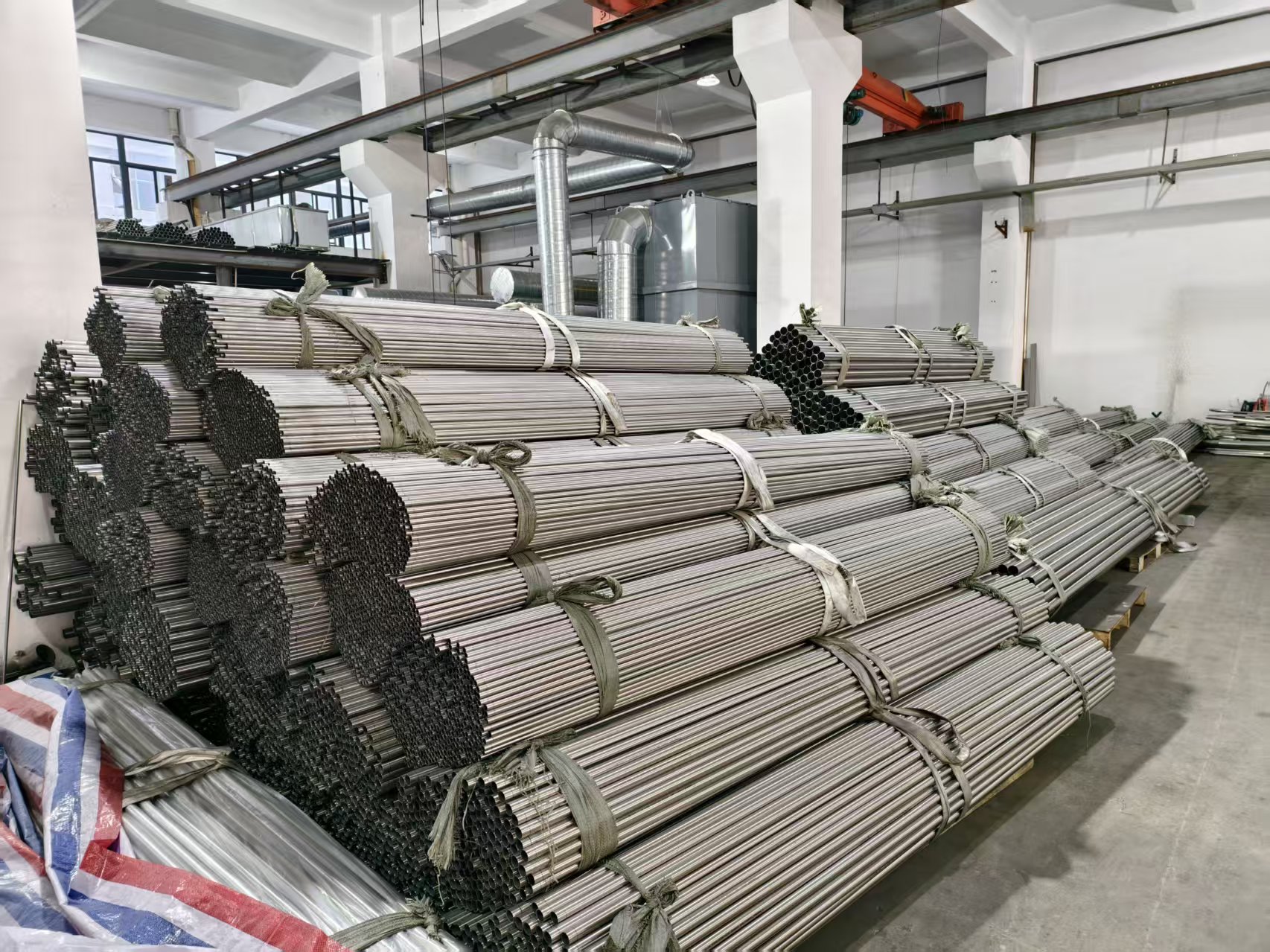
Have Questions or Need More Details?
Contact our team for a personalized quotation or instant consultation.
Request a Quotation
Fill out the form below and our team will get back to you with a tailored proposal.
WhatsApp Direct Chat
Prefer to chat in real-time? Message us on WhatsApp for instant assistance & quick answers.
- Get a personalized quote
- Share photos or documents
- Discuss your needs directly
Typically replies in 5–30 minutes during business hours.