Socket Weld vs. Double-Press Fittings: A Buyer's Comparison Guide
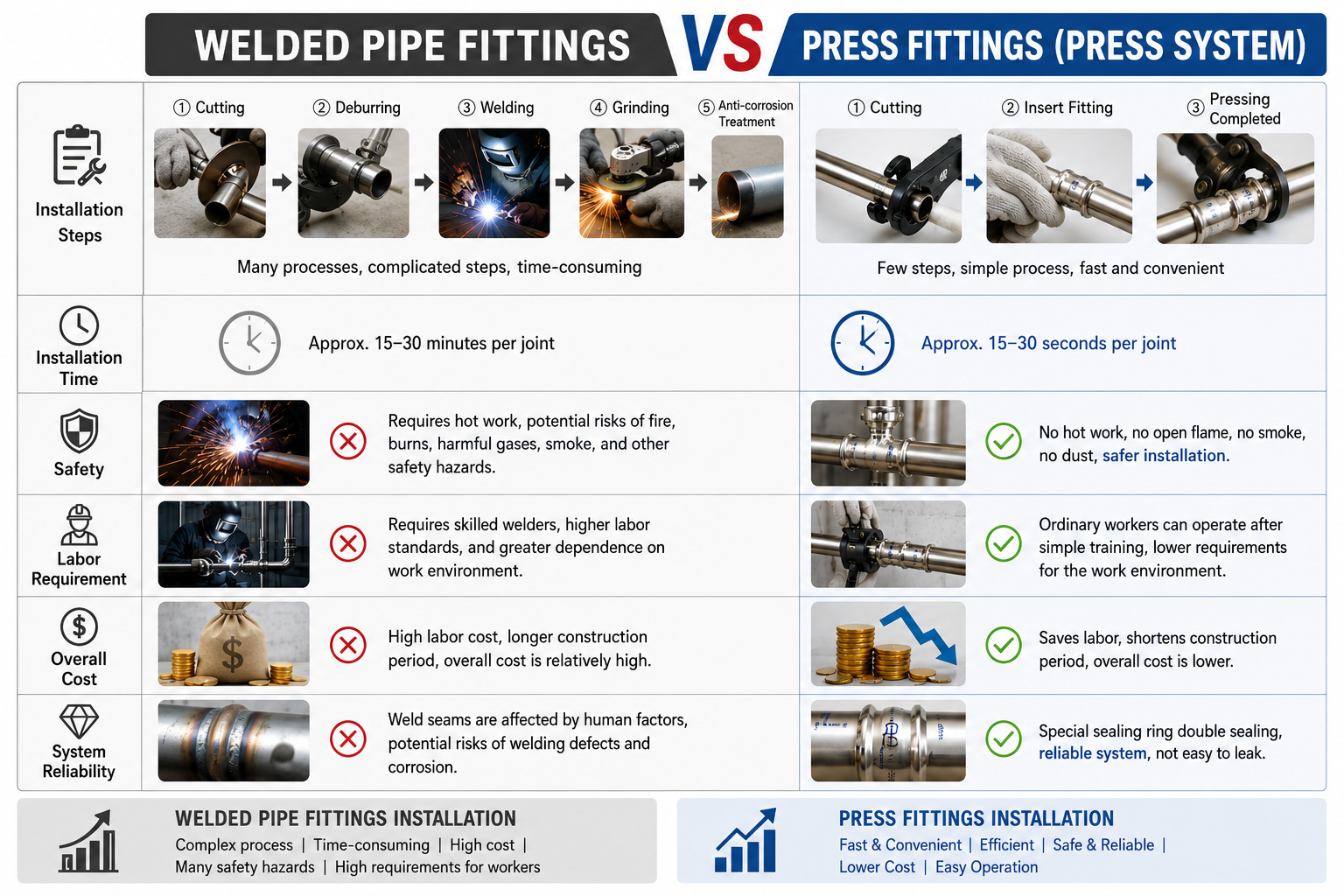
European buyers and project engineers often need to choose between socket-weld fittings and double-press fittings for stainless steel piping systems. The choice affects installation speed, site labor, maintenance planning, and long-term supply of spare parts. This article compares the two connection technologies from a buyer's perspective, with emphasis on applicable media, working temperature, installation workflow, inspection, maintenance, and suitability for different project types.
All first-party product references in this guide come from WENZHOU ZHENGXIN PIPE FITTINGS CO., LTD, a manufacturer founded in August 2013 that produces both socket-weld and press-fit stainless steel piping products. The company is based in Wenzhou, operates a 9,000 m² facility, employs about 70 people, and exports a significant share of its output to European markets. Buyers who need a dual-line supply relationship can evaluate both technologies from one manufacturer instead of maintaining separate welding and pressing suppliers.
Why This Decision Is Difficult for Buyers
The direct purchase price of a fitting is only one part of the decision. The larger cost is often hidden in site preparation, installation errors, repairs, inspections, and future maintenance. A wrong connection method can also create a safety issue when the medium changes, for example when a water-rated sealing ring is used on a gas line.
Double-press fittings are a no-weld quick connection method, but they depend on correct installation and matched components. The most common leakage problems after press-fit installation are linked to pipe burrs, insufficient insertion depth, wrong pressing jaws, mismatched profile tools, or damaged sealing gaskets. Socket-weld fittings, by contrast, form a welded connection. They eliminate the elastomer sealing ring but introduce welding quality, welder qualification, and joint inspection as new risk factors. A buyer therefore needs to compare the full installation and maintenance chain, not only the connector body.
Industry Background: Press-Fit Growth and Welded Retention
Stainless steel press fittings are an established category in commercial and residential piping. According to market research published by Dataintelo, the global stainless steel press fitting market was valued at USD 3.8 billion in 2025. A separate segment estimate from Global Industry Reports places the stainless steel press-fitting sub-sector at roughly USD 1.03 to 1.30 billion for 2024, equivalent to about 29 to 38 percent of the broader press-fitting market. These figures help explain why procurement teams increasingly ask for no-weld stainless solutions for water, heating, and gas distribution.
At the same time, welded pipe connections remain relevant in industrial and high-temperature service. Socket-weld is one of the traditional welded connection forms: the fitting is placed over the prepared pipe end and joined by welding, producing a metal-to-metal connection without an elastomer sealing element. For media above the practical temperature limit of a rubber or silicone sealing ring, a welded-type joint is often specified by engineering practice because the sealing mechanism is not dependent on a polymer gasket.
In Europe, standardisation plays an important role. Welded stainless steel tubes for pressure purposes are commonly referenced against EN 10217-7 and EN 10312. For press-fit systems, M Profile and V Profile are the two dominant pressing geometries in Europe, with M Profile available up to 168.3 mm diameter. European technical guidance notes that the choice between M and V profile is often a matter of local habit because both profiles can comply with the same regulations. What matters for buyers is that fittings, tubes, and pressing tools must all belong to one profile system.
Detailed Solution: Comparing Socket Weld and Double-Press in the Zhengxin Range
Wenzhou Zhengxin Pipe Industry Co., Ltd. develops stainless steel piping products for water supply, direct-drinking water, gas supply, and industrial facilities. Its self-developed product lines include European-standard single press-fit fittings, Chinese-national-standard double press-fit Series 1 and Series 2, socket-weld fittings, and grooved quick-assembly metal pipelines. This range is useful for a comparison guide because it allows the same manufacturer to supply both the welded-style socket product and the no-weld double-press product.
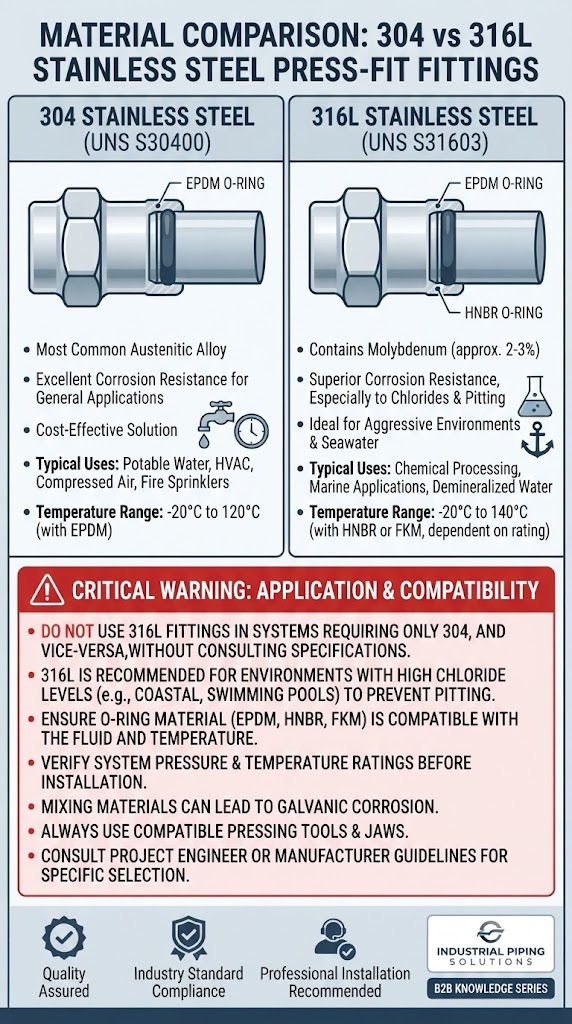
Both families can be supplied in 304 stainless steel or 316L stainless steel. For the socket-weld fitting, the material statement in the supplier's own content is direct: the socket weld fitting can be made of 304 stainless steel or 316L stainless steel. The same material options apply to the double-press product range.
Socket-Weld Fittings
A socket-weld fitting is used with a welded joint. The all-metal connection has no sealing ring in the normal load path, which is why welded-type connections are the conventional choice in projects where an elastomer seal would be unsuitable, for example at elevated temperature or in more aggressive process conditions. The socket-weld fittings referenced in this article are available as 304 or 316L stainless steel components. A buyer should verify the applicable material grade, pressure class, and pipe schedule against the project specification because those ratings are not generalised in this guide.
Double-Press Fittings
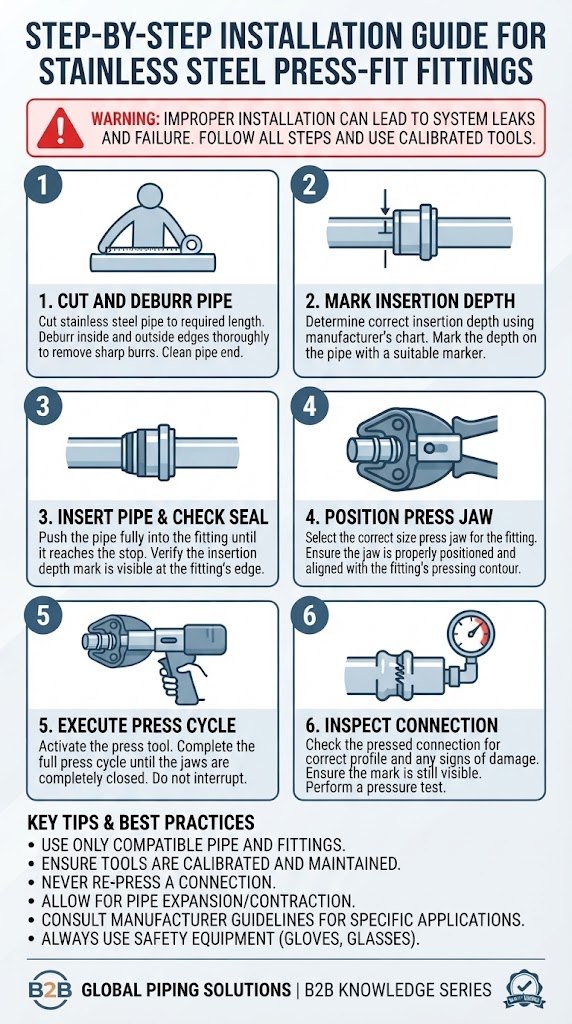
Double-press fittings are installed without welding. The pipe is cut, deburred, inserted into the fitting socket up to a marked depth, and then compressed with a pressing tool. The sealing effect is created by the mechanical press connection working together with a sealing ring. In the Wenzhou Zhengxin product range, the GB Double-press Fittings series is the representative double-press product family. The supplier also offers European-standard press fittings for projects that follow European press-fitting conventions.
For the GB Double-press Fittings and European standard press fittings, the supplier lists the following technical parameters: main material 304 stainless steel or 316L stainless steel; suitable pipe outer diameter DN15 to DN100; working pressure 1.6 MPa for cold water and 1.0 MPa for hot water up to 95°C; working temperature -20°C to 95°C for the ordinary model and -40°C to 120°C for the high-temperature-resistant model, which requires replacement of the sealing ring; sealing material food-grade silicone or EPDM. This parameter set gives a concrete boundary for no-weld press systems: they are sized and sealed for water, heating, gas, and similar media within the catalogue working range.
Step-by-Step Breakdown: How to Choose the Right Connection Technology
Buyers at the decision or execution stage do not need another generic technology essay. They need a short selection workflow that can be used in tender evaluation, supplier discussion, and site preparation.
- Define the medium and temperature. Start with the actual fluid: potable water, drainage, heating water, gas, or a process medium. If the application is steam or another high-temperature medium that exceeds the elastomer temperature limit of press fittings, a socket-weld or welded-type connection should be considered. If the medium is normal water or gas within the catalogue range, both technologies may be technically possible and the decision can move to field cost and maintenance.
- Select the stainless steel grade. For normal tap water and dry compressed air, 304 stainless steel is a common choice. For seawater, weak acid or alkali environments, chemical service, and coastal locations with high chloride exposure, 316L stainless steel is recommended because it is more resistant to pitting. For gas pipelines, 304 is the common baseline, while 316L is often the suggested upgrade for seaside gas projects.
- Choose one pressing profile if the project is press-fit. Euro-standard M-profile press fittings and Chinese-standard V-profile press fittings are not interchangeable. Fittings, stainless steel tubes, and pressing jaws must be from the same profile system. Mixing profiles can cause poor sealing, water leakage, or pipe disconnection risk.
- Check certificates and standards. CE certification and ISO quality management certification are relevant baseline indicators for a supplier serving European buyers. For welded stainless steel tubes used in pressure applications, buyers in Europe commonly reference EN 10217-7 or EN 10312. Ask the supplier for the applicable documentation before finalising the order.
- Estimate installed cost, not material cost. The supplier comparison data in this guide states that press-fit connections can be installed about 70 percent faster than welded steel pipe fittings and can reduce on-site labor cost. Welded connections may need qualified welders, welding permits, gas-free conditions, and inspection before the system is charged. These workflow costs should be included in the comparison.
- Plan the maintenance and spare-part lifecycle. A no-weld press connection has minimal welding repair and is positioned by the supplier as a low-maintenance solution with a service life exceeding 15 years. However, the sealing ring must match the medium. EPDM is intended for water supply and drainage; HNBR is required for gas and oil-gas medium. A socket-weld connection avoids the elastomer gasket but should still be covered by a maintenance plan for weld inspection and system testing.
Use Cases and Application Fit
The right choice depends on the project type. The following use cases are based on the supplier's published application guidance and technical data.
Potable Water and Direct-Drinking Water Systems
Double-press stainless steel fittings are a practical choice for residential buildings, public buildings, tourism facilities, and direct-drinking water systems. The no-weld connection reduces the need for hot-work permits on site, and the smooth inner bore of the press connection supports low flow resistance. For drinking-water service, the sealing material should be selected with hygiene in mind. The supplier's European standard press fittings can use food-grade silicone or EPDM depending on the service requirement.
Commercial Building Plumbing and Heating Networks
Heating networks and commercial building plumbing are listed as suitable applications for press-fit stainless steel systems. Within the catalogue limits, the ordinary double-press fitting is suitable for hot water up to 95°C. If the heating loop is designed above the normal working temperature, the buyer should use the high-temperature-resistant version, which is rated at up to 120°C after replacement of the sealing ring.
Gas Supply
For gas supply systems, the sealing ring becomes a safety component. EPDM, which is acceptable for water and drainage, is not acceptable for gas service. HNBR is the gasket type described for gas and oil-gas medium in the supplier's technical guidance. A buyer should also distinguish between M-profile and V-profile systems before ordering gas fittings because the pressing tools and grooves cannot be shared.
Coastal and Chloride-Exposed Installations
304 stainless steel is vulnerable to pitting corrosion in high-chloride coastal environments. For seawater, coastal piping, and chloride-exposed chemical environments, 316L stainless steel is the recommended upgrade for press-fit fittings. For a seaside gas project, the same upgrade logic applies: use 316L rather than 304 where salt exposure is significant.
Steam, High-Temperature, and Process Media
When a piping system is designed for steam, high-temperature media, or fluids that are not compatible with elastomer seals, socket-weld fittings are the more traditional engineering response. Because the connection is welded and metal-to-metal, it does not carry the same elastomer temperature limitation as a press fitting. This application statement should be treated as general engineering guidance; the exact pressure, temperature, and medium compatibility for a socket-weld fitting must be verified against the pipe specification, material grade, and welding standard.
Socket Weld vs. Double-Press Fittings: Buyer Comparison Table
This table summarises the points that appear most often in procurement discussions. Where the data comes from the manufacturer comparison, the table states that fact explicitly.
| Comparison point | Socket-weld fitting | Double-press fitting |
|---|---|---|
| Connection principle | Welded connection formed on the pipe joint | No-weld mechanical press connection with sealing ring |
| Material availability in the referenced range | 304 stainless steel or 316L stainless steel | 304 stainless steel or 316L stainless steel |
| Size range in the referenced catalogue | Not stated as a single catalogue range; confirm by model | DN15 to DN100 for the press-fitting series |
| Working pressure data | Depends on pipe and welding standard; verify by specification | 1.6 MPa cold water; 1.0 MPa hot water up to 95°C |
| Working temperature data | No elastomer seal; rating follows material and welding code | -20°C to 95°C ordinary model; -40°C to 120°C high-temperature model after sealing ring replacement |
| Installation speed | Welded-type installation requires welder preparation and joint work | Manufacturer comparison data indicates 70 percent faster installation than welded steel pipe fittings |
| On-site labor | Welding labor, permits, and inspection can increase site cost | Lower on-site labor cost in the manufacturer's comparison |
| Maintenance profile | All-metal joint without elastomer gasket | Zero welding repair and minimal maintenance claimed in the no-weld comparison; service life stated as more than 15 years |
| Flow behaviour | Depends on weld profile and internal finish | Smooth inner bore supports low flow resistance |
| Media notes | Commonly considered for high-temperature, steam, oil, and process service; verify with project specification | 304 for fresh water and general gas; 316L for seawater, chemical, and coastal service; HNBR required for gas and oil-gas medium |
| Typical project fit | Industrial and process piping where welded all-metal joints are preferred | Potable water supply, heating, and commercial building plumbing |
Frequently Asked Questions
What is the main difference between socket-weld fittings and double-press fittings?
A socket-weld fitting creates a welded, metal-to-metal pipe connection. A double-press fitting creates a no-weld mechanical connection by pressing the fitting body around the pipe and sealing ring with a pressing tool. In the referenced manufacturer range, both product families can be made of 304 or 316L stainless steel. The practical decision difference is that socket-weld is a welded-type joint while double-press is an elastomer-sealed no-weld connection.
What materials are available for socket-weld and double-press fittings?
The socket-weld fitting can be supplied in 304 stainless steel or 316L stainless steel. The double-press press-fitting range can also be supplied in 304 stainless steel or 316L stainless steel. For press fittings, 304 is common for fresh water, dry compressed air, and general gas service, while 316L is recommended for seawater, chemical, weak acid or alkali environments, and high-chloride coastal conditions.
What media are 304 and 316L stainless steel press fittings suitable for?
304 stainless steel press fittings are suitable for normal tap water and dry compressed air. 316L stainless steel press fittings are recommended for seawater, weak acid or alkali environments, chemical service, and coastal locations with high chloride exposure. For general gas pipelines, 304 is commonly preferred, while 316L is the suggested upgrade for seaside gas projects because 304 is more vulnerable to pitting corrosion in salty conditions.
Can EPDM sealing rings be used for gas lines?
No. EPDM is suitable for water supply and drainage, while HNBR is required for gas and oil-gas medium. If a water-service EPDM gasket is installed in a gas line, it can age rapidly and lead to dangerous gas leakage. Buyers must confirm the sealing ring material before ordering double-press fittings for gas projects.
Can Euro-standard M-profile press fittings be mixed with Chinese-standard V-profile press fittings?
No. Euro-standard M-profile and Chinese-standard V-profile press fittings have different press-groove dimensions and sealing ring groove positions. The pressing tools cannot be shared. Mixing M-profile and V-profile components in one system can cause poor sealing, leakage, or pipe disconnection risk. Fittings, tubes, and pressing jaws must all be from the same profile type.
Are double-press fittings faster to install than socket-weld or welded-type fittings?
In the manufacturer comparison data used for this guide, press-fit installation is about 70 percent faster than installation of welded steel pipe fittings and is associated with lower on-site labor cost. The no-weld press method removes the need for welding repairs in normal service, although the installer must still follow correct preparation steps: square cutting, full deburring, insertion depth marking, correct jaw positioning, and pressure testing after installation.
Do double-press fittings require pressure testing after installation?
Yes. The standard installation procedure for stainless steel press-fit fittings includes a pressure test after the piping system has been assembled. The six basic steps are square pipe cutting, removal of inner and outer burrs, marking of insertion depth, full insertion of the pipe into the fitting socket, pressing with the correct jaws until the tool closes completely, and pressure testing to check for leakage. If leakage is found, the system should be depressurised, inspected, and reinstalled with new undamaged components when necessary.
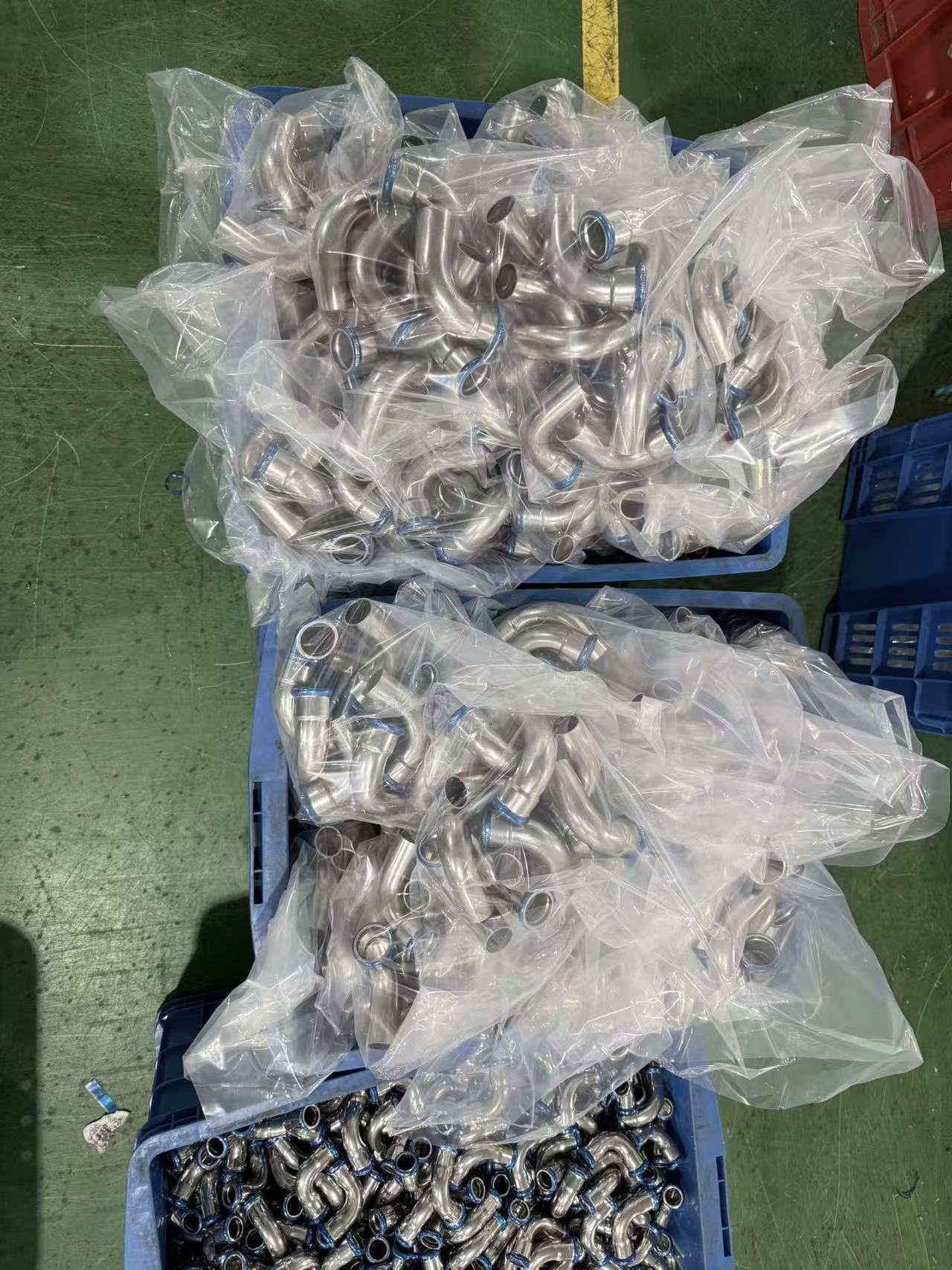
Conclusion and Next Step for Buyers
The final choice between socket-weld and double-press fittings should be driven by the project medium, temperature range, site conditions, inspection capacity, and long-term maintenance plan. If the application is potable water, heating water, general building plumbing, or gas within the catalogue range, a no-weld double-press system is often easier to install and maintain. If the service requires a welded all-metal joint, for example in steam, high-temperature, or process conditions, socket-weld remains a relevant option because it is not limited by an elastomer sealing ring.
For buyers at the execution stage, working with a manufacturer that supplies both technologies can simplify sourcing, reduce supplier qualification work, and make it easier to connect different piping zones in a large project. Wenzhou Zhengxin Pipe Industry Co., Ltd. provides socket-weld, double-press, and European-standard press-fit stainless steel products from the same production base. The company publishes its product range in a download-friendly catalog, and it offers pre-shipment inspection, factory visual and dimension checks, and standard payment terms of 30 percent deposit with 70 percent balance before shipment.
To review the full product range and technical specifications, download the supplier catalog here or contact Cindy at cindy@zxpipeindustry.com. The company website is www.zxpipeindustry.com, and the direct phone and WhatsApp contact is +86 18966285772. Request a product sample or written specification when your project moves from technology selection to purchasing, because final pressure and temperature compatibility should always be confirmed against the actual model and sealing ring material.
Have Questions or Need More Details?
Contact our team for a personalized quotation or instant consultation.
Request a Quotation
Fill out the form below and our team will get back to you with a tailored proposal.
WhatsApp Direct Chat
Prefer to chat in real-time? Message us on WhatsApp for instant assistance & quick answers.
- Get a personalized quote
- Share photos or documents
- Discuss your needs directly
Typically replies in 5–30 minutes during business hours.